L3Harris lands EOD disposal robot award for the Navy and Marine Corps
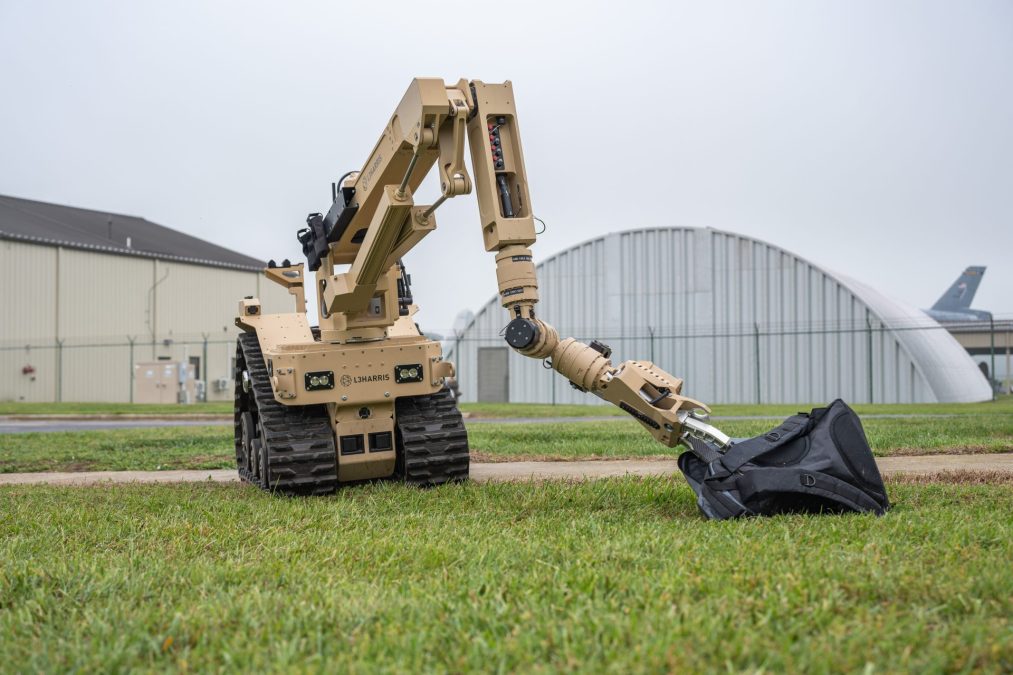
The Navy and Marine Corps awarded L3Harris Technologies a deal for 34 explosive ordnance disposal robots, the defense company announced Wednesday.
The T7 robot is a 710-pound tracked ground vehicle that can dispose of hazardous material or improvised explosive devices, according to the contractor, intended to keep human operators out of harm’s way.
A spokesperson for L3Harris declined to disclose the contract value to DefenseScoop Wednesday. The company said that T7 deliveries to the services will begin this year.
The award comes amid renewed scrutiny about the effects of “blast overpressure” — essentially pressure from shockwaves emitting from explosions — on service members. While EOD techs used remote systems to identify and dispose of IEDs during the Global War on Terror, they were still routinely exposed to blasts and many bomb disposal robots at the time had limited capabilities.
Renewed attention to blast overpressure has pointed to deleterious impacts on the physical and mental welfare of this small military community, especially in relation to traumatic brain injuries.
According to years of military data obtained by North Carolina news site The Assembly, Army explosive ordnance disposal technicians had the highest rate of suicide and illness-related deaths in the service, and died by suicide at up to twice the rate compared to other soldiers. It also reported that EOD techs were experiencing physical symptoms, including digestive issues and inexplicable pain they believe are related to their exposure to blasts.
Just days after The Assembly’s report in early January, the Uniformed Services University of the Health Sciences said that research into blast overpressure was “entering a new phase” and that it would be studying blast effects among both male and female EOD technicians.
After baseline assessments on 100 EOD personnel, they will wear blast sensors during operations and deployments for a two-year study.
L3Harris has pitched its platforms as a way to protect service members from blasts. The company’s release noted the recent Navy and Marine Corps award follows a 2021 order for 100 robots from the Air Force.
“L3Harris T7 robots help keep troops out of harm’s way by neutralizing explosive threats from a safe distance,” the company said in its release. It “designed the robotic systems for high-risk missions, providing mobility, manipulation and intuitive control.”
Over the last several years, the New York Times has reported extensively on blast overpressure health issues in other military jobs as well, such as in mortarmen and tankers.
The Army recently said it was looking for solutions that can reduce blast overpressure health issues, especially for enclosed and semi-enclosed structures that the military has increasingly used for training.