Pentagon approves long-range, autonomous counter-UAS system for use across the military after border testing
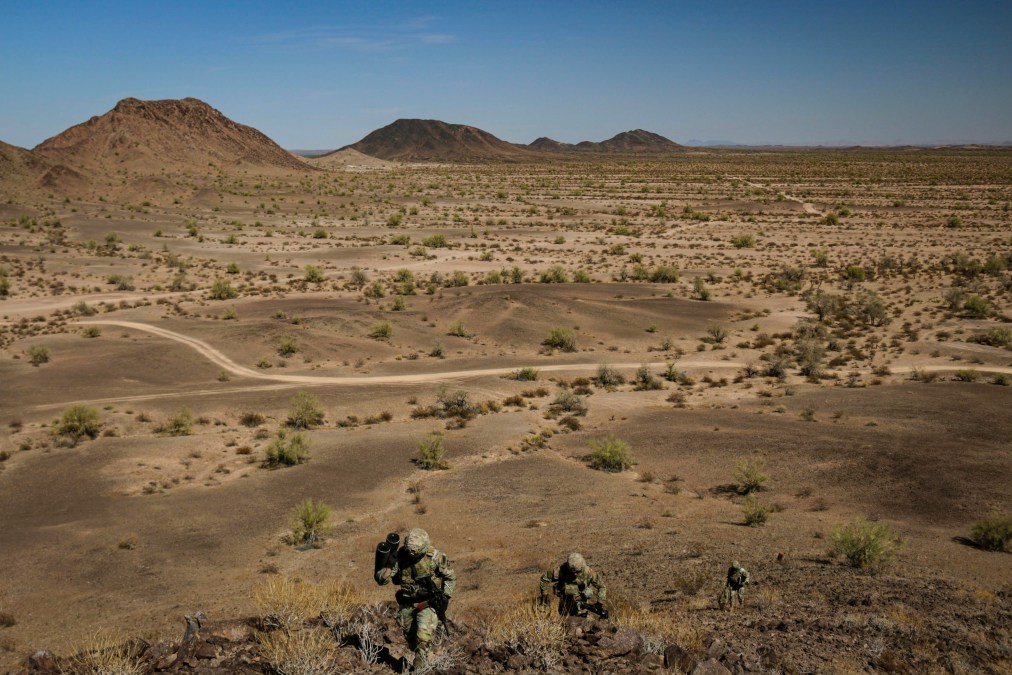
The Pentagon’s counter-drone task force tested a defensive system near the southern border last month that officials said is capable of long-range targeting and 24/7 automated sensing against unmanned aerial threats, approving it for use across the military.
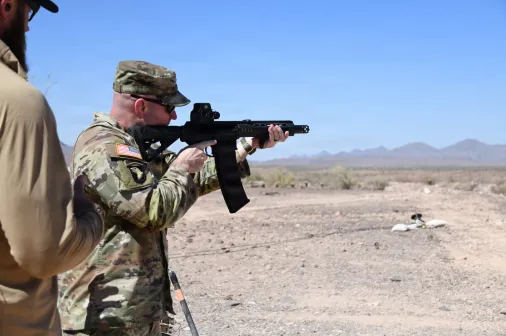
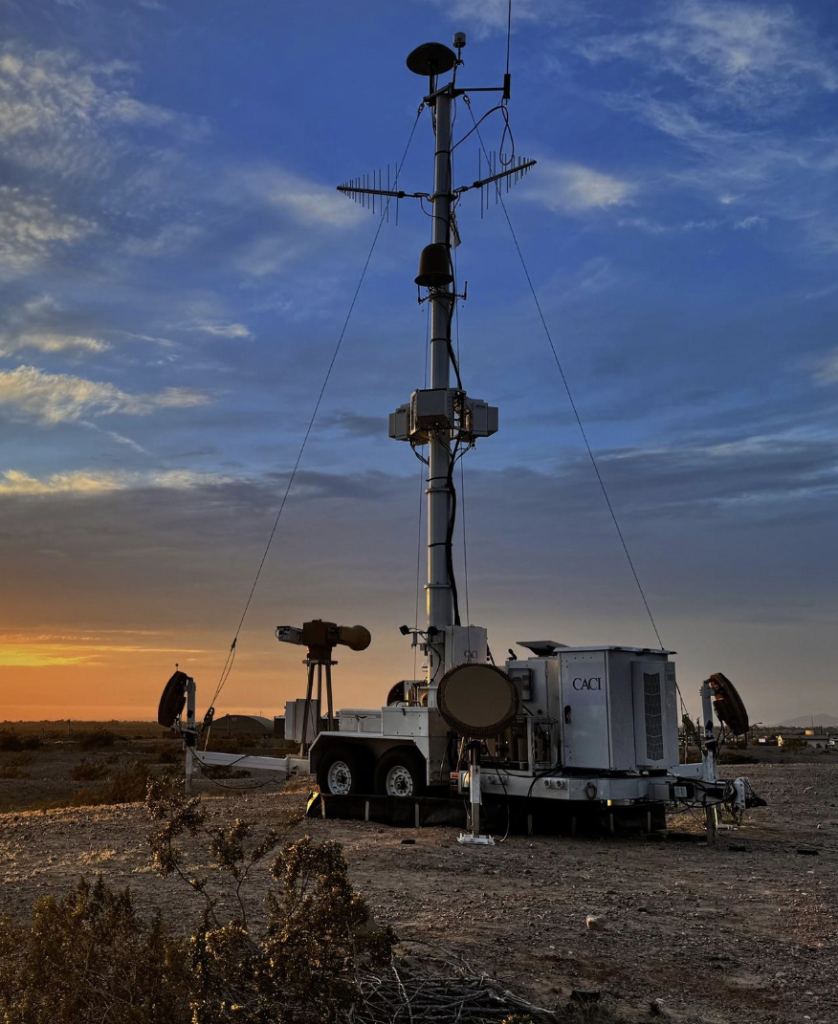
Over two days in mid-May at Marine Corps Air Station Yuma, Arizona, Joint Interagency Task Force 401 and other federal agencies deployed SkyValor — a counter-UAS “detect and defeat” system developed by CACI International — against aerial targets at different ranges, elevations and flight paths, according to a spokesperson for the task force.
In a press release on June 7 announcing the test, officials said the system adds to the burgeoning suite of counter-drone systems the Pentagon is deploying to the U.S.-Mexico border, a region senior military officers have dubbed a testbed for such technology.
“SkyValor is now validated for use as one component of a layered C-UAS defense across the entire Joint Force to meet operational needs anywhere warfighters need to defend themselves from drones,” said Lt. Col. Adam Scher, spokesperson for JIATF-401, in a statement to DefenseScoop.
SkyValor can detect and defeat drones ranging from small first-person view systems to UAS the military considers to be in the largest group of platforms, according to CACI, using “non-kinetic” jamming to zap targets from more than 40 miles away in some cases.
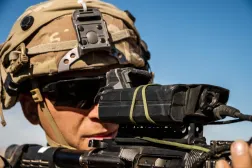
CACI describes the system as having several tracking and “low/no-collateral” defeat mechanisms, including nets meant to capture drones from nearly four miles away and radio frequency jammers that run on “automated sense and shoot algorithms.”
Military officials have said “low-collateral” interceptors are key to defeating drones, especially ones that can capture a UAS so investigators can analyze and track its origin.
Since its inception, JIATF-401 has funneled at least hundreds of millions of dollars into domestic counter-drone employment, DefenseScoop previously reported, an effort officials say is boosted by concerns about UAS incursions across the U.S.-Mexico border and over critical installations.
The task force has continued to coordinate between various federal agencies, including U.S. Customs and Border Protection and the Federal Aviation Administration, after two high-profile incidents earlier this year in which Texas airspace was temporarily shut down after the departments miscoordinated the deployment of counter-drone systems at the border.
JIATF-401 said that the SkyValor validation was conducted alongside Joint Task Force-Southern Border, the entity in charge of military operations in the region, and CBP.
“It was a team effort to get the SkyValor system to Yuma and validate it for operational use,” said Lt. Col. Alejandro Elizalde, southern border team lead for the JIATF-401 response division, according to the press release. “A whole-of-government approach is crucial to maintain a strong counter-drone defense across all 1,954 miles of the southern border.”
CACI said SkyValor, which appears to run on a mobile trailer system, can operate autonomously, around the clock “at various classification levels from any location.”
Officials have recently warned of some counter-UAS systems gaps in the region.
Late last month, U.S. Northern Command’s top officer Gen. Gregory Guillot affirmed that the border was a “sandbox” for counter-drone technology, but expressed concern over a lack of systems that would protect troops patrolling the barrier against drones.
“We have a lot of fixed and movable counter-UAS capabilities, but not really anything that would follow a patrolling soldier, and that’s a concern of mine,” Guillot said at the annual SOF Week conference in May.
It was unclear if the recent validation was tied to a broader contract between CACI and the military.
A spokesperson for CACI provided DefenseScoop public spec pages for SkyValor, noting that it was previously called Merlin, and acknowledged the publication’s questions, but did not answer them by publication. Scher deferred to Pentagon public affairs for contract details.