Lack of counter-drone tech to cover troops patrolling the southern border a ‘concern’ for NORTHCOM commander
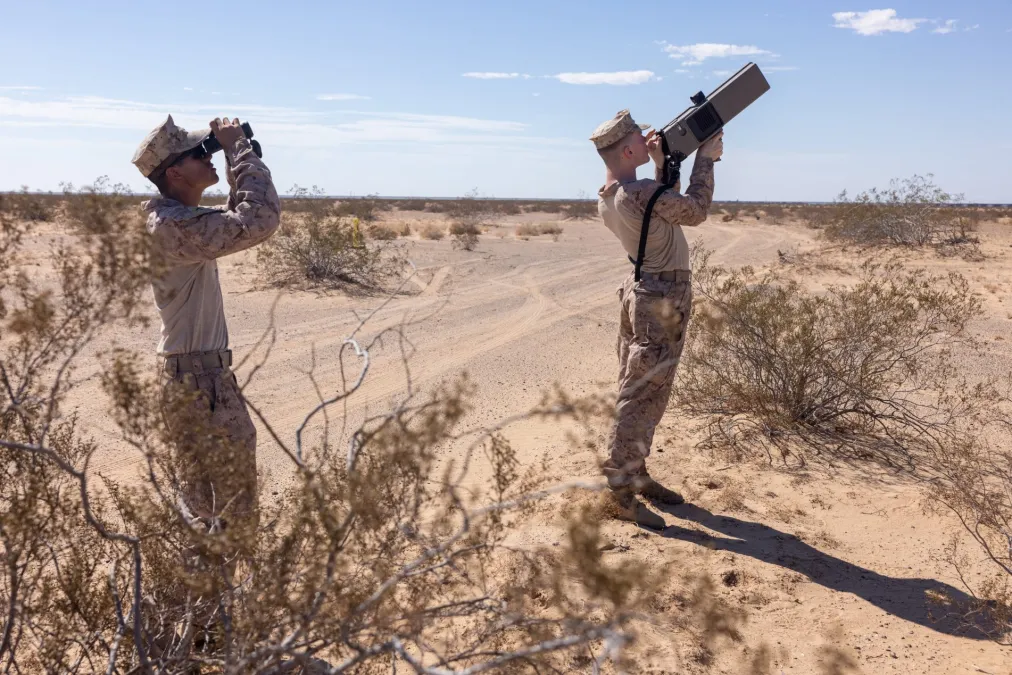
TAMPA, Fla. — While U.S. forces deployed to the southern border employ several fixed and mobile counter-drone systems, the top general in charge of stateside defense said troops lack adequate technology for patrols.
Within days of President Donald Trump’s inauguration, troops quickly flooded to the southern border as part of the administration’s crackdown on immigration, soon taking to mounted and dismounted patrols along the barrier.
Since then, the region has become what officials dubbed a testbed for counter-UAS systems, part of an effort to zap drones coming over the border. Gen. Gregory Guillot, commander of U.S. Northern Command, reaffirmed that the southern border has become a “literal and a figurative sandbox” for industry and operations.
But he also said that cartel drones are flying over Marines and soldiers “all the time” and that troops don’t have enough counter-unmanned aerial system coverage while conducting patrols.
“It presents us a different challenge. We have a lot of fixed and movable counter-UAS capabilities, but not really anything that would follow a patrolling soldier, and that’s a concern of mine,” Guillot said Tuesday at the annual SOF Week conference.
While he did not specify if he meant hand-held devices, wearable jammers, or literal systems that would track drone threats above or in tandem with troops, Guillot is not the first official to signal issues with patrol-oriented counter-UAS tech.
Earlier this year, Army Secretary Dan Driscoll called the Dronebuster — a handheld counter-UAS system — “fucking terrible” and “a joke.” The company that produces the equipment, DZYNE Technologies, defended the Dronebuster to DefenseScoop following Driscoll’s comments.
Still, soldiers have been using it on the southern border and elsewhere, including as recently as earlier this week.
“I was just at the border and the unit I was attached to — all they had for c-UAS was the Dronebuster,” a soldier who works in human intelligence told Driscoll and other Army leaders during a January panel. “I’m sure there’s better stuff out there. Why can’t we field it yet?”
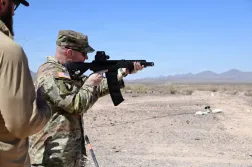
A spokesperson for the task force overseeing operations in the region told DefenseScoop last month that troops had employed other individualized counter-drone systems, including portable devices, such as the Wingman and Pitbull systems, as well as Smart Shooter, a rifle-mounted optic meant to track and down UAS.
The Pentagon’s counter-drone team, Joint Interagency Task Force 401, has pushed at least hundreds of millions of dollars toward stateside and overseas defense, DefenseScoop previously reported. Some defense experts criticized the investment as well overdue, especially given the drone threats emanating from the Iran War.
Guillot said that NORTHCOM was learning lessons from the Israeli military and U.S. Central Command, which oversees operations against Iran, and is applying them to the southern border. That effort was also mired by two back-to-back incidents earlier this year involving counter-UAS lasers that resulted in temporary airspace closures over Texas.
He also urged industry to bring counter-drone technology to the southern border to demonstrate their equipment.
“We tell all of the vendors, if you’re willing to bring it down to the southern border, we’ll put it to use. We’ll tell you if it works, if it does, we’ll probably buy it,” Guillot said. “If it doesn’t, we’ll tell you exactly what you need to work on, so we can buy it potentially at scale, and therefore we have hundreds of systems down there or components of systems that are the beneficiaries of lessons learned from other regions.”