Data from ‘half a million hours of Ukraine conflict drone footage’ now available to train AI
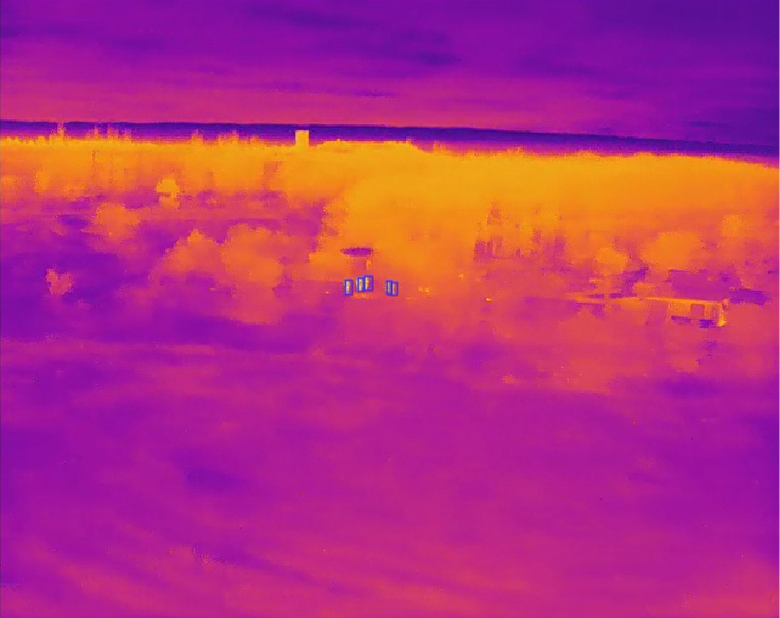
Virginia-based, data-labeling and AI startup Enabled Intelligence is expanding its repository of curated datasets that government and commercial partners use for model training and deployments to include a new collection of drone footage recorded in Ukraine amid the ongoing war.
Since Russia’s large-scale invasion of its territory in 2022, Ukraine has generated staggering volumes of frontline videos capturing real-world combat operations.
The steadily growing visual record is creating vast amounts of training data that’s enabling military observers and defense contractors to innovate weapons capabilities based on modern tactical lessons at rapid rates, including AI models that allow drones to autonomously recognize and strike targets.
“This is the first Ukraine full-motion video in our EView library,” Peter Kant, the company’s CEO and founder, told DefenseScoop on Monday. “What sets it apart is that it’s real — not simulated, not a controlled environment.”
That data library includes labeled datasets across multiple sensor types — electro-optical, synthetic aperture radar, infrared, and foreign-language audio.
Kant said that more than “half a million hours of Ukraine conflict drone footage” would make up the new collection. The imagery is pre-labeled, validated, and considered ready-to-use for AI model training.
“It’s footage from one of the most complex and dynamic conflicts in modern history, labeled across aerial object detection, vehicle classification and ground activity. That kind of operational authenticity is extremely hard to replicate, and it is exactly what AI systems need to perform when deployed,” Kant noted.
Launched in 2020, Enabled Intelligence specializes in data acquisition and conditioning, precision labeling and annotation, and the engineering and deployment of high-performance custom models for the U.S. military and government, as well as authorized end users in the healthcare, financial services, and energy industries.
The new dataset has a variety of use cases, but the CEO expects it to be particularly valuable to those looking to cut time training AI models for aerial applications by reducing the need for labeling and validation. According to Kant, different types of drones “can quickly be AI-enabled” with the data offering.
“Ukraine has produced more real-world drone footage than any conflict in history,” he said. “That data is only valuable if someone has done the hard work of making it usable.”
On the commercial side, Kant pointed to item delivery and remote sensing as likely near-term, drone-related applications.
“In defense, this data is used for intelligence gathering, offensive and defensive operations, and even logistics — getting supplies into contested areas where it’s too dangerous to send people,” he told DefenseScoop.
The National Geospatial-Intelligence Agency tapped Enabled Intelligence in 2025 for a single-award contract worth up to $708 million over a seven-year ordering period. The Sequoia data-labeling-as-a-service contract broadly encompasses work to train computer vision algorithms used in intelligence, surveillance, and reconnaissance, or ISR operations.
That data-labeling effort is notably foundational to NGA’s Maven program components.
Kant did not share details about agencies and defense customers the company is currently working with, or the sources of the Ukraine full-motion video drone assets in the company’s data library.
But he said the new collection “is ready and available now” for approved users working in the U.S., Ukraine, and nations in the NATO alliance.
“What makes the Ukraine footage especially valuable is that it’s real. You get every weather condition, every terrain type, every unpredictable scenario that a simulation can’t replicate,” Kant told DefenseScoop.