Lawmakers with ‘deep concerns’ press Army leadership about decision to terminate unit’s Ukraine-informed drone mission
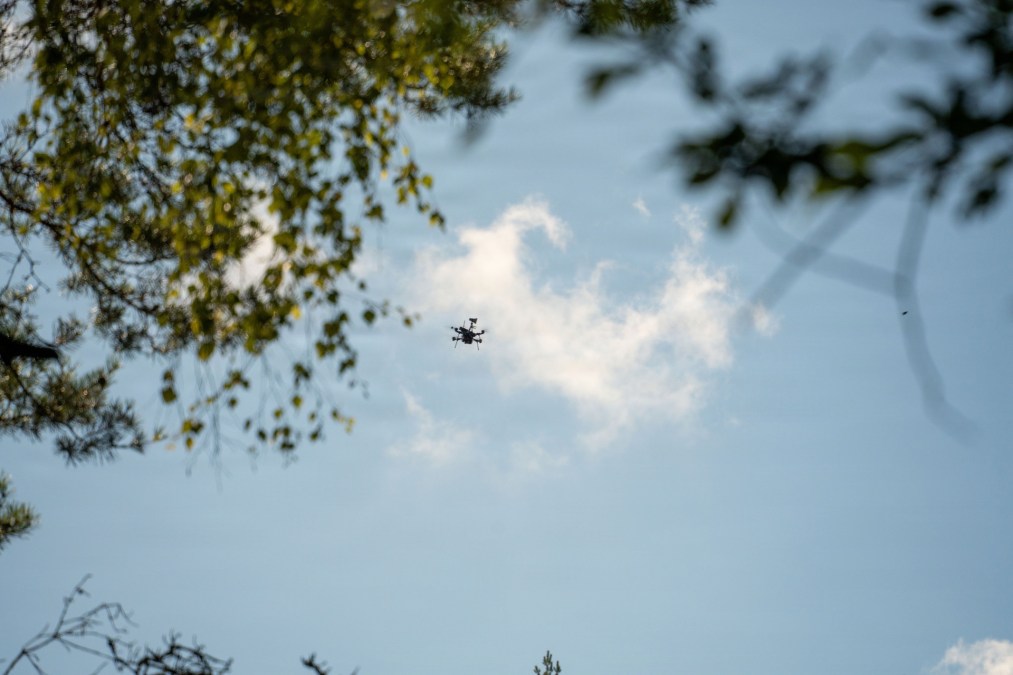
A bipartisan group of lawmakers expressed “deep concerns” this week about the Army’s decision to order a Europe-based infantry battalion to halt its drone innovation mission, pressing the service’s top leaders to explain their rationale as unmanned systems continue to fundamentally change modern conflict.
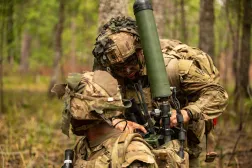
In November, the Army tasked the 600-soldier Unmanned Assault Battalion, part of the 173rd Mobile Brigade Combat Team, to function as a dedicated drone formation, according to a service official, part of an experimental unit concept informed by lessons from the Ukrainian military.
Following an exercise in Germany set to end this month, the battalion will stop its specialized drone mission and return to its core task as an airborne infantry unit. The move has alarmed lawmakers as Defense Secretary Pete Hegseth cuts deep into the Army’s top ranks and the service vies for advancements in uncrewed aerial systems.
“We have deep concerns that eliminating this specialized drone unit will limit our ability to learn from allies, particularly the Ukrainian Armed Forces, and hinder our efforts to modernize drone warfare at the speed necessary to compete on the modern battlefield,” the lawmakers wrote in a Sept. 1 letter shared with DefenseScoop.
The letter was signed by Sens. Jeanne Shaheen, D-N.H., Thom Tillis, R-N.C., Angus King, I-Maine, and Rep. Mike Turner, R-Ohio, who requested a brief from the Army by Sept. 21 about how the service will keep capitalizing on lessons about drone warfare from Ukraine in the unit’s absence.
“This specialized unit was a prudent response in a moment when the character of warfare is changing faster than a conventional formation’s ability to adapt,” the lawmakers wrote.
Given its European basing, the lawmakers said the drone battalion was “ideally placed” to capture valuable lessons for the U.S. military and its industrial base from Ukrainian troops “who have proven their ability to innovate and compete in this space” against a formidable military.
The Army official said the drone unit was meant to study drone warfare tactics, including from Ukraine, test and train on various unmanned systems, and turn what they found over to the Army as part of the DOD’s push for “drone dominance.”
The official said the unit had drafted and experimented with “a concept of employment” for a battalion dedicated to using unmanned systems in support of a brigade-sized element.
“The battalion is participating in Exercise Saber Junction at the Joint Multinational Readiness Center in August and September,” according to the official. “It will deliver what it learned there, together with the past year’s findings, to the Army to inform force design and future experimentation.”
A spokesperson for the Army declined to comment on the letter, telling DefenseScoop that the service will respond directly to the lawmakers. The Associated Press first reported the letter on Wednesday.
Along with the Ukraine-Russia conflict, the lawmakers also cited the Iran war as an example of “our need to make significant improvements in drone warfare.” While the U.S. and its allies have intercepted a majority of Tehran’s attacks, Iran has used cheap, lethal drones and missiles to kill American service members and destroy infrastructure, straining the Pentagon’s arsenal of expensive interceptors.
The lawmakers also expressed concern about whether the Army’s decision to stand down the unit’s drone mission was part of a broader “uneven and inconsistent” commitment to Ukrainian and European security.
Hegseth has culled deep into the Army’s top ranks during his tenure as Pentagon chief, including by ousting the service’s former chief of staff, Gen. Randy George, in April. After months of clashes with Hegseth, Army Secretary Dan Driscoll submitted his resignation to President Donald Trump and served his final full day as the service’s top civilian on Wednesday.
Both Driscoll and George had prioritized Army modernization through aggressive drone procurement, the formation of UAS and counter-UAS marketplaces and other tech-focused efforts that sought to tap into the commercial industry for quicker innovation.
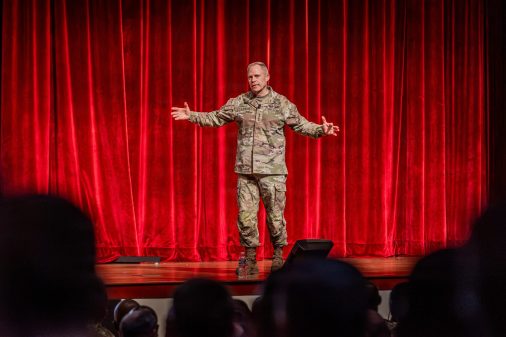
After serving as a military assistant to Hegseth, Gen. Christopher LaNeve became Army vice chief and then took over as the Army’s acting chief of staff in a rapid ascent to the service’s top uniformed spot, though he faces an uphill battle for Senate approval if Trump decides to nominate him for the chief of staff role on a permanent basis.
LaNeve outlined his broad vision for the force last month, titled “The Army Azimuth,” which emphasized both innovation and “fundamentals of soldiering.”
The lawmakers’ letter was addressed to both Driscoll and LaNeve, and they asked whether the decision to cut the unit was made by the Army internally or came from Pentagon leadership.
“We understand that, at its core, the 173rd is an infantry battalion and that the elimination of this unit is part of General LaNeve’s ‘back to basics’ approach from his message to the force,” the lawmakers wrote. “However, this message also says soldiers need to ‘learn, innovate, and adapt faster’ to prepare for the next war, and eliminating this battalion, without announcing a new home for this specialized drone capability runs counter to that.”
They added: “It hurts our ability to acquire the critical knowledge and skills that can be gained from working with and learning from Ukrainian soldiers.”