LaNeve tells soldiers that decision to revert experimental drone unit back to infantry roots predated his tenure as acting Army chief
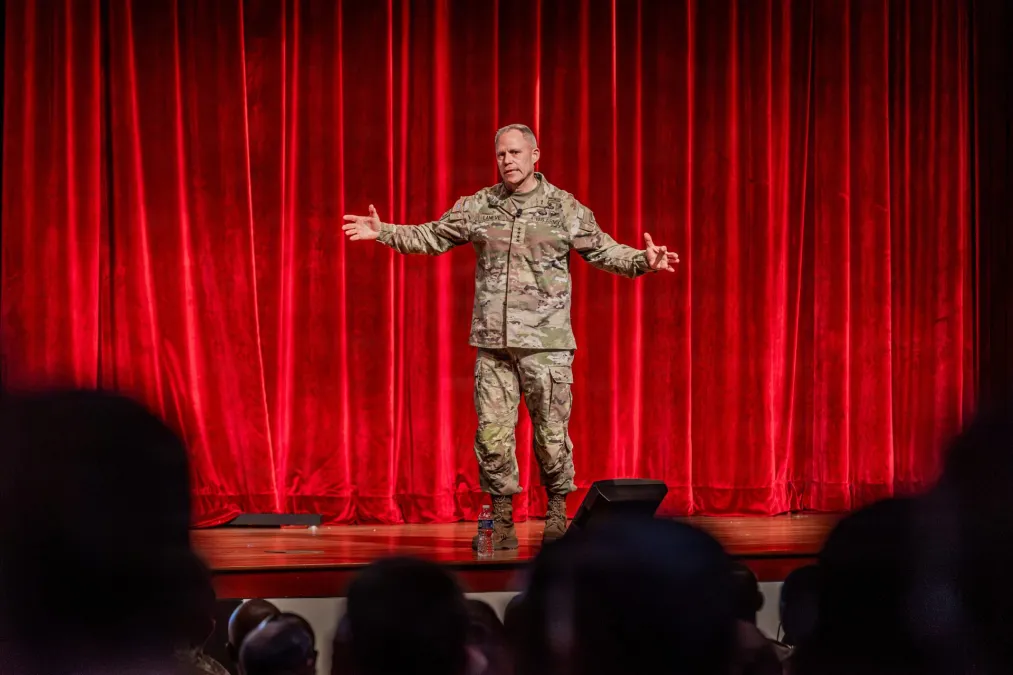
Gen. Christopher LaNeve told an audience of soldiers on Tuesday that the decision to end a specialized unit’s drone mission and return it to an airborne infantry status predated his tenure as the service’s top uniformed officer, contradicting weeks-old reporting amid a recent chorus of Army officials defending the move.
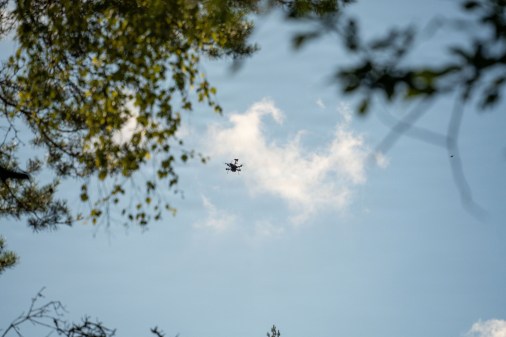
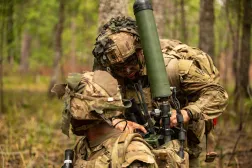
Last fall, the Army tasked an infantry battalion from the 173rd Mobile Brigade Combat Team to function as a dedicated drone unit. Officials said its designation as the Unmanned Assault Battalion was part of an experimental unit concept, largely informed by the Ukrainian military.
Nearly a month after the Wall Street Journal reported the Army ended the unit’s mission and outlets attributed the decision to LaNeve himself, the service is still getting questions about it. Those questions have come from the press, Congress and now, the service’s own soldiers.
“That article surprised me, but I read a lot of shit that I’m like ‘wow, I didn’t know that,’” he said in response to an audience question about the drone unit during the Maneuver Warfighting Conference in Fort Benning, Georgia. “Frankly that decision to move the battalion back into an infantry one was made a long time before, you know, really I was in the seat.”
Army spokespeople acknowledged DefenseScoop questions about who made the decision and when it was made, but did not answer them by publication.
LaNeve did not name the outlet, though the WSJ first reported the wind-down on Aug. 19. Since then, the decision has wrought significant consternation from lawmakers about the Army’s path to drone adoption and the military’s security commitments in Europe.
DefenseScoop reported on Sep. 3 that a group of bipartisan lawmakers sent questions to the Army’s top leaders, including LaNeve, about the “elimination” of the unit, expressing “deep concerns” about what the move might mean for the service’s ability to modernize.
Defense Secretary Pete Hegseth ousted LaNeve’s predecessor, Gen. Randy George, in April. More than five months later, President Donald Trump has yet to nominate LaNeve for Army chief amid a reported lack of sufficient Senate Republican support. If nominated, he will likely face questions about the drone unit and Army senior leader slashings — including the resignation of his former boss, Dan Driscoll — during his confirmation hearing.
In recent days, several top Army officials (many fielding questions from reporters about the drone unit) have publicly said the Unmanned Assault Battalion was always intended to revert back to an airborne infantry unit after it had shared its lessons with the service.
“They were never flagged to be a permanent centralized drone unit,” Alex Miller, the Army’s chief technology officer, told reporters during a media roundtable last week. “In fact, we pushed back on having something like a drone corps since its inception because our theory of the case is if you centralize that in one place, what you lose is the ability to actually scale that learning and send that out to the rest of the Army.”
The Army’s acquisition, logistics and tech lead, Brent Ingraham, backed the sentiment along with the service’s drone dominance director, Col. Gregory Merkl, during the roundtable.
The Army has been working to adopt small drones in training, holding competitions among its soldiers to identify skills, tactics and technology, and spending significant resources on the new tech as it races to adopt unmanned systems that adversaries, namely Russia, have been using in combat for years.
A service official recently told DefenseScoop that the special unit was tasked with studying drone warfare, testing various unmanned systems and pushing lessons to the Army as part of the DOD’s “drone dominance” push. The unit was set to revert back to an infantry battalion this month following an exercise in Germany known as Saber Junction, the official said.
“We are not slowing down on drones or autonomous systems, and we are not walking away from them,” Miller added. “That was just probably not us telling the full story fast enough, as opposed to showing the actual scale at which we’re doing autonomous systems now.”
The Army also did not answer a question about why top service officials began publicly explaining the move weeks after the WSJ story first broke.
During the maneuver conference, Sgt. Maj. of the Army Michael Weimer took aim at the reporting itself without naming an outlet, warning soldiers to “be careful what you read and what you fully believe and wait until you get to the ability to get a trustworthy source.”
He echoed other Army leaders in saying that the unit had done what the service always intended it to do and that its role as an airborne infantry battalion “falls into being brilliant at the basics.”
LaNeve outlined his broad vision for the Army last month in a publication called “The Army Azimuth,” which he discussed during the keynote speech at the conference Tuesday. It describes what he sees as the service’s strategic direction: domestic defense, “warfighting” and land-based power projection.
While it talks about innovation and technology, LaNeve has put an emphasis on “the fundamentals of soldiering.” Lawmakers said they understood the “back to basics” approach, but the elimination of the drone unit ran counter to the parts of LaNeve’s message that highlighted innovation.
In response to the question during the maneuver conference, LaNeve invited the senior enlisted leader for U.S. Army Europe and Africa — the overall command in charge of the experimental drone unit — onto the stage to also explain the move.
Command Sgt. Maj. Christopher Mullinax reiterated to soldiers that the plan for the unit was to collect lessons from Ukraine, validate those skills during training and pass them along to the Army.
“The bottom line is there was never a plan to make [the infantry unit] a permanent drone battalion,” Mullinax said. Gesturing toward LaNeve, he added: “That was a [course of action] that we could offer back to the chief.”