Army’s premier armored division to put new tank, infantry combat vehicle to the test at combat training center
Two of the Army’s most anticipated ground platforms will be put to the test next spring at one of the military’s combat training centers, according to the commander in charge of the division that will receive them, a marked step in the rapidly changing future of armored warfare.
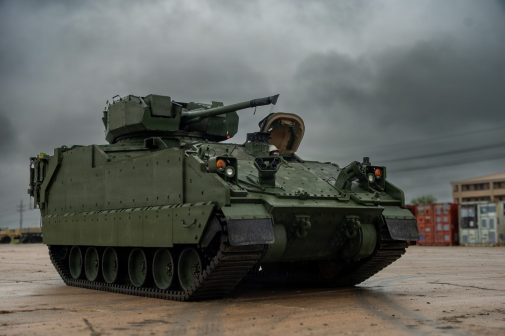
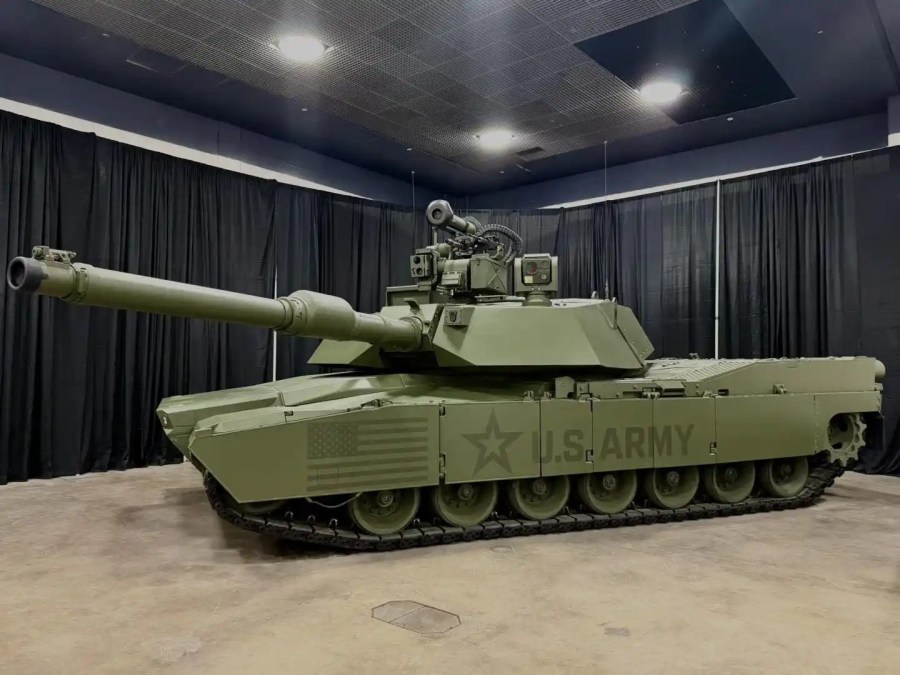
By fall 2026, prototype models of the M1E3 tank and XM30 Mechanized Infantry Combat Vehicle will track to 1st Cavalry Division out of Fort Hood Texas where soldiers will begin training on the new systems.
Two platoons will receive the XM30 and another will get the M1E3, taking them to the National Training Center at Fort Irwin, California, where soldiers will give feedback to developers after “shooting, moving and communicating” the platforms across the Mojave Desert, said Maj. Gen. Thomas Feltey, commander of 1st Cavalry Division.
The recent announcement comes amid a fundamental shift for armored warfare, and the Army, through the design of these two platforms, is trying to anticipate the battlefields heavy units may find themselves in.
“They are really a major shift forward in terms of technology,” Feltey said of the vehicles. “They’re just not incremental improvements.”
The M1E3 Abrams tank — which adopted the name of its decades-old predecessor — is billed as an adaptable platform meant to meet a variety of new environments. It’s fitted with AI-enabled systems, counter-drone capabilities and a new hybrid propulsion system that, combined with a lighter weight, could cut sustainment requirements in half, according to Feltey.
Some things will remain the same, such as the 120mm smooth-bore main gun. But the Army made the turret remotely operated and added an auto-loader, which reduces the crew from four to three personnel and will no doubt invite significant cultural change for tankers used to heaving rounds into the main gun.
DefenseOne reported the Army is rolling the new tank out five years ahead of schedule.
The XM30 is meant to replace the M2 Bradley, which has been carrying infantry soldiers for more than 40 years and leaves behind a string of failed, costly substitutes. The new model sports many of the same promises: AI, cybersecurity measures, autonomy and an open system architecture to add new technology as it becomes available.
The Pentagon’s fiscal 2027 budget request called for 19 XM30 platforms at $547 million. The service recently declined to answer DefenseScoop’s questions about the XM30 request.
In a combined arms fight, these systems are meant to work together. Under its “Transformation in Contact” initiative, the Army is attempting to run new technology through line units to assess its efficacy. 1st Cav and its brigade combat teams are part of that effort.
“We’re organizing together to fight together,” Feltey said. “When you look at the new tank and the XM30, it’s enhanced mobility. Not only is it platform protection, but then it begins to offer formation protection.”
Feltey relayed the prototype employment to reporters last week, which was first covered by Task & Purpose Tuesday.
Modern conflict, ripe with drones that make heavy armor vulnerable to attack, has changed the nature of tank warfare. Ukrainian and Russian troops modified them on the battlefield almost beyond recognition to meet those threats. One assessment said heavy armor had taken on new roles as a sort of stand-off tool in a conflict defined by grinding drone, infantry and artillery fights.
“We know, as we fight through this very contested environment, just being able to shoot things that we can see is not enough,” Feltey said. “We’ve got to be able to detect beyond line of sight.”
The Ukraine war has wrought a more expansive no-man’s land between combatants, he said, one that neither side has been able to effectively “break in.” Tanks would be part of that effort should U.S. military forces find themselves in that breach, according to Feltey, but not the only part. The combined arms units within his division, replete with engineers, infantry, air defense and other unit types, would tackle no-man’s land together.
“I think the core principle of us organizing, equipping to solve a problem — restoring fires and maneuver and layered protection — that applies in every condition and every place that we could possibly fight,” he said after DefenseScoop asked how the division will prevent getting locked in to one type of fight, such as those playing out in Eastern Europe or the desert environment of NTC.
“We’ll go fight anywhere,” Feltey said, citing Europe, the Middle East and Pacific. He said the combined arms configuration is built to the lowest level and company-sized elements can detach to support missions.
“We’re confident that we could fight anywhere,” he added. Both the XM30 and M1E3’s lowered sustainment requirements “makes it easier for us to fight anywhere.”