Cartel drone ops on the U.S.-Mexico border ‘get more creative every day,’ task force warns
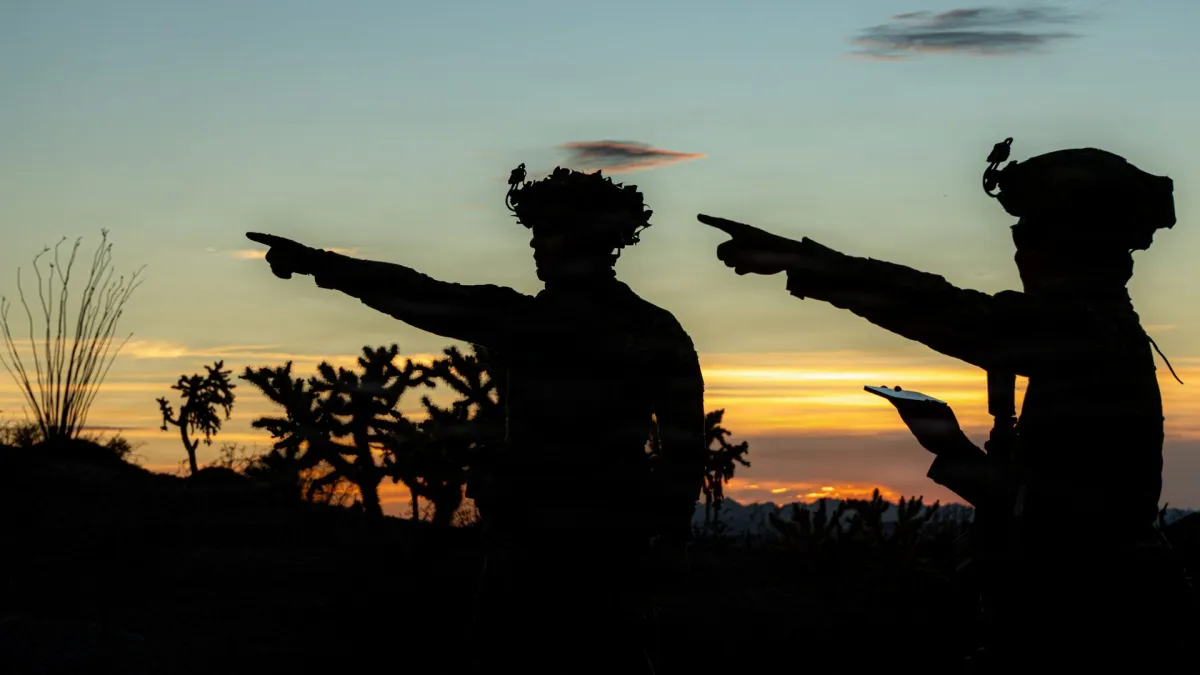
U.S.-MEXICO BORDER — Drone threats from criminal cartels currently present a “very real” danger on America’s southern border, according to U.S. military officials deployed there who said so-called “narco-terrorists” are increasingly adapting their technology-enabled tactics and tradecraft.
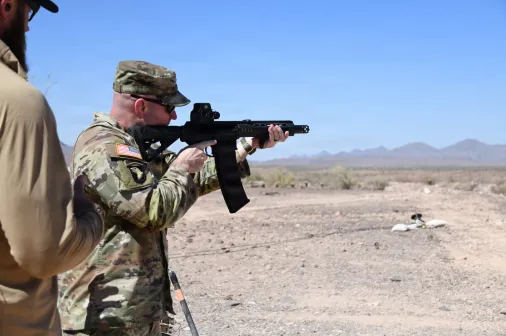
Though they repeatedly declined to provide details about the frequency, payloads, size and proximity of such unmanned aerial system threats (citing operational security concerns), U.S. Joint Task Force-Southern Border personnel discussed their ongoing mission with a small group of reporters who were invited to cover Northern Command’s Falcon Peak 26.2 counter-drone exercise this week.
“These narco-terrorist cartels are evolving in how they use drones, and they’re enhancing how they use drones,” said JTF-SB Deputy Director of Public Affairs Lt. Commander Lauren Cole. “And we are constantly ensuring that we can meet and exceed the threats of how they use them.”
Tightening security on the southern border has been a top Defense Department priority since the start of the second Trump administration.
JTF-SB launched in March 2025. It’s billed as a unified military command structure that supports the Department of Homeland Security and U.S. Customs and Border Protection with non-law enforcement assistance, including activities associated with drone detection and surveillance, intelligence analysis, logistics, and physical barrier reinforcements.
“We allow them to have better situational awareness — and with that better situational awareness, they have faster response times” to unauthorized drones, Cole said.
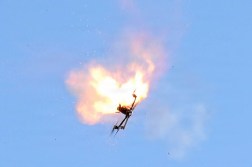
The task force taps into a variety of “layered capabilities,” including mobile and static systems, manned and unmanned reconnaissance platforms, riverine patrols, and kinetic and non-kinetic drone mitigation options. Among assets on display Wednesday were the lightweight, handheld electronic DroneBuster device that detects and disables unauthorized small UAS, as well as the Pitbull drone jammer.
“I wouldn’t say that one is necessarily better than the other. We’ve been given a variety of technology that gives us a wide array of capabilities. I think they’re all worthy of being on the ground with us,” 2nd Lt. Sarah Allston Suttles told DefenseScoop.
When asked about the average number of drone threats JTF-SB observes from that location daily, she said: “I can’t really talk about the specifics of how many, but I can say we do see a variety of threats out here — so, it is imperative that we have these counter-drone technologies.”
In response to questions from reporters, the other task force officials also said they were not permitted to discuss details or trends around drone types, ranges, routes or payloads they’ve seen or engaged with on America’s border with Mexico.
“We are mitigating drone threats. [That’s] the best way to put that,” Cole noted. “We are not going to speak to specific locations or how many though.”
She added: “But the threat is very real — and it is very malintended.”
Cole and other officials with JTF-SB also indicated that cartels have been changing their drone maneuvers and tactics often, to avoid getting caught and countered.
“It might not be better, but it’s different,” she said. “I mean, it’s the same thing as when you were a little kid and you got caught trying to sneak candy from the candy jar, and so you figured out a different way to get to the candy.”
Regarding the overarching threat context, Cole warned that transnational criminal organizations and drug cartels are using surveillance drones to monitor the movements and patterns of U.S. service members and interagency officials.
“That’s particularly scary to me because these are my colleagues — and I serve too, right?” she told DefenseScoop. “They are also looking to find routes [across the border], and then some of them, I’m sure that they are attempting to transport [illicit] packages and such. So, it’s a variety of operations. And you know what, they get more creative every day — but so do we.”