DOD planning to address compute ‘bottleneck’ that could hinder AI proliferation
The Pentagon is preparing to take additional steps to address a major bottleneck that could limit the military’s ability to proliferate artificial intelligence capabilities throughout the force: compute.
Defense Secretary Pete Hegseth, Pentagon CTO Emil Michael and other senior officials are pushing the department to accelerate AI adoption, touting its benefits for warfighting and back-office functions.
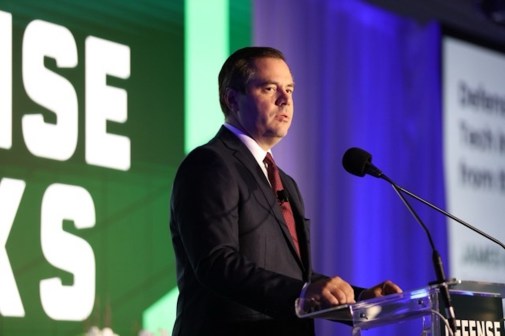
Chief Digital and AI Officer Cameron Stanley noted that the technology has demonstrated its utility during the Iran war.
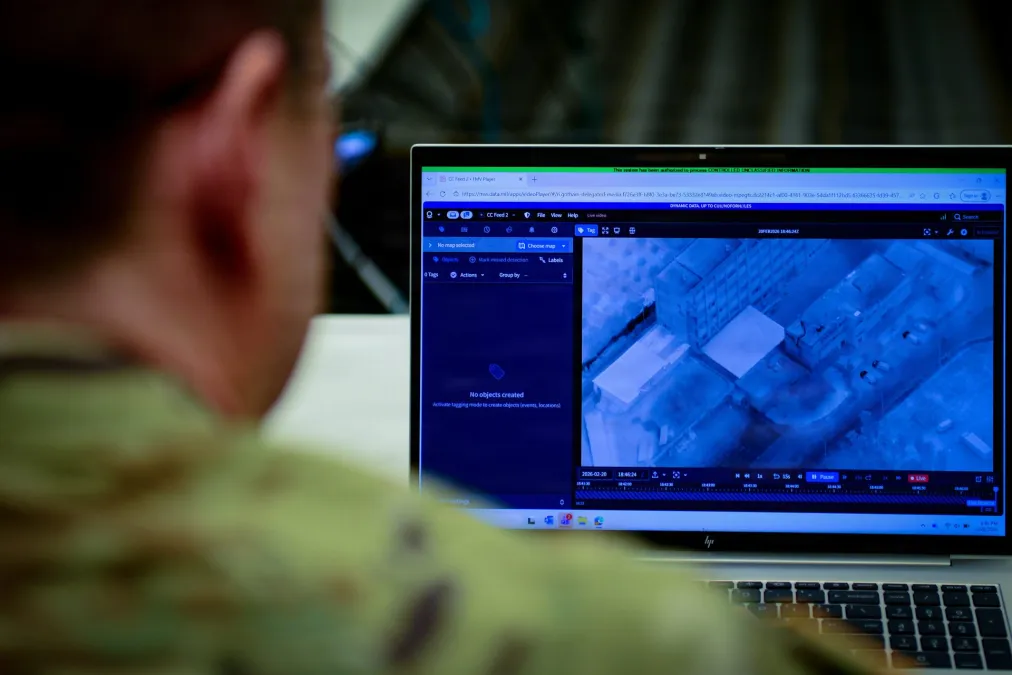
“Operation Epic Fury leveraged Palantir’s Maven Smart System in order to conduct strike missions across the entire battlespace — 13,000 targets in 38 days,” Stanley said Thursday at the AI+ Expo. “But what we saw from CDAO is not just the targets, but the individual contributors and what they were doing in leveraging this absolutely fantastic, exquisite tool. We saw four times increase in all network utilization … and we also saw 894 million tokens per day in agentic workflows that allow us to take all of this data, synthesize the data and make better decisions faster on the battlefield.”
He noted that the Pentagon also recently inked agreements with eight companies — SpaceX, OpenAI, Google, NVIDIA, Reflection, Microsoft, Amazon Web Services, and Oracle — to deploy their AI capabilities on the department’s classified networks.
“These are the cloud service providers and frontier labs and open-source model developers that we are going to leverage as we develop the next generation of AI-enabled capability for the warfighter,” Stanley said. “Not only are we like looking to empower them with the right technology, we’re also making sure that those bureaucratic roadblocks — things like ATOs and ATCs, things like capacity from a compute perspective — are all taken care of … for these higher order models in classified environments.”
Compute is currently a top concern, he noted.
“My biggest fear is really not the adversary at this point. My biggest fear is, can we keep up … [with] the insatiable appetite of American warfighters to accept and leverage technology?” Stanley said. “We are seeing a dramatic increase, not only in the utilization of our systems, but also the amount of compute that’s required for us to actually keep up with warfighters who are decisively engaged. And so the department right now is looking at a variety of different ways that we can increase our capacity in every domain, in every classification level, to make sure that that insatiable appetite is satisfied from the lowest possible operator to the most senior commander.”
He continued: “We’ve handed our warfighters a Ferrari, and my only sleepless nights come from … making sure we never, ever run out of the high-octane fuel that they need, which is compute. We have to get ahead of this, and we will. There will be announcements coming out in due course. But compute is a bottleneck, and we are going to get after it.”