The Army wants a new drone to close ‘reconnaissance and security gaps’ for its battalions
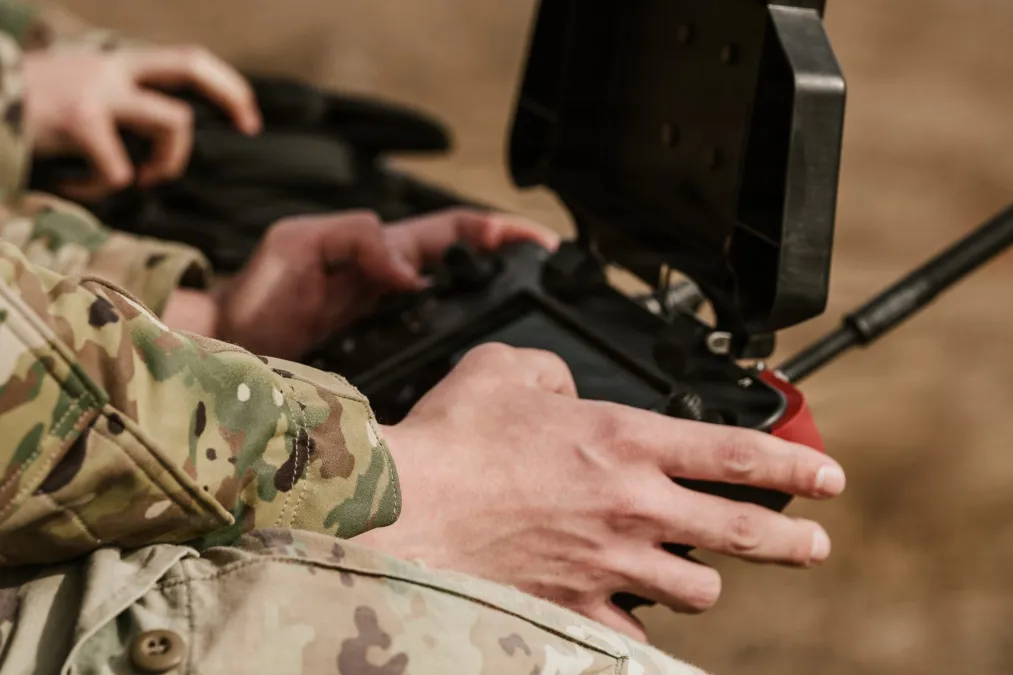
The Army is on the hunt for a readily available, rapidly deployable drone that service officials hope will address “reconnaissance and security gaps” that “severely limit” a battalion’s ability to assess the battlefield, according to a recent call for solutions notice.
Amid an ongoing effort to push longer-range, quick-launch drones to tactical units, the service wants battalion commanders to have an unmanned aerial system organic to their unit that can take-off vertically and fly over 40 kilometers.
Multiple services are trading fixed-wing drones for vertical take-off and landing UAS, an attempt to shed systems that are too reliant on vulnerable infrastructure should large-scale combat break out, require open space to launch, or aren’t as maneuverable and advanced.
While much of the focus has been on small, first-person view or larger, division-level drones, the Army’s request puts a spotlight on the battalion, a self-sustaining unit and cornerstone to tactical operations. Called the “Battalion Reconnaissance UAS,” officials said the need for a production-ready drone that gives those commanders better battlefield awareness was “urgent.”
“The character and pace of modern warfare are being redefined by the rapid proliferation and innovation of UAS,” officials wrote in the Thursday notice. “Our near-peer competitors are deploying these capabilities with a speed and scale that directly threatens our technological advantage at the tactical edge.”
For decades, tactical units used fixed-wing drones such as the RQ-11 Raven for surveillance, which have limited maneuverability in congested spaces and were mostly designed for the singular purpose of reconnaissance.
The drone the Army is requesting now should not only be capable of autonomous surveillance, but function as a communications relay in “dynamic radio spectrum environments,” according to the notice. It also needs to be all-weather, less than 55 pounds, include an electro-optical/ infrared camera and fly for more than five hours.
The Army also wants the system to be AI-enabled “for target detection and recognition” and be able to integrate lethal munitions, officials wrote. It will come with two “modular” VTOL air vehicles and two ground control stations.
Since the beginning of Russia’s full-scale invasion into Ukraine more than four years ago, U.S. military officials often cite the conflict as a test bed for drones, specifically how contested airspace and jamming have galvanized the drone race and informed American UAS designs.
Alluding to Ukraine and announcing its shift to “cutting-edge” reconnaissance UAS, the Army said in 2024 the Raven — and its cousin, the RQ-7 Shadow — were “not capable or survivable on today’s battlefield.”
Industry responses to the Battalion Reconnaissance UAS notice are due May 5.