Army’s 82nd Airborne Division supplying AI, C2 network support for Project Freedom
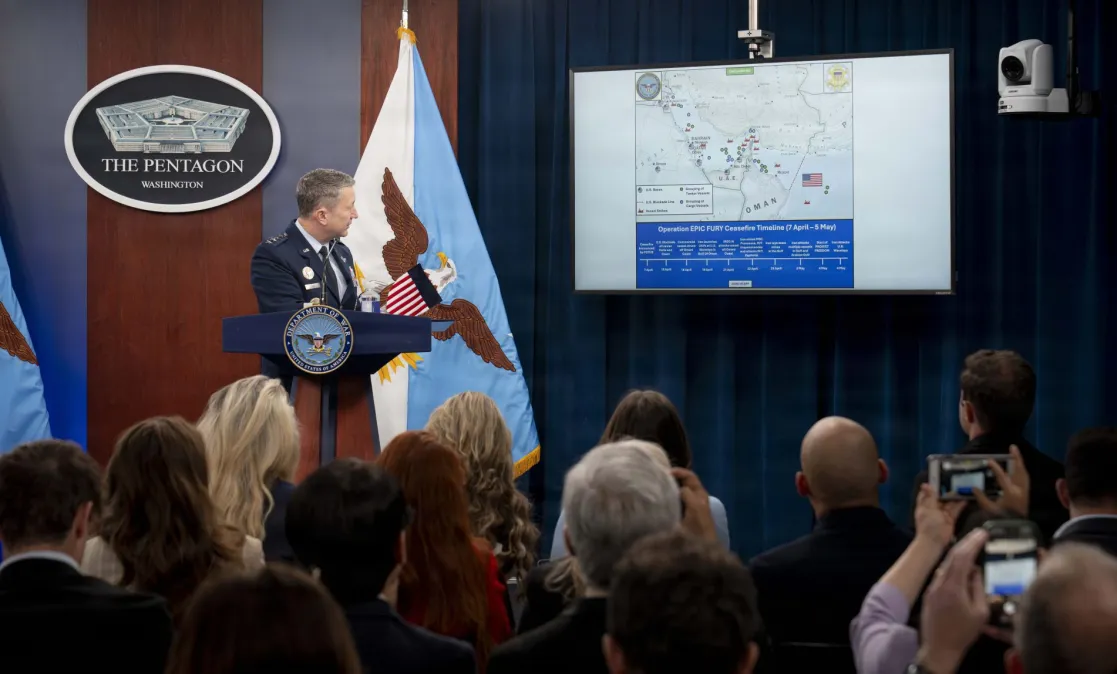
The U.S. military is fusing sensors, surveillance platforms and manned and unmanned air and watercraft into a networked, AI-enabled command and control architecture as part of a large-scale campaign to retain nonstop overwatch and localized control over the Strait of Hormuz early into Project Freedom, according to Chairman of the Joint Chiefs of Staff Gen. Dan Caine.
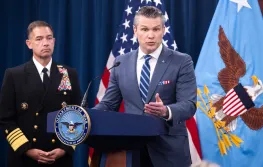
During a Pentagon press conference Tuesday, the top U.S. military officer and Defense Secretary Pete Hegseth discussed ongoing operations to restore global shipping in and around that complex maritime chokepoint and counter associated threats from Iran.
“Commercial vessels that transit through the area will see, hear — and frankly, feel — U.S. combat power around them on the sea, in the skies and on the radio,” Caine told reporters.
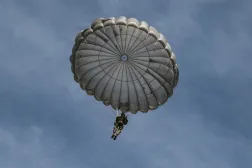
Notably, the chairman indicated that the Army’s 82nd Airborne Division, which is known for its elite parachute assaults, is currently operating as a C2 hub that’s choreographing the joint force’s drones, fighters, ships, and sensors in real time.
“This division is now more than just a formation that we use for forcible entries,” Caine said. “For example, just today, they are out there coordinating, integrating and synchronizing land, air, space, sea and cyber forces using joint all-domain command and control. They use next-generation tactical networks that are AI-enabled to augment intelligence and operations, and they seamlessly synchronize all of these effects — and are doing so in support of Project Freedom.”
Most transits across the Strait of Hormuz have been held up by disruptions since March, after President Donald Trump initiated Operation Epic Fury to wipe out Iran’s leadership, nuclear infrastructure and weapons arsenals.
Iran responded by almost completely shutting down any movements in the strait, and oil prices have subsequently soared worldwide.
After waves of deadly military clashes in the Middle East, the U.S. and Iran agreed to a temporary pause in major combat last month to allow for negotiations to end the war. On Tuesday, Hegseth told reporters that the ceasefire is still intact, but urged Iran to keep its operations “below the threshold” that would restart the conflict.
He noted that Project Freedom is solely “about the strait,” and is considered separate and distinct from both Epic Fury and the blockade U.S. forces are now enforcing in the Gulf of Oman to prevent commerce from moving in and out of Iranian ports.
The secretary said U.S. Central Command and its partner nations are in active communication “with hundreds of ships, shipping companies and insurers” about reopening the strait, as of early Tuesday.
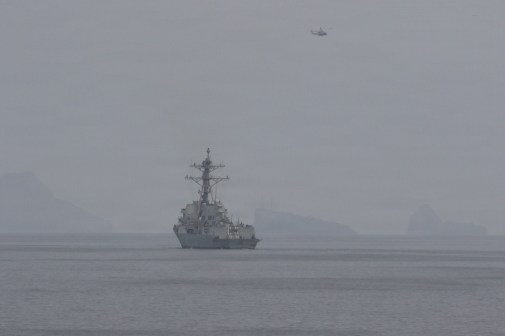
“All of these ships from all around the world want to get out of the Iranian trap that they have been stuck inside. As a direct gift from the United States to the world, we have established a powerful red, white and blue ‘dome’ over the strait. American destroyers are on station, supported by hundreds of fighter jets, helicopters, drones and surveillance aircraft, providing 24/7 overwatch for peaceful commercial vessels — except Iran’s, of course, which is why our ironclad blockade remains in full effect as well,” Hegseth said.
In his remarks, Caine told reporters that “there are currently 22,500 mariners embarked on more than 1,550 commercial vessels trapped in the Arabian Gulf, unable to transit” due to attacks and other threats from Iran.
“Centcom has established an enhanced security area on the southern side of the strait that is now protected by U.S. land, naval and air assets to help defeat further Iranian aggression against commercial shipping,” the chairman said.
More than 100 fighter jets, attack aircraft and other manned and unmanned assets are being “synchronized by the 82nd Airborne Division,” Caine noted, to defend that enhanced security area from one-way attack drones, weaponized small boats, and other threats.
The division has been aggressively integrating AI and modernized C2 systems into its workflows in recent months. Though he declined to share many details, citing operational security, Caine suggested that the 82nd Airborne is supporting Project Freedom as much from the network as it is on the ground.
“As we speak, the relentless focus on technical innovation allows the commanders out there in the field to see, sense and understand the opportunities that are in front of them, along with the associated risks, and make smart decisions out on the objective with incredible courage, tenacity and grit,” Caine told reporters. “They are going all the way, every day, and whenever the nation calls on them, they are there to answer the call.”