AUKUS allies launch new undersea drone project
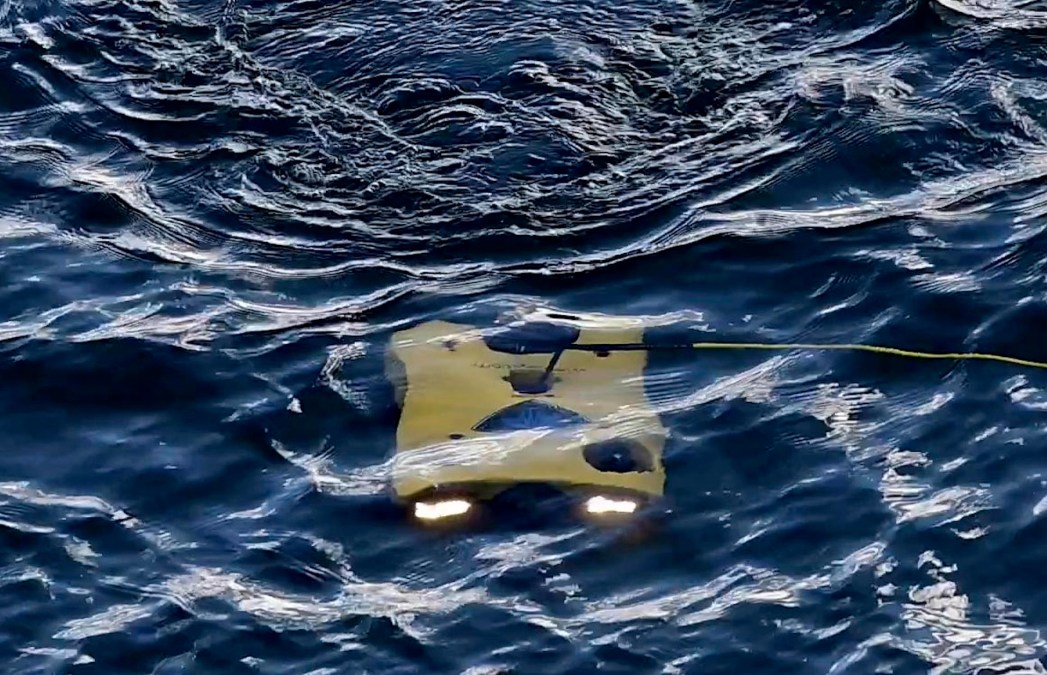
The United States, United Kingdom and Australia have launched a new trilateral “signature project” focused on developing new capabilities for unmanned underwater vehicles.
The military pact unveiled the undersea drone effort in a joint statement issued on Saturday. The partner nations will be developing “cutting-edge payloads and enabling systems” to enhance their UUV arsenals, with deliveries expected to begin next year, according to the statement.
The announcement came after a meeting between U.S. Defense Secretary Pete Hegseth, U.K. Secretary of State for Defense John Healey MP and Australian Deputy Prime Minister and Minister for Defense Richard Marles at the American embassy in Singapore. The three leaders were in Singapore to attend the annual Shangri-La Dialogue.
“This project is intended to significantly enhance AUKUS partners’ ability to protect critical national seabed infrastructure; deploy cutting edge surveillance, reconnaissance, and strike capabilities; conduct logistics operations; and bolster superiority in anti-submarine and anti-surface warfare, mine countermeasures, electronic warfare, and contested littoral maneuver,” per the statement.
The jointly developed payloads are expected to be interchangeable, according to a fact sheet about the initiative. The technologies produced could include things like sensors, navigation tools, offensive strike capabilities, and other assets that enable information-sharing and teaming with other uncrewed and crewed platforms, such as common control systems.
The partner nations also expect to have shared standards and operational concepts, the fact sheet noted.
“Uncrewed and undersea warfare capabilities are a force multiplier for crewed platforms and enhance the agility, asymmetry and survivability of our warfighters,” officials wrote.
U.S. Chief of Naval Operations Adm. Daryl Caudle and other Pentagon leaders are keen on using unmanned platforms to enhance the capacity of the Navy’s fleet and keep sailors out of harm’s way. Caudle unveiled his “hedge strategy” earlier this year, which includes fielding a network of robotic and autonomous systems and associated enablers.
The new AUKUS underwater drone project falls under Pillar 2 of the trilateral pact. While Pillar 1 is centered on nuclear-powered submarines, the second pillar focuses on accelerating the delivery of other advanced and emerging capabilities, including AI, undersea assets, cyber, quantum tech, hypersonics, counter-hypersonics, electronic warfare and information-sharing tools.
Members of the alliance are concerned about China’s military buildup and aggressive behaviors in the Indo-Pacific region, and are taking steps to bolster deterrence and their respective warfighting capabilities.
The joint statement issued Saturday noted that the three defense leaders support deepening industrial base collaboration and “expanding the breadth of the AUKUS license-free environment” between the member nations “by taking expeditious and practical steps to narrow the list of excluded technologies.”