Redacted watchdog report spotlights Navy staffing strains impacting undersea surveillance
The Pentagon’s Office of Inspector General urged the U.S. Navy to establish a more permanent workforce with specialized skillsets to meet serious current and emerging demands associated with a vital underwater network that combines seabed technologies with data-processing assets to monitor and classify submarines.
According to a heavily redacted IG report, which was distributed internally in January and recently obtained by DefenseScoop through the Freedom of Information Act (FOIA) process, a fragile talent pipeline and unstable staffing for the Integrated Undersea Surveillance System (IUSS) has proven to be a perpetual challenge for the service.
“The IUSS does not have a sustainable workforce with sufficient expertise to effectively accomplish existing and future mission requirements,” officials wrote in the watchdog review. “The decline in IUSS enlisted acoustic analysts’ skills is attributed to the Navy not prioritizing repeat IUSS tours.”
Broadly, the Navy’s IUSS mission is designed to enable global maritime acoustic surveillance and timely anti-submarine warfare reporting to the military’s theater undersea warfare commanders.
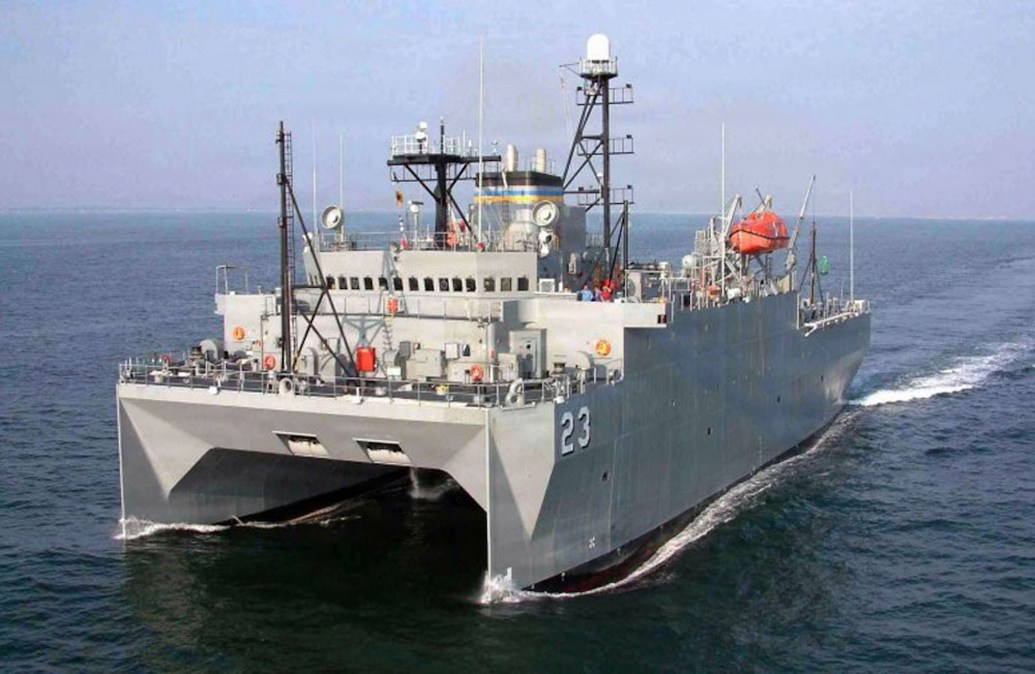
The system provides the sea service with a major edge in spotting and tracing submarines that could threaten U.S. or allied assets. It connects persistent long-range, fixed, and mobile systems that transfer data and information from submarines, surface ships, maritime patrol aircraft and other sources.
The IG report notes that roots of the IUSS trace back to the early 1950s when the Office of Naval Research funded the development of an undersea surveillance system designed to detect and track Soviet submarines.
As part of those efforts, the Navy set up a network of hydrophones on the ocean floor. Those fixed-sensor system arrays were connected by underwater cables to on-shore processing centers that were eventually designated as Naval Oceanographic Processing Facilities (NOPFs).
The Navy commissioned the first operational Sound Surveillance System command in 1954. Three decades later in 1985, after the introduction of towed sensor arrays, IUSS was formed in its full capacity. The system facilitates set and moveable sensing capabilities.
Officials note in the 29-page IG report that the IUSS reached its Cold War peak in the late 1980s — with 11 NOPFs, 14 Surveillance Towed Array Sensor System-equipped ships and two Ocean Systems Commands that were manned by approximately 4,000 personnel.
By 2010, the IUSS was reduced to two NOPFs, five SURTASS-equipped ships, and one Ocean Systems Command (dubbed the Commander Undersea Surveillance, or CUS), staffed by a team of roughly 1,000 officials.
They suggest that this decrease was largely sparked by shifts in America’s post-Cold War tactics.
“As a result of the end of the Cold War, Navy national maritime policies de-emphasized efforts in some naval warfare areas. This strategic direction, derived from the Presidential National Security Strategy, represented a fundamental shift away from open-ocean warfighting which led to a reduction of IUSS funding,” Defense Department OIG officials explained. “However, over the past decade, Combatant Commanders have increased their [Anti-Submarine Warfare, or] ASW reporting requirements for IUSS coverage because of the resurgence of adversary threat submarines.”
A portion of the report outlines the history of enlisted ratings related to IUSS work, which are essentially occupational specialties that reflect each sailor’s technical training and career fields. A clear element of the ongoing issue stems from dedicated IUSS ratings being disestablished or merged into other communities in recent years.
This IG evaluation follows a prior review the office conducted in March 2022 to determine whether IUSS capabilities were meeting anti-submarine warfare requirements. The organization revisited this topic after two recommendations were not resolved by the Navy, as previously directed.
In its follow-up investigation, the IG discovered that the Navy continued to lack a sustainable IUSS workforce and had not prioritized the development of master-level analysts with proper expertise to perform the mission.
“Although Navy leadership is aware of the challenges with the CUS maintaining qualified IUSS acoustic analysts, creating an IUSS-specific rating remains an enduring challenge,” IG officials wrote.
Representatives from the Navy’s “type command” responsible for equipping all submarine forces in the Pacific region — Commander, Submarine Force, U.S. Pacific Fleet, or COMSUBPAC — stated that submarine manning, surface command manning, and combatant commander emerging priorities had historically taken precedence over IUSS manpower gaps.
“However, COMSUBPAC representatives told us that Navy leadership is currently more receptive to addressing IUSS manpower issues than in previous years,” IG officials wrote.
In response to their three new recommendations, the type command agreed to generate courses of action that could improve IUSS acoustic analyst expertise and proficiency, and submit those plans to the Undersea Warfare Commander’s Executive Board Chair for approval.
The chair was instructed to then refer the options to the Deputy Chief of Naval Operations for Manpower, Personnel, and Training for implementation.
At the time of this IG report’s dissemination inside the department, in January 2026, investigators listed their three recommendations for the Navy as “resolved but open” until they received proof that actions were taken to address the concerns.
“The Navy has not sufficiently addressed CUS manpower issues,” the watchdog officials wrote. The subsequent paragraph detailing the concern was redacted.
Spokespersons from the Navy and the DOD’s Office of Inspector General did not provide answers to questions from DefenseScoop on Monday regarding the service’s recent moves to resolve the recommendations, and whether any or all remain open.
The Navy’s program acquisition executive for strategic systems recently launched the Next Generation Undersea Security Initiative to push the adoption of unmanned systems, autonomy and other high-tech weapons to enhance and protect the sea service’s maritime assets.