Army to host nuclear microreactors at Forts Bragg, Campbell, Hood, Benning and Drum
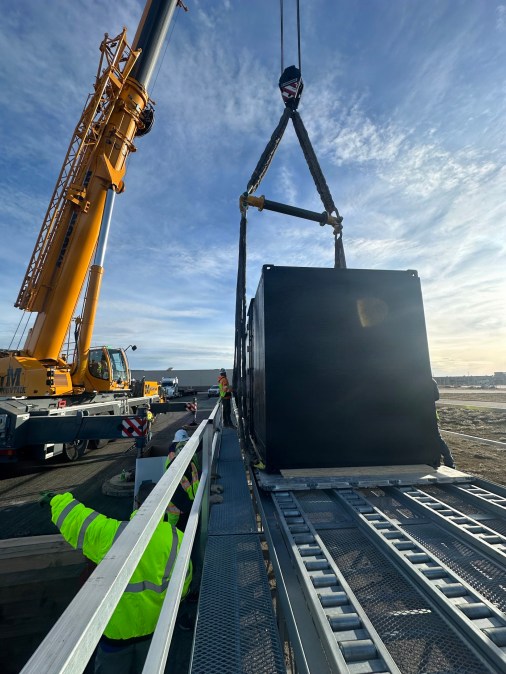
The Army on Wednesday announced the initial five installations that have been selected to host nuclear microreactors as part of the Janus program and named the companies that will build and operate them.
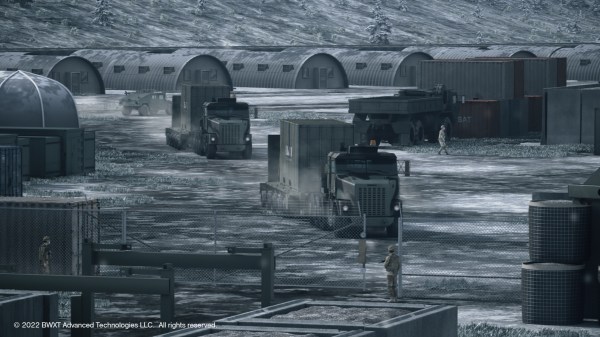
The chosen vendors and the respective bases where their reactors will be deployed include Antares Nuclear at Fort Bragg, North Carolina; BWXT Advanced Technologies at Fort Campbell, Kentucky; General Atomics Electromagnetic Systems at Fort Hood, Texas; Radiant Industries at Fort Benning, Georgia; and Westinghouse Government Services at Fort Drum, New York.
The sites were picked from a list of nine finalists that the Army announced in November 2025 as part of its selection process.
The installations that were short-listed but weren’t chosen include Fort Wainwright, Alaska; Holston Army Ammunition Plant, Tennessee; Joint Base Lewis-McChord, Washington; and Redstone Arsenal, Alabama.
After a competitive source selection and down-select process that was conducted in partnership with the Defense Innovation Unit, the Army negotiated other transaction agreements with the five vendors to construct and operate the reactors on the chosen installations for energy generation. The service plans to invest a total of about $2.2 billion for the effort across the fiscal 2027-2031 timeframe. Payments to vendors will be “milestone-based,” according to the Army.
Each company selected is expected to design, build and operate its own reactor as part of the program.
“Awarding these contracts accelerates our ability to deliver safe, reliable baseload power directly to our installations. We are building the energy resilience necessary to project combat power globally, without relying on potentially vulnerable external grids,” Army Secretary Dan Driscoll said in a statement.
An Army press release noted that the effort is also intended to support “the revitalization of American industrial capacity and technological leadership.”
The service is expecting the deals to spur billions of additional dollars in capital investment in nuclear technologies. A goal of the program is to boost the commercial nuclear power industry and position vendors to sell their products to other customers, according to Jeff Waksman, principal deputy assistant secretary of the Army for installations, energy and environment.
The Janus effort has been driven by nuclear energy-related executive orders issued by President Donald Trump, according to the Army, which launched the program last year. The service was designated as the executive agent for the Pentagon’s installation and operational nuclear energy efforts and was tasked with setting up a program of record, Waskman explained.
“Delivery of all those reactors [under the agreements announced Wednesday] will be for over the next five years. The size of the reactors is different depending on the company. So the reactors are anywhere from around 1 megawatt to 20 megawatt, depending on the company,” he told reporters during a media roundtable Wednesday.
To meet a deadline laid out by Trump, the Army expects to have at least one of the reactors up and running by Sept. 30, 2028.
The initiative is expected to eventually expand to other bases, including those belonging to other military services. The Army anticipates that more than 20 nuclear microreactors will be built and operated at Defense Department installations, according to a service press release.
Waksman noted that not all vendors will receive the same amount of money or build the same number of reactors at designated sites under the new agreements.
“We have five companies because we want to keep maximal competition. We know that this is going to be very difficult, and that there’s a very real chance that one or more of these companies will fail. And we want to ensure that at all times we have competition, we have more than one vendor, and that we don’t have vendor lock,” he told reporters.
A variety of factors were considered in the site selection process.
“We had a thorough analysis of all Army installations to figure out which would be the best ones for nuclear reactors in general. And that comes down to everything from seismic risk to other natural disaster risk to what are the energy costs at that installation, what are the energy resiliency challenges at that installation, etc. And that is how we got that initial candidate list of nine sites that we announced last fall,” Waksman said.
“However, once we selected the five companies and we had to choose the opening site for those five companies, it then became a matching process between companies and sites. … So, for instance, a company might have a good relationship with a utility, or a utility may not want to work with a certain company,” he added. “We also have to worry about the specific power needs of that installation. So, for instance, a 1-megawatt reactor versus a 20-megawatt reactor — you have to figure out which sites are going to have need for that power and can use that power for operational purposes. And then also … for instance, some of these companies can largely just put a reactor on the surface, some need to dig down a little bit underground. And of the nine sites, some are conducive to digging, and some are not, based on either seismic issues, soil issues, bedrock depth, and things like that.”
The five bases chosen will still be tied into the commercial power grid, according to Waksman.
“These reactors are not going to provide 100% of the power on any of these installations,” he told reporters. “And the intent is that if the grid fails, then this [nuclear energy] will provide resilient power to critical infrastructure on those installations.”
The Army will be providing “technical support” for the microreactor initiative, but the systems will be contractor-owned and contractor-operated, Waskman said. Soldiers and Army civilians aren’t expected to be involved in those types of operations.
“These are going to be commercially owned and operated. So, all the people pressing buttons, all the people doing maintenance, will all be commercial vendors, part of the contractor team. There will not be Army green suiters operating these reactors. The Army will be providing technical support along the development pathway, and the Army will be performing the oversight. So the Army reactor regulatory office is currently overseen by an Army lieutenant colonel. So the Army team is going to be very much involved in the program, but they will not operate these reactors. We want this to be a commercial operation,” Waksman told DefenseScoop during the media roundtable.
Many questions about safety were raised by reporters during the roundtable.
Waksman noted that none of the reactors will be using highly enriched uranium or “weapons-grade” uranium.
“It means that we don’t have to treat these things the way … a nuclear weapon or a naval reactor needs to be treated. However, you know, one of the benefits of being on an Army installation is that we will be leveraging the Army security that already exists on these Army installations. So obviously, physical security is part of our requirements. We have … additional security requirements for important infrastructure on Army installations that go beyond what you will often see in the private sector. So that is incorporated here,” he said.
He told reporters that nuclear waste will be removed from the bases.
“There is going to be no long-term nuclear waste on these installations. The plan is that within two years of any reactor shutting down, all that nuclear waste has to be removed off the site. That’s one of the program requirements,” he said.
“The Army has the responsibility for the entire Pentagon to negotiate that nuclear waste deal with the Department of Energy. So we are working on that. We don’t have that fully signed and agreed to yet, but the intent is to have a deal with the Department of Energy where the waste will go to a DOE site of some sort, and there’d be money transacted, and then DOE would take title to that waste. So we are not going to stand up an Army-licensed nuclear waste facility. That would not be beneficial or practical,” he added.
Brandon Cockrell, deputy assistant secretary of the Army for energy and sustainability, told reporters during the roundtable that Army representatives have been meeting with community members and elected officials to discuss plans for the program and safety matters.
The microreactors will have built-in safety features, Waksman noted.
“It’s important to remember that the commercial nuclear reactors that exist in the United States are all quite old designs,” he said. “But these reactors, this next generation of reactors … are what’s called inherently safe. That means that the physics of the core itself will shut these reactors down safely. They do not rely on any outside external power or anything else to allow them to shut down safely. If there is some sort of problem, the reactors will trip and they will turn themselves off, and the natural air circulation that is flowing over them will be sufficient to keep them from having any sort of dangerous failure.”
The presence of the reactors shouldn’t cause “significant change” to how Army personnel are living and working on the bases, Waksman said, asserting that soldiers won’t be expected to provide support in case of an emergency.
The Janus program is moving forward amid concerns about drone threats to U.S. military installations, including in the homeland. DefenseScoop asked Army officials if the planned microreactor sites will be hardened against potential drone attacks.
“One of the benefits … that nuclear reactors have is that they’re already very well shielded naturally. Just the materials that you would tend to use, particularly for gamma shielding, are often very similar to the sort of materials that get used in, for instance, tank armor. So, these are already very hardened devices,” Waksman said.
He noted that knowledge gained from a previous DOD nuclear reactor-related effort called Project Pele is informing the Janus initiative.
“We obviously can’t talk in any detail about it because a lot of it is classified, but [the Pele team] did a lot of work on understanding what the physical risks are to reactors and how to minimize and mitigate that,” Waksman said. “All that knowledge is being transferred to the Janus program.”