Navy expands contract ceiling for AI-enabled repair robots
Six months after tapping Gecko Robotics’ suite of wall-climbing robots, drones, and sensors that capture data and apply AI to fix and enhance the Navy’s aging and emerging maritime fleets, the U.S. government is quadrupling the value of its original contract ceiling.
This move signals a shift from the sea service’s legacy acquisition approaches and a growing emphasis on innovation and readiness as a national security priority, the firm’s Co-founder and President Troy Demmer told DefenseScoop ahead of the announcement on Tuesday.
“Historically, the U.S. Navy is not necessarily known for moving quickly. They’ll be the first to say that. The Navy is showing a greater willingness to judge technology by the operational results it delivers and move quickly when those results justify expansion,” he said in an email Monday. “That’s exactly what you are seeing here — a new model based on [return on investment, or] ROI and impact.”
The original five-year agreement, unveiled in March by the Navy and General Services Administration, came with a $71 million ceiling and an initial scope that covered 18 Pacific Fleet ships. According to Demmer, this expansion to a total value of $300 million will enable the technology to scale to the Atlantic Surface Fleet, next.
“We want to boost readiness across the U.S. Navy as a whole,” he said.
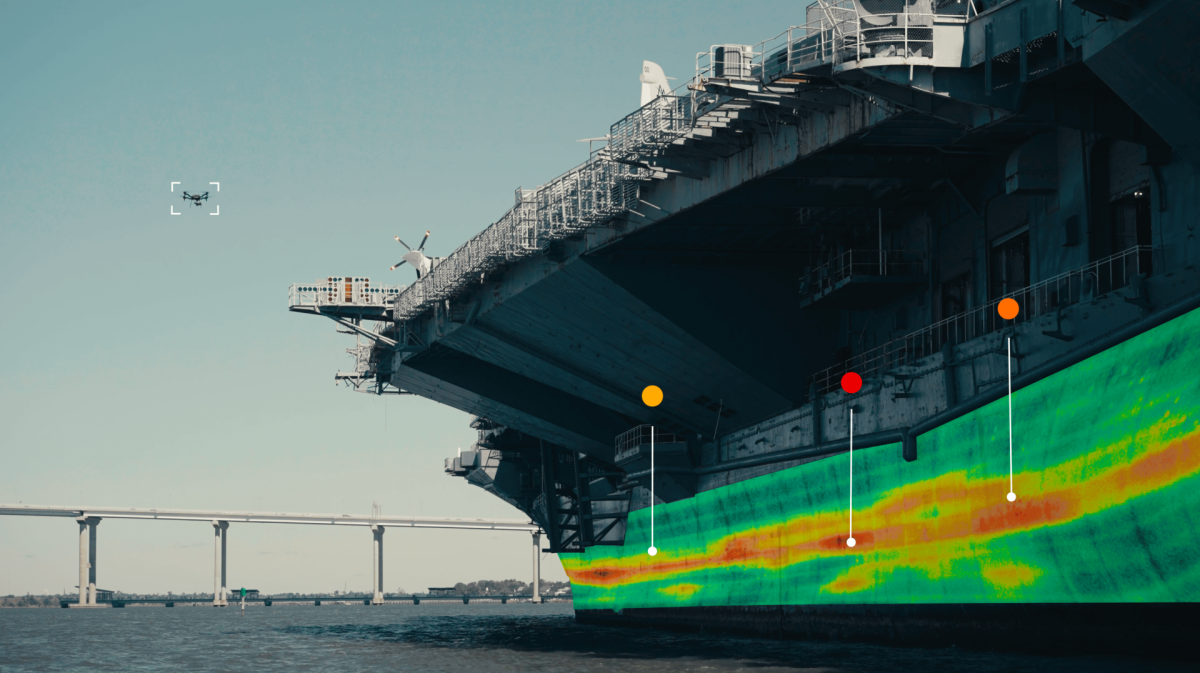
Among Gecko’s flagship products is Komodo, which Demmer referred to as a ground-driving robot that can assess the condition of steel beneath a ship’s deck coating. Previously, that layer would have to be stripped off in what he said was a costly and time-consuming manner, before any evaluation.
“But picture now a robotic crawler moving across the deck, on top of that coating, seeing through and measuring the metal underneath the surface sailors walk on and aircraft land on,” Demmer said.
The system uses electromagnetic acoustic transducer technology to measure steel thickness, which helps reveal corrosion and other structural degradation to be dealt with that would otherwise be difficult to assess.
“The value is knowing what needs repair before a maintenance period begins as our technology is deployed while the ship is still in the water,” Demmer noted. “Navy engineers can use that evidence to focus work on the areas that need it, avoid unnecessary replacement and reduce the surprises that extend maintenance schedules.”
The robots collect measurements of ships’ conditions, comprising millions of data points, which Gecko’s software helps turn into evidence that Navy engineers can use to scope repairs and prioritize maintenance operations.
“Any AI applied to that process has to be evaluated against the task, the reliability required and the Navy’s security requirements,” Demmer told DefenseScoop. “Our technology is built to do just that leveraging the advancements in robotics and AI to generate an ROI that previously couldn’t be achieved.”
Beyond maintenance, the firm is also contributing to major U.S. shipbuilding initiatives — including with Anduril and BPMI.
“When you can establish which steel actually needs replacing, you can remove unnecessary work from the maintenance plan and direct skilled workers toward the repairs that matter,” Demmer said. “That is how AI and robotics translate into military capability: fewer avoidable delays and more ships ready when the country needs them.”