Army playing ‘ACEs’ to meet commanders’ capability needs
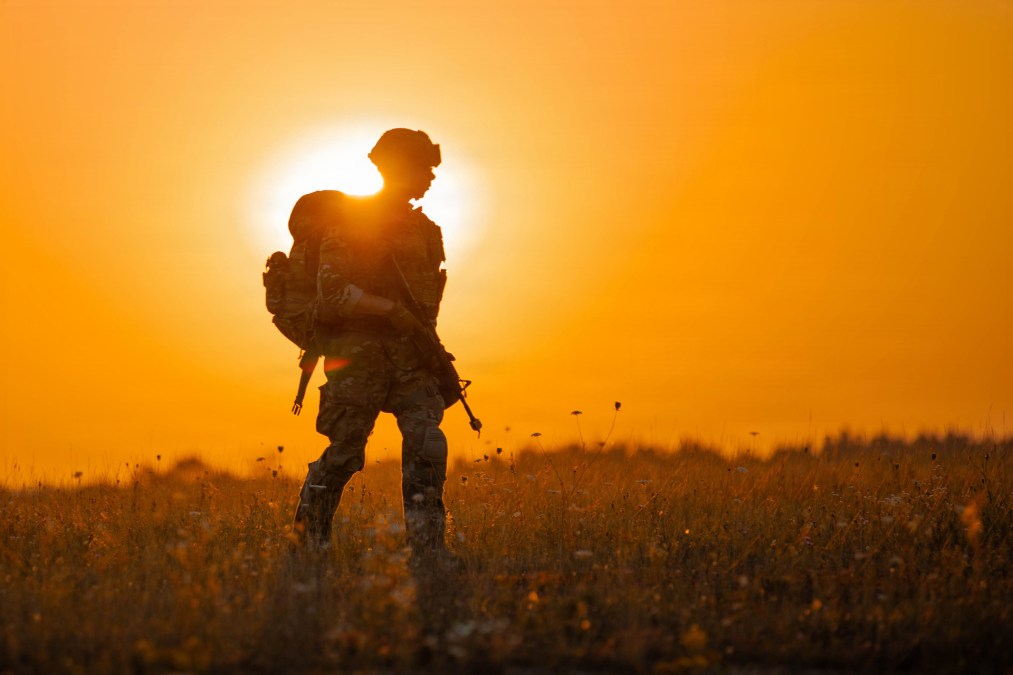
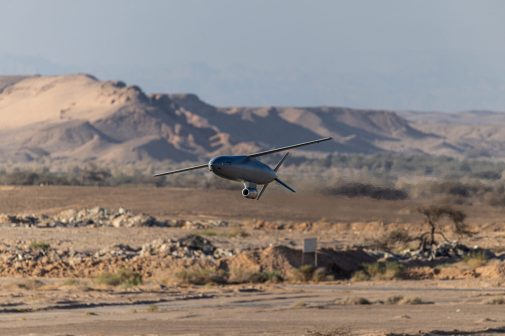
The Army is getting ready to expand its Accelerated Capability Event (ACE) initiative that’s intended to deliver new operational technologies to commanders on shortened timelines, according to the director of the Global-Tactical Edge Acquisition Directorate.
The G-TEAD, as the organization is known, oversees the process.
“We call them ACEs, which allow us to identify, test, and provide contracting mechanisms to prototype solutions at operational speed. What this means in practice is a total shift from traditional years-long acquisition timelines to a responsive operational capability delivered in months and sometimes weeks, depending on the capability. By pairing embedded expertise directly with the commanders, G-TEAD bridges the gap between the speed of dual-use innovation and the tactical needs of our warfighters,” Col. Christopher Hill Sr., director of G-TEAD, told reporters Wednesday during a media roundtable on the sidelines of AUSA’s annual convention.
“Through our ACEs, we’re not just modernizing on paper; we’re putting field-tested, combat-ready capabilities into hands of soldiers at the dynamic edges of multi-domain operations worldwide, while at the same time working alongside the [portfolio acquisition executives] and the newly formed [Futures and Autonomous Systems Command] to scale and transition these capabilities into the portfolios of program managers,” he added.
The G-TEAD has embedded teams within Army service component commands that provide forces for geographic combatant commands. Those teams operate in theater, working directly with the commanding generals to translate operational priorities into “actionable technology requirements” that drive the Accelerated Capability Events.
The ACE process starts with a “problem set” from the commanding general that lays out their priorities. After verifying that portfolio acquisition executives and other elements of the acquisition enterprise don’t already have a capability that would fit the bill, the G-TEAD reaches out to vendors.
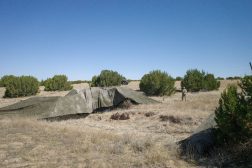
“We go out to industry and say, ‘OK, this is the problem set that still remains,’” Hill explained. “We normally get somewhere between 150 to 250 responses. We will downselect those to 15. Fifteen vendors are then invited to come out to a soldier-led demonstration. … At the end of the demonstration, five of those 15 will be awarded contracts. Those same five will be given the feedback from the soldiers from that demonstration. They also will be given the technical feedback from [Army Test and Evaluation Command]. They will then be told 45 days from now there’s going to be an operational assessment [and] where we’re going to do that. … Why 45 days? Because like on the battlefield, things change, and these companies need to prove to us that they can change based upon feedback. So, the feedback that they received at the demo, you got 45 days to incorporate it. So, when you show up at the operational assessment, if your system looks the same, you’ve proven to us that you’re not an agile company.”
The systems that are assessed typically include a combination of hardware and software, Hill told DefenseScoop.
Once the operational assessment is completed, the G-TEAD will present the interested commander with the data.
“It is his decision [about which vendor capabilities to select], not the acquisition enterprise. Our mantra is: warfighting command gets 51% of the vote. He will make the final decision. … That’s when I come in with dollars and put it towards those companies. So, that’s the first time we actually buy kit,” Hill told reporters.
The G-TEAD also works on the “transition piece” of the puzzle, Hill noted, working with the office of the Army’s acquisition, technology and logistics chief and Army Transformation and Training Command to make a final decision about whether the tech should also be transitioned to a portfolio acquisition executive. “If the answer is yes, that’s when the scaling comes in,” Hill said.
The G-TEAD aims to hold ACEs quarterly.
The organization holds enterprise synchronization forums with Army service component commands to facilitate planning.
“What that allows us to do is we look six months out and we say, ‘OK, six months from now what are the ACEs that are happening across the world?” Hill told reporters. “We have the senior leaders that will come in … to talk about why is this [capability] important? Why do I need this as a commander?”
The G-TEAD also reaches out to vendors.
“We bring industry in to say, ‘alright, six months from now, this is what we’re going to be doing in these theaters. Oh, by the way, we’ve done a few of these, so let us tell you what you need to do to win. These are the things that we’re looking for. If you don’t do these things, your chance of winning are less. So let us help you help us.’ The ACEs that are going to happen six months from now, the RFIs for these events — they’re going to drop . … Prepare yourself. You got time to get out and talk to other companies, because you may need the team with another company. Maybe you don’t provide the entire capability” that’s needed, Hill said.
The G-TEAD plans to do additional Accelerated Capability Events for organizations like U.S. Army Europe and Africa (USAREUR-AF), U.S. Army Pacific (USARPAC) and Southern European Task Force, Africa (SETAF-AF). The directorate is currently “at the forming stage” with U.S. Army Central (ARCENT) “to determine what that cadence is going to be,” Hill said.
An ACE with USAREUR-AF is slated for November, and another is scheduled for February with SETAF-AF, according to Hill.