As Army I Corps gets parts of NGC2 ecosystem, ‘tyranny of distance and disruption’ in the Pacific are top of mind for commander
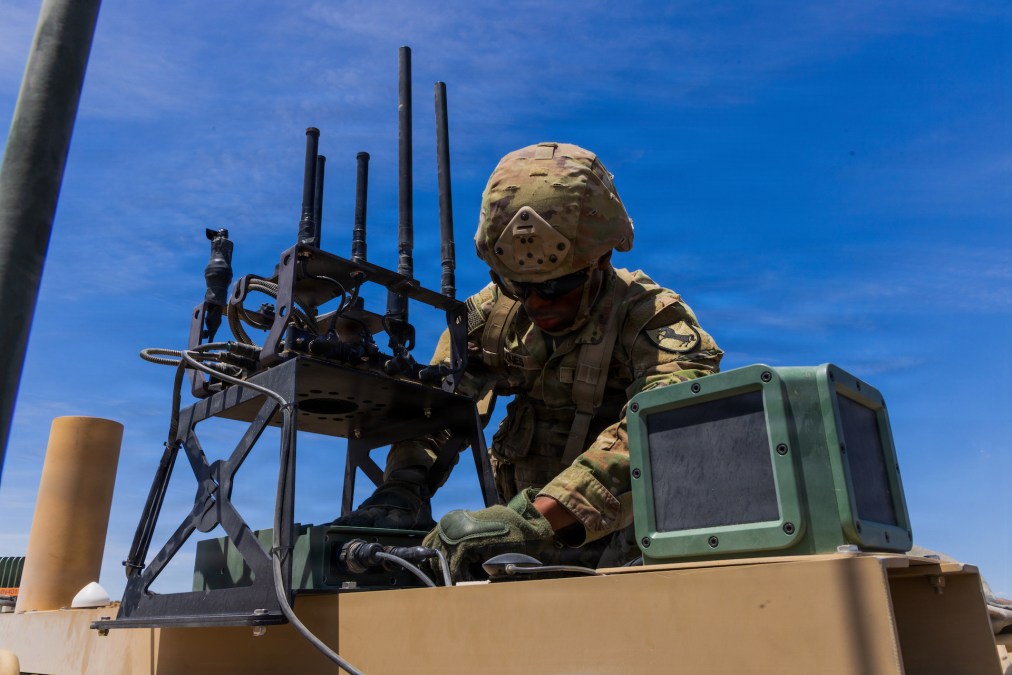
As the Army shifts parts of its Next Generation Command and Control System to I Corps, the organization’s top officer acknowledged that the new ecosystem will operate across vastly larger distances than previously tested given the unit’s focus on the Pacific.
Having been prototyped across two divisions over the last year — both smaller tactical echelons than I Corps — the Army’s ecosystem is working its way to more immense environments.
“What’s really different is the scope and scale,” Lt. Gen. Matt McFarlane, head of I Corps, said at the annual AUSA conference Tuesday, referencing the Pacific theater. “Instead of across an island or two islands next to each other, at the corps level it’s command posts in Honshu in Japan and in Brisbane in Australia.”
He said that I Corps’ primary challenge is the “tyranny of distance and disruption,” an allusion to the significant expanses U.S. forces will have to operate across should a war with China occur in the Pacific. McFarlane said NGC2 would help synchronize effects and data, and provide his units better survivability across that type of theater.
I Corps has used some elements of NGC2 over the last nine months, according to McFarlane, but now has started a “deliberate rollout” of the system at the corps headquarters and its “enabling” brigades.
“As we make that transition … the mission of Next Gen C2 fundamentally pivots from the tactical to the operational level,” he said at a separate media roundtable on the sidelines of the AUSA conference. “Corps echelons do not fight localized gun battles or tactical fights. My job as the corps commander is to orchestrate through theater-wide multi-domain campaigns, allocate joint fires, manage operational endurance, and synchronize all-domain effects across thousands of miles of maritime domain in the Indo-Pacific.”
A top priority for the Army, NGC2 is meant to give commanders the ability to make decisions and act upon them faster than an adversary, as service officials drum beat about how quick access to data flowing from a suite of new sensors will be decisive on future battlefields.
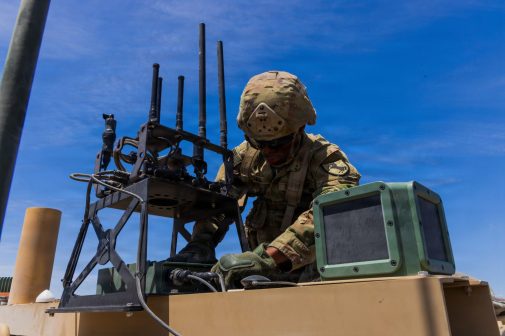
NGC2 tools were put through their paces this summer in the Mojave Desert during the Army’s Project Convergence Capstone 6 exercise. Afterward, senior leaders dubbed the event a success, but acknowledged that some equipment failed in the desert heat.
“We are fielding or equipping right now with the systems that were validated during PCC6,” McFarlane said. “So things that weren’t working or weren’t ready, we are not rolling out at I Corps at the operational level with my team.”
McFarlane did not name specific hardware systems that were validated or not validated during PCC6, when asked about them by DefenseScoop.
“As we train and then certify ourselves on those [NGC2] systems, the ruggedization and the requirement for that is incredibly important in the Pacific as you look at the different kind of environments we fight in, from the frozen Arctic terrain in Alaska to the high heat, high humidity, extreme dense triple-canopy jungles in the first island chain in the Pacific. So, the ruggedization is obviously really important for us as we look at operating that forward in small, distributed nodes, where mobility is a key aspect of survivability for our command posts,” McFarlane said.
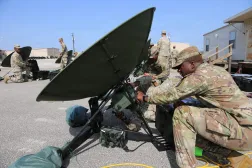
“What I can tell you is the systems that enable Next Generation Command and Control provide me [with] decision dominance at the operational level in the Pacific. And so that’s the [data and communications] transport so I can talk from anywhere on the face of the Earth with any other point on the face of the Earth that’s got the transport that’s part of the Next Gen Command and Control package,” McFarlane said.
The tech can also drive faster “detector-to-effector” or “sensor-to-shooter” cycles in the kill chain, he noted.
“And then amongst all of that are the applications that allow me to see myself, see the enemy, predictive analysis, some modeling tools to help me make decisions faster than our adversary makes decisions, and then take action faster than our adversary,” he added.
“The ones that we’re fielding were validated at the tactical level, and so I think there’ll be some room as Next Gen C2 continues to work with industry to identify the right apps and maybe additional pieces of equipment that we need at the operational level,” McFarlane said.
Over the next six months, some of his focus areas will include interoperability among the joint force and allies, across multiple classification levels or information levels, McFarlane told reporters.
How quickly NGC2 capabilities can be scaled will depend on the resources that are available, he told reporters.
“The key aspect here for me is as we employ at the corps level, driving operational maneuver, [is] making sure we’re optimizing the apps, the different tools to include transport as we deal with contested electromagnetic spectrum, to ensure we can quickly move from one transport to another — fiber to radio, the different connectivity there, LEO and milsat — without humans having to be in that loop, is an example of an app that we’re excited about because it’ll drive our assured comms there and resilient comms that we need at the distances we need them,” McFarlane said.