DARPA exploring tech for tactically responsive space operations
The Defense Advanced Research Projects Agency is scouting industry for technologies and concepts designed to restore space assets that are damaged or destroyed on orbit.
DARPA’s Strategic Technology Office published a request for information on Sam.gov on Friday soliciting industry solutions for the Rapid Reconstitution of Space Capabilities effort. The program builds upon ongoing work within the Space Force to improve the Defense Department’s ability to quickly launch new space systems to replace those that have been damaged or destroyed by adversaries or in accidents.
“The end goal is to develop and deploy effective response mechanisms to rapidly restore critical services to minimum levels or higher, on tactical timelines of hours to weeks, in response to demand surge needs, lost assets resulting from potential adversaries’ [anti-satellite weapons] engagements, or orbital debris collisions,” the RFI states.
With adversary advancements in the space domain putting more demand on the Space Force, the service has been exploring ways to increase the resiliency of its constellations. While one method has been proliferating large numbers of satellites on orbit to add redundancy, the Space Force also wants to reduce the time it takes to put new systems in space.
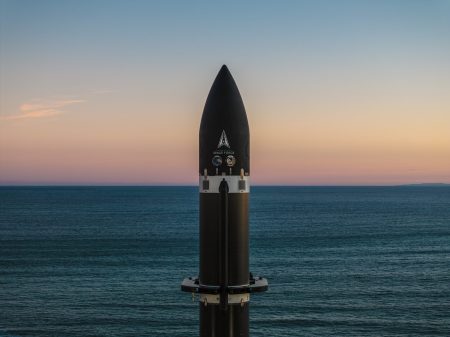
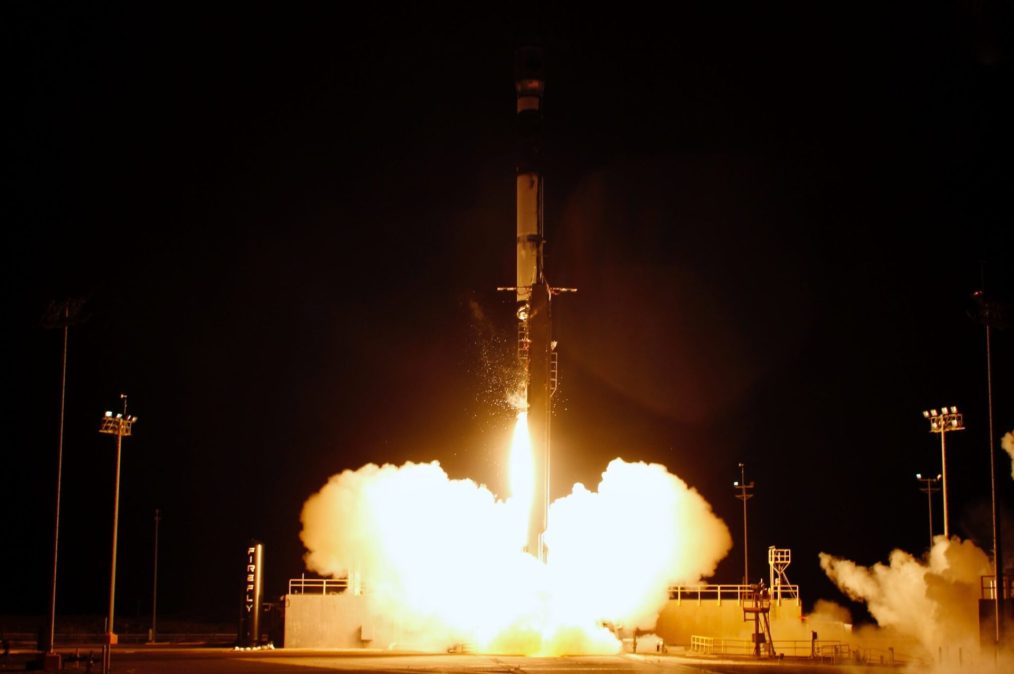
In 2023, the service began the Victus demonstrations under the Tactically Responsive Space (TacRS) program — focused on launching small payloads onboard commercial rockets with just 24 hours’ notice. The Space Force’s Commercial Augmentation Space Reserve (CASR) is another effort that seeks to augment the Pentagon’s space-based capabilities during crisis or conflict through contracts with commercial vendors, the RFI noted.
While the Space Force has touted the overall success of TacRS, there are still multiple technical, logistical and regulatory challenges that prevent the service from fully establishing a rapid space reconstitution capability. Responses to DARPA’s newest RFI aim to explore additional technologies and methodologies to advance the effort.
“The fixed capacity of launch vehicles and the relatively limited frequency of launches across multiple launch providers drive the need for greater functionality, resiliency, and flexibility in space assets. This requires minimizing spacecraft assembly, launch, and deployment time while maximizing the capabilities they provide,” the RFI explains.
The agency’s request outlines five general areas it is interested in: space vehicles, satellite payloads, launch vehicles, space vehicle-launch vehicle integration and concepts of operations.
The RFI outlines a list of possible topics — including spacecraft scalability, operations in very low-Earth orbit, supply chain optimization, and alternative positioning, navigation and timing capabilities.
“Reconstitution solutions must consider existing architecture integration,” the document says. “Possible solutions could be realized with reconfigurable, software-defined, multifunctional, and multi-mission payloads, as well as proliferated/mesh architecture and rapid on-orbit deployment concepts.”
Responses from industry are due July 8.