One year in, America’s counter-drone task force still has ‘a ton of work to do’
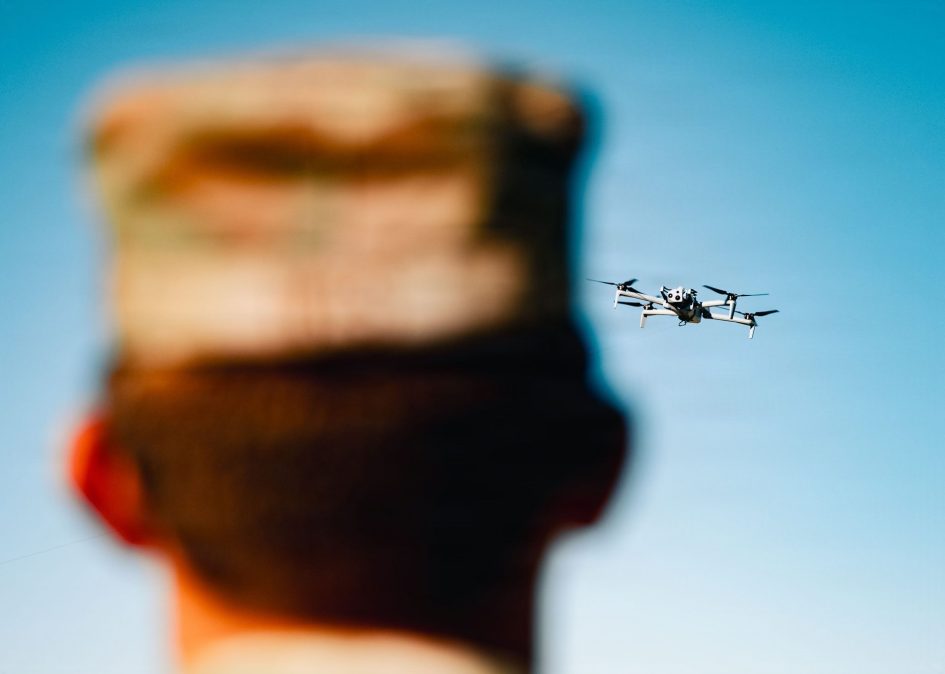
As drones from hostile, reckless or unknown operators continue to traverse jurisdictions and increasingly threaten military installations, civilian areas and mega-events across the U.S., senior officials are hustling to enable a first-of-its-kind national counter-drone surveillance network.
More than 200 U.S. military, federal, law enforcement and industry stakeholders met in Virginia on Friday at Joint Interagency Task Force 401’s second summit to discuss their first-year progress and path ahead.
“This isn’t intended as a victory lap — it’s quite the opposite,” said Brig. Gen. Matt Ross, who leads JIATF-401. “I think we’ve got a ton of work to do.”
In onstage presentations and a media roundtable on the sidelines of the event, he and other JIATF-401 insiders shared new details about their vision and work to drive interagency cohesion and “normalize” the use of counter-drone assets for law enforcement, public safety and national security operations.
“I think we share the same enemy, and that’s what makes the collaboration so important,” Michael Torphy, who runs the FBI’s drone program, told DefenseScoop.
‘One community of action’
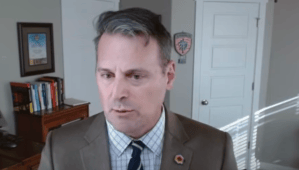
Bryan Stevens opened his remarks at the summit by acknowledging that “it is a little unusual for an FBI executive to keynote” a Defense Department-led event.
“That is exactly the point of this gathering,” said Stevens, who serves as deputy assistant director of the FBI’s Critical Incident Response Group. “The drone threat does not live neatly inside anyone’s land.”
It’s no secret that the proliferation of inexpensive and highly capable small uncrewed aerial systems has introduced a major modern security challenge for the U.S. government, joint force, and state and local law enforcement.
Over the past few years, hundreds of mysterious drone incursions have been documented around the nation — including over multiple strategic and sensitive military installations — exposing unsettling gaps in domestic detection and defense capabilities.
Some incidents have reportedly involved coordinated, potentially high-tech drone swarms exhibiting extended flight durations, sparking fears of foreign surveillance and reconnaissance operations. Several recent, seemingly sophisticated incursions have not been publicly resolved.
“It’s a warfighting problem in the Middle East and a law enforcement problem in New Jersey — sometimes built from the same airframes you can buy online,” Stevens said. “Counter-UAS lives at the seam between military capability and civilian authority. The threat does not respect that seam, and neither can we.”
Senior officials from the FBI, DOD and the Department of Homeland Security later echoed his sentiment at the roundtable with reporters.
“There’s a democratization for our enemies to produce lethal weapons — and not only lethal weapons, but surveillance weapons and disruption weapons — very cheaply with knowledge that’s very publicly available,” said Torphy, who works under Stevens leading the FBI’s drone and counter-drone efforts.
Steve Willoughby, the acting executive director of DHS’s new program executive office for drones and counter-UAS, added that his agency covers a large breadth of mission sets to target any capabilities being used for nefarious purposes.
“It’s not just the really bad stuff about delivering narcotics or a kinetic strike. You can launch a drone on an active runway and cause economic disruption in the millions,” Willoughby told DefenseScoop. “That is impactful to public safety, to national security — and maybe that’s a different threat manifestation versus somebody who actually wants to kill people or cause destruction — but economic harm is just as much of a risk to us within homeland security, and within the national security apparatus, as people losing their lives.”
From his view at the helm of JIATF-401, Brig. Gen. Ross added “there’s commonality between the threats” that each of the task force components and partners aim to detect in different environments, like signals and signatures, regardless of “whether it’s a combat context or at home.”
The officials hosted this event nearly one year after the Pentagon formally established JIATF-401 as part of a governmentwide campaign to better align authorities and resources with its goals for drone defense.
That Army-led task force has served as a mechanism for the department to conduct wide-scale technology tests, streamline safety standards and beef up its arsenal. It has also eased coordination with law enforcement agencies, such as the FBI and DHS, which have simultaneously ramped up their own counter-drone activities.
“A year ago, many of us were strangers working adjacent problems,” Stevens said during the keynote. “Today, we are one community of action.”
The task force’s overarching vision was put to the test this summer during the FIFA World Cup, which served as a watershed moment for domestic drone defense.
The Federal Aviation Administration set temporary flight restrictions for the airspace over stadiums, fan-fest sites, team hotels, base camps and training facilities across the 11 American host cities. The FBI, DHS and local police departments then stepped in for enforcement, leaning on the training they had received from DOD.
The ability to share information on a common platform — keeping all parties in the loop — was key, according to a senior FBI official.
“Every mission, every detection, every seizure was logged to one standard,” Stevens said. “So we can tell the White House exactly what happened and prove it.”
By the time matches wrapped up in July, the federal government had detected more than 1,600 unauthorized drones, seized 700-plus systems, opened around 120 federal cases and arrested a dozen people.
At the press briefing, Willoughby told reporters that the task force “engaged with nearly every one of those drone operators” when the platforms were seized.
“The intent is never really known until you go and talk to the person, until you understand it. … And it’s very much like the [Transportation Security Administration’s] mission, if you will,” the senior DHS official said. “People ask us ‘how many terrorists have you caught,’ right? And well, they don’t come out and say they’re a terrorist. It’s the little things that stop [them], and being able to interdict something before it happens and be as far ‘left-of-launch’ as possible.”
Over the course of the day-long summit, participants reflected on what the task force learned during the World Cup about event preparation, co-location techniques, data discipline, the best approaches to handling drone operators, connectivity and more.
“The whole system got tested in public for six weeks,” Stevens said. “The lessons are written into what we do next.”
‘Opening the floodgates’
Just as the World Cup acted as a test of the interagency coordination efforts, there are more on the way. The 2028 Olympics hosted in Los Angeles, for example, will present challenges at scale.
“The Olympics will be bigger than the World Cup: more venues, more days, more airspace and far more overlapping jurisdictions concentrated in one region,” Stevens said.
But mega-events are not the only target of adversarial or reckless drone operators.
“There’s 300 NFL games … [and] there’s four times as many college games,” Willoughby noted during the media roundtable. “There’s not a federal official at every one of those games.”
As a result, equipping responders on the “frontlines” with adequate capabilities to spot and mitigate drone threats is top of mind for the task force in the months ahead.
“We’re opening the floodgates for state and local [agencies] to be able to conduct this mission within their own jurisdictions because we can’t be everywhere all the time. That’s just the reality of it,” Willoughby said. “If there’s an incident [that is] based out of some sort of terrorist actor or some other malicious or reckless activity, there’s a role for [the federal government]. But it needs to be pushed down to the lowest common denominator because we can’t be there, we won’t be there. The folks who are going to be the first responders are the local sheriff’s office and the county police.”
DHS and the Department of Justice jointly issued an interim final rule that allowed training and certifying of state, local, tribal and territorial law enforcement to detect — and in some cases disable — unmanned aircraft that pose a credible threat.
The rule took effect July 1, and already about 500 officers have been trained to take up the responsibility, per Torphy.
The FBI isn’t meant to be “the nation’s quick reaction force for drone incursions,” he explained. “We’re an investigative and intelligence agency.”
Other officials agreed, underlining the need to not treat drone defense as a responsibility that’s only meant for the federal government or military.
“Louisiana State Police, who have graduated our [National Counter-UAS Training Center] program, they’re there in their [area of responsibility] working with the sheriff’s office, they can go … and start the investigation very quickly,” Torphy said.
Still, one year in, the officials executing on JIATF-401’s mission recognize there’s much more they need to accomplish to fully enable the nationwide, layered counter-drone network the government envisions.
And in the near term, adopting low-cost detection and low-altitude air domain awareness capabilities that cover “the entire breadth of the United States” will mark a top technology priority, according to the task force’s director.
“I appreciate the progress that we’ve made, but I don’t feel like we’ve solved the problem yet — and so we’ve got to continue to move against it,” Ross said. “I don’t want to lose momentum.”