III Armored Corps receiving baseline NGC2 capabilities
III Armored Corps is starting to get basic layers of the Army’s Next Generation Command and Control (NGC2) technology, according to a press release and a service official, the first unit to dump an older network for the new prototype under a consolidated fielding process.
NGC2 — which Army officials have touted as a data-heavy ecosystem of hardware and software meant to allow commanders to make faster decisions against increasingly sophisticated adversaries — comes with a four-layer stack. III Armored Corps is now getting two of those layers initially: infrastructure and transport.
The fielding comes after two Army divisions experimented with NGC2 for more than a year and nearly two months after the service tested the architecture at a capstone event in the Mojave Desert, leading senior service officials to start pushing the prototype to additional units.
“The network transport and compute infrastructure equipment set will serve as the baseline for all of the Army’s current and future modernization efforts across the force,” Brig. Gen. Shane Taylor, capability program executive for the Army’s command and control information network effort (CPE C2IN), said in the press release.
The press release did not refer to the prototype by name, but an Army official told DefenseScoop that the III Armored Corps was the first unit to get the NGC2 baseline under a strategy meant to shed a decades-old tactical network and field the new prototype.
The effort is intended to help Army units adopt NGC2 and divest remaining parts of the Warfighter Information Network-Tactical (WIN-T), which began fielding in 2004.
“The III Armored Corps is being fielded with the transport and infrastructure baseline of the Army’s Next Generation Command and Control (NGC2) capabilities, not the entire NGC2 full stack,” the official said, adding that these layers will allow the unit to adopt the rest of the stack — the data and application layers — “when fielded.”
Service officials said in the press release that the fielding of the baseline NGC2 capability provided “information highway and computing capabilities” for real-time data exchanges, including in denied, degraded, intermittent and low bandwidth (DDIL) environments.
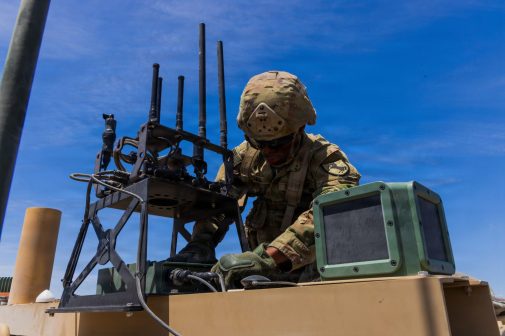
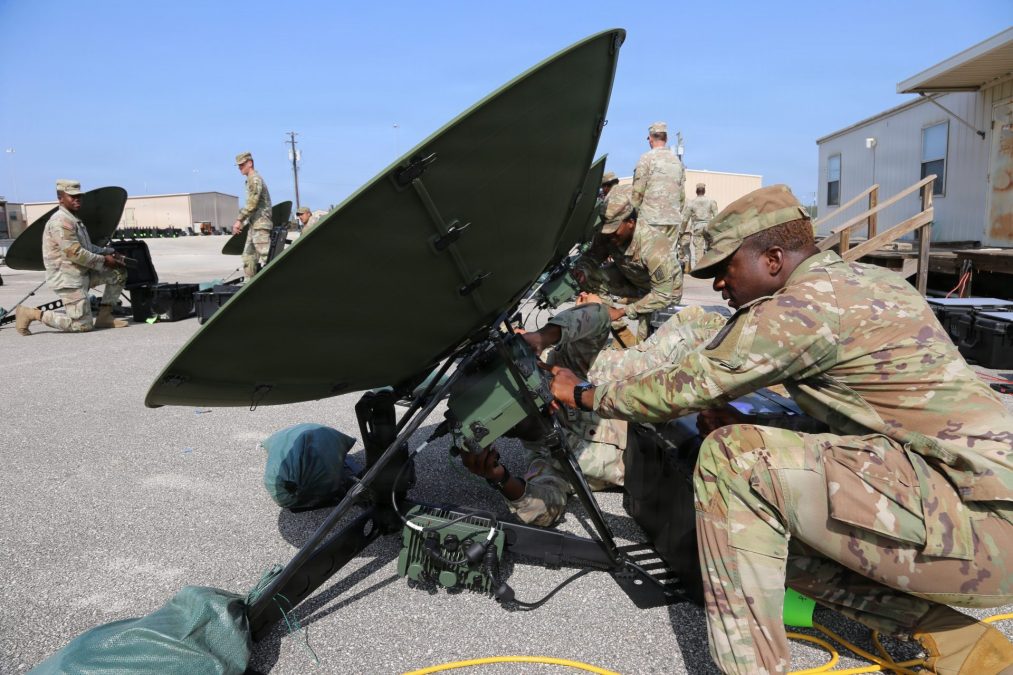
The unit’s new equipment features dismounted satellite communication antennas, tools that automatically manage network traffic, and servers with cloud access that process data in forward operating environments, according to the press release.
CPE C2IN is “managing the delivery” of the baseline equipment under an effort meant to reduce time, cost and “soldier burden” that combines fielding and training at certain locations across the country, including at Fort Hood in Texas, officials said. Soldiers will turn in their WIN-T equipment at those locations, though officials did not detail where they were in the release.
The development and distribution of NGC2 also comes amid increased attention toward the electromagnetic spectrum as an increasingly dangerous battlefield domain, where the war in Ukraine has shown that even the smallest signals can result in units being targeted by advanced systems, such as drones, within minutes.
“Smaller, lighter, faster. Anything we can do to more rapidly deploy, tear down, and set up is going to allow us to move before the enemy is able to detect where we are,” Lt. Col. Christopher Vanderberg, commander of the 57th Expeditionary Signal Battalion-Enhanced, said in the release.
Following its completion in July, senior service officials dubbed the Mojave Desert exercise, known as Project Convergence Capstone 6, a success. But they also said some of NGC2’s hardware struggled to function in the heat.
I Corps, which is based in Washington state and focused on the Pacific theater, will adopt NGC2’s full stack starting with software deliveries next month, the Army official said.