GAO warns information gaps could hinder Army’s battlefield network modernization plans
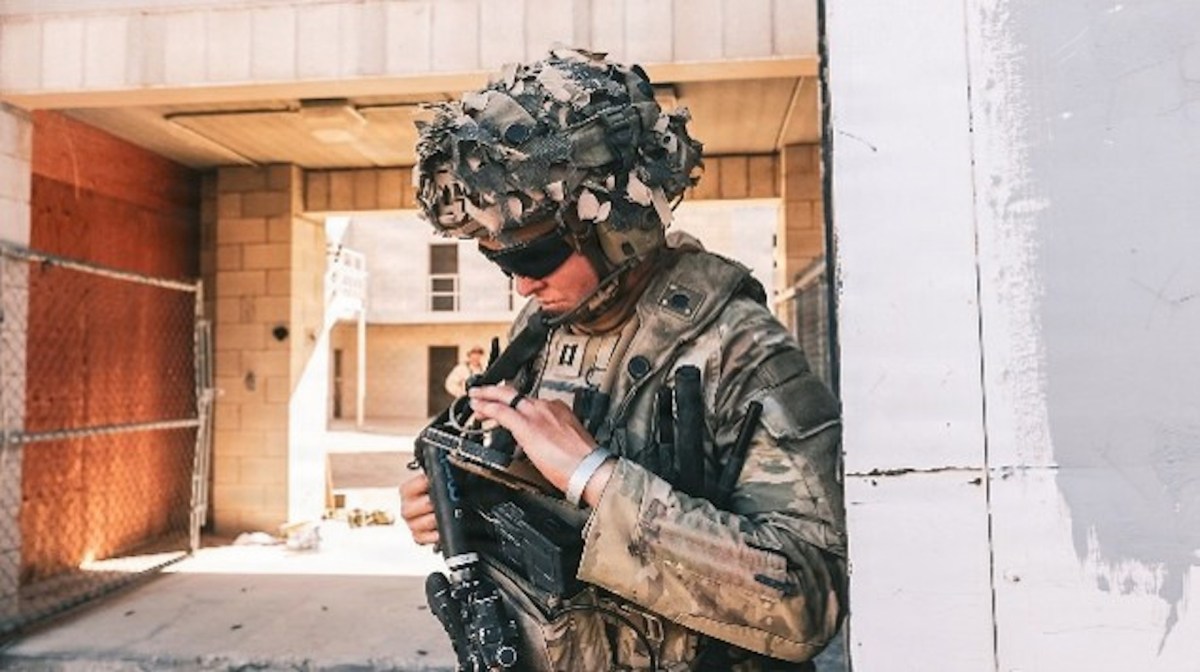
The Government Accountability Office released a report Thursday flagging a lack of schedule and cost data for the Army’s network modernization efforts, warning that it creates uncertainty about the service’s ability to scale new capabilities and puts soldiers at risk of not having reliable access to communication tools on modern battlefields.
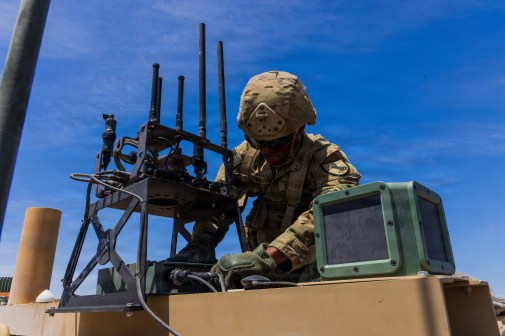
The document especially highlights issues with the Next Generation Command and Control (NGC2) project, which Army officials have billed as a data-heavy ecosystem of interconnected hardware and software intended to give commanders the ability to make better and faster decisions against advanced adversaries.
The service recently finished a crucial milestone for NGC2 by testing the ecosystem in the Mojave desert. Senior leaders were quick to call the test a success and said the Army would soon be sending parts of the network to more units, but acknowledged NGC2-related hardware suffered in the extreme heat.
The top general in charge of one of the testing units called the ecosystem “ready, but not done.”
“The Army developed short-term schedules for NGC2 through fiscal year 2027 with a tentative goal of fielding NGC2’s full technology stack across 11 divisions and four corps by the end of fiscal year 2032. However, the Army is not well positioned to assess its ability to meet this timeline because it has not developed a detailed schedule that identifies the specific units, by fiscal year, that will receive the modernized capabilities,” GAO officials wrote in their report.
They added that the service has identified NGC2 costs through fiscal 2026 in budget-related documents — totaling approximately $3.3 billion — but it “has limited visibility into long-term costs because it has not completed an initial cost estimate for the life cycle of the collective effort.”
“The absence of a detailed schedule and long-term cost data limits the Army’s ability to assess whether it has the time and resources it needs to meet its tentative goal for fielding NGC2 across the service by 2032. This gap risks access to secure and reliable communications that soldiers in the field need for modern large-scale combat operations,” the watchdog report states.
GAO recommended that Army leadership address those concerns by ensuring Capability Program Executive Command and Control Information Network develops a detailed fielding schedule that identifies the specific units that are planned to be equipped per fiscal year and determine preliminary costs for the life cycle of the full NGC2 effort. Army officials should regularly reassess those schedules and cost estimates as the initiative progresses, the report added.
In response to a draft GAO report dated June 5 that was provided to the Pentagon for review, the department concurred with the watchdog’s recommendations but noted that the Army had already taken steps to address the issues laid out in the document.
The Army’s portfolio acquisition executive for C2 acknowledged Tuesday that new units will have to adopt NGC2 quicker than those that originally tested it, the 25th and 4th Infantry Divisions.
“I recognize as we scale, we’re going to need to be able to take this on with units that are maybe not going to have as much time up front as 25th ID and 4th ID had,” Joe Welch told an audience at the annual TechNet Augusta conference. “We really can’t afford to ask the Army to sacrifice its focus on readiness just to take out to train a bunch of new equipment. And I’m confident that we can do this seamlessly in an integrated fashion, but it’s going to take a different viewpoint on the whole thing, in my opinion.”
The next unit that will adopt NGC2 is the Washington state-based I Corps. Its commander, Lt. Gen. Matthew McFarlane, said at the same conference his unit had worked alongside test units and will begin to “roll out” NGC2-related apps in September. I Corps will start receiving hardware in the following months, McFarlane said, adding that he wasn’t concerned with his unit’s ability to adopt the technology.
The schedule and cost estimates for NGC2 are accounted for through the Future Years Defense Program (FYDP), and in further projections out to fiscal 2032, according to the Pentagon’s response to recommendations in the GAO report. The department’s projections assume that NGC2 “remains fully resourced,” it noted.
The schedule specifies the units that will get at least two layers of the NGC2 stack, infrastructure and transport, that will replace older C2 systems over the next few years, the Pentagon said in its response. It also said the schedule identifies other units that will get the new system, by year, to meet the service’s goal of equipping 11 divisions and four corps within the FYDP as the Army keeps an eye on funding.
The Army suggested that the schedule issue raised by GAO in its draft report “is no longer a limiting factor in the Army’s ability to assess whether it has the time and resources it needs to meet its goal for NGC2 fielding,” according to the Pentagon.
Still, the service is betting on nearly $4 billion in congressional funding to further develop the tech, a significant increase from last year’s request that comes amid deep consternation from lawmakers over defense funding amid the Iran war.
Cost information for NGC2 was included in the fiscal 2027 budget request, the Pentagon noted in its response to the GAO report. It added that the cost estimate was “under validation progress” by the Office of the Deputy Assistant Secretary of the Army for Cost and Economics, and that it would be reviewed again during key phases in the program.