What’s unique about Northcom’s Falcon Peak 26.2 counter-drone exercise
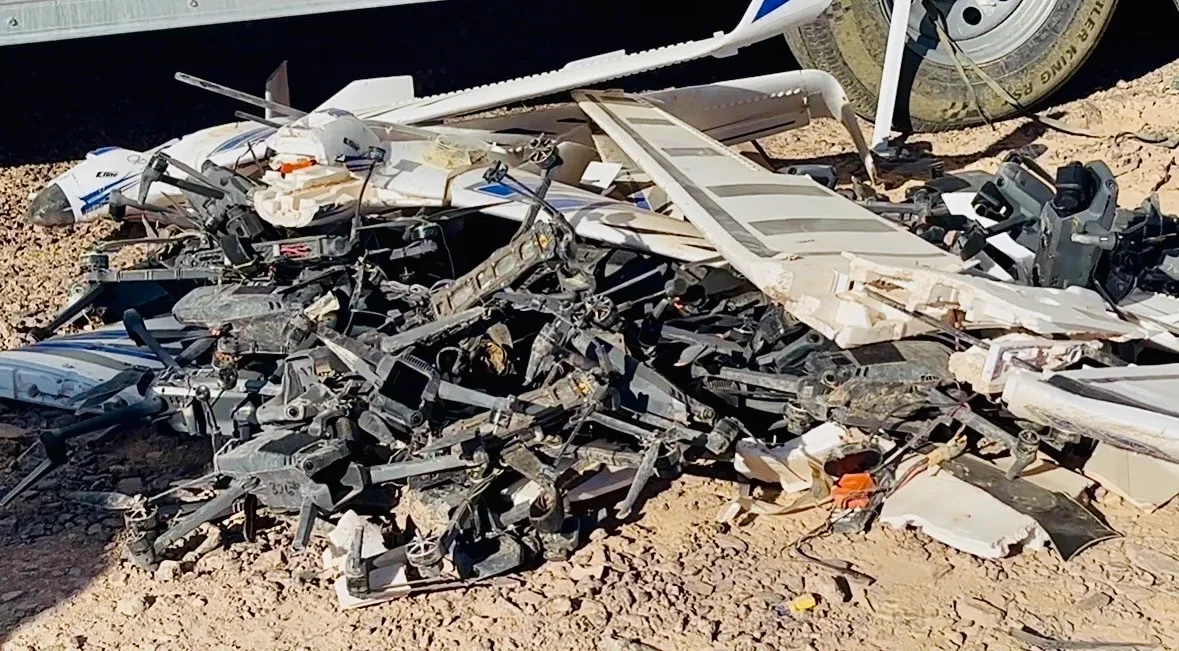
YUMA PROVING GROUND, Ariz. — U.S. Northern Command’s fourth iteration of its large-scale Falcon Peak exercise is designed to demonstrate, refine and connect capabilities that counter small, hostile drones in desert terrains, and for the first time, those threatening America along the southern border.
“What we’re trying to do is come up with technologies that help us identify adversary drones and also hobbyist drones, so that we can appropriately — within the bounds of U.S. law and regulation — mitigate that threat both to troops as well as to civilians and facilities,” Northcom spokesperson Becky Farmer said on Tuesday.
Officials shed new light about the command’s intent for its ongoing Falcon Peak 26.2 with a small group of reporters who were invited to observe the joint military demonstration as it comes to a close this week.
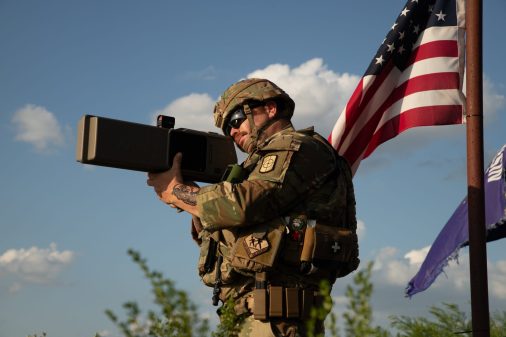
The organized trials cover three lanes: drone-on-drone interceptors, kinetic or ballistic mitigation using shotgun-based systems, and capabilities that sense and detect enemy unmanned aerial systems.
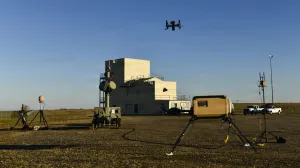
“You can’t fight what you can’t see, and our commander [Northcom’s Gen. Greg Guillot] says that a lot,” Farmer told DefenseScoop. “So, as you saw today, seeing with your naked eye is really hard, and by the time your eyes see it, it might be too late to do anything about it.”
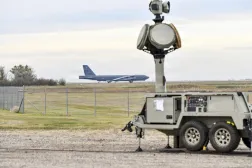
She added: “And so having that capability with our sensors, whether that’s infrared, other optical means, or other technology, the farther out we can see something — and then we can track it and really tell whether that’s friendly or not friendly — is key to this fight.”
Pentagon counter-UAS exercises have been known to focus often on tactical, expeditionary warfare and impacts on forces abroad. But this year, Falcon Peak 26.2 is directly targeting Northcom’s mission to defend against drone threats that have been emerging across U.S. airspace, critical infrastructure, and incursions escalating around the southern border.
“Cartels use drones for many things, including drug smuggling, human trafficking, and also surveilling our troops,” Farmer noted. “And so we’re here in this environment to test capabilities that we can use against that very specific threat.”
Testing at Yuma replicates conditions along America’s 1,954-mile border with Mexico.
“The focus this year is really not only just on counter-drone at-large, but the warfighter who’s [there],” Farmer said. “Being here replicates a large portion of that border. And so we’re really getting after putting the right technology in the warfighters’ hands. Being here in Yuma gets us that much closer.”
Beyond being the first Falcon Peak exercise to emulate border combat and unfold on the military’s sprawling Yuma Proving Ground, 26.2 also marks the first iteration that the command deployed Anduril’s autonomous command-and-control (C2) software platform Lattice as a digital backbone and baseline standard against which all commercial sensor-to-shooter counter-UAS assets are measured.
It follows a selection by the military’s Joint Interagency Task Force 401 (JIATF-401) of Lattice to serve as a key tactical C2 solution for C-UAS, via an $87 million contract under the Army’s recently-announced Enterprise Agreement with Anduril.
“Usually, the customer has a version of Lattice, and they’re bringing in systems to integrate on that. This is the first go-around where the test organization has the Lattice capability and they’re integrating into our infrastructure,” Robert Fletcher, Yuma Proving Ground’s sensor branch team lead, said.
As he suggested, the commercial participants must feed their sensor data, radar tracks and targeting data directly into the Lattice system during this exercise. At least 20 vendors have been involved, Fletcher said, with anywhere between 15 and 30 opportunities to do intercepts.
Lattice offers “the C2 that is supposed to be used to standardize that plug-and-play aspect,” he told DefenseScoop. “So if all counter-UAS can plug-and-play, and that’s what everyone’s using, you can relocate it, buy it, use it — and I think that’s the end goal.”