Task force says drone threats on US-Mexico border increasingly linked to human trafficking
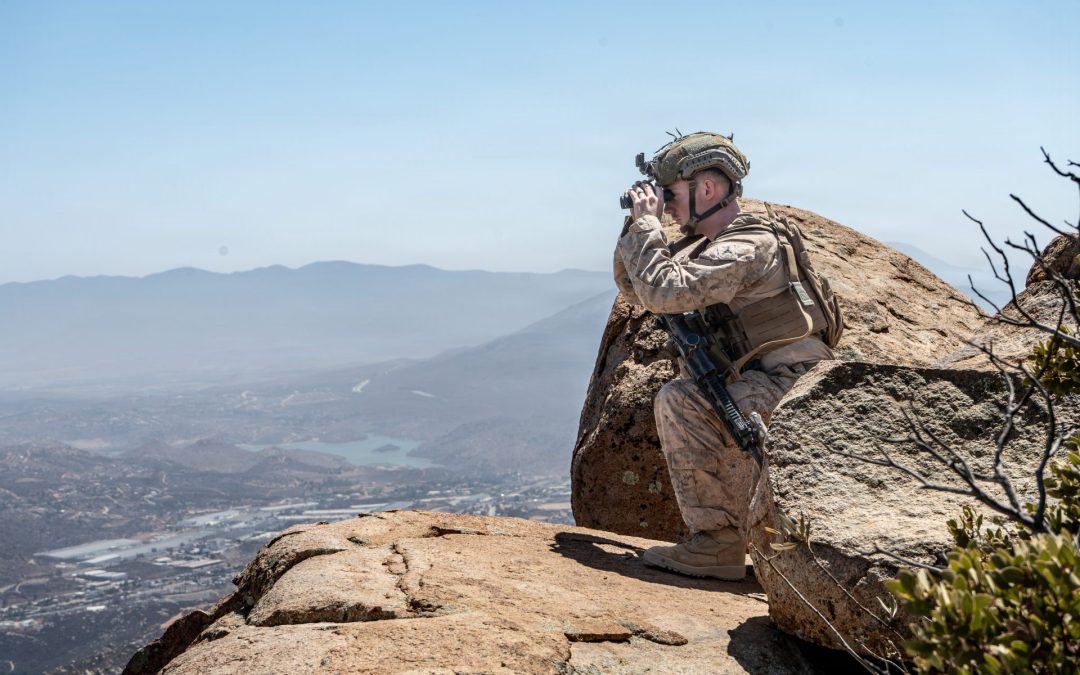
YUMA PROVING GROUND, Ariz. — Transnational criminal cartels are increasingly flying commercial drones into America over the southern border to enable human-trafficking operations, senior military officials indicated last week.
“It is a human tragedy what’s going on on our southern border — and the people that are trying to cross are being exploited,” Air Force Brig. Gen. Brian Filler, Joint Task Force-Southern Border’s deputy commanding general, told DefenseScoop. “So, anything we can do to prevent that from happening is good.”
Officials leading JTF-SB and the government’s interagency border security efforts discussed their ongoing counter-drone pursuits in onstage presentations and briefings with a small group of reporters invited to cover U.S. Northern Command’s Falcon Peak 26.2 experiments at various locations on America’s southern edge.
“The predominant drone threat that we see along the southern border of the United States is very simply reconnaissance to support human trafficking,” said Army Maj. Gen. Curtis Taylor, JTF-SB’s commanding general. “That accounts for 95% to 98% of the drone activity that we observe along the southern border.”
Activated under Northcom in early 2025, JTF-SB provides the Department of Homeland Security and U.S. Customs and Border Protection with non-law enforcement assistance, including drone detection and surveillance assets, intelligence analysis, logistics support, and physical barrier reinforcements.
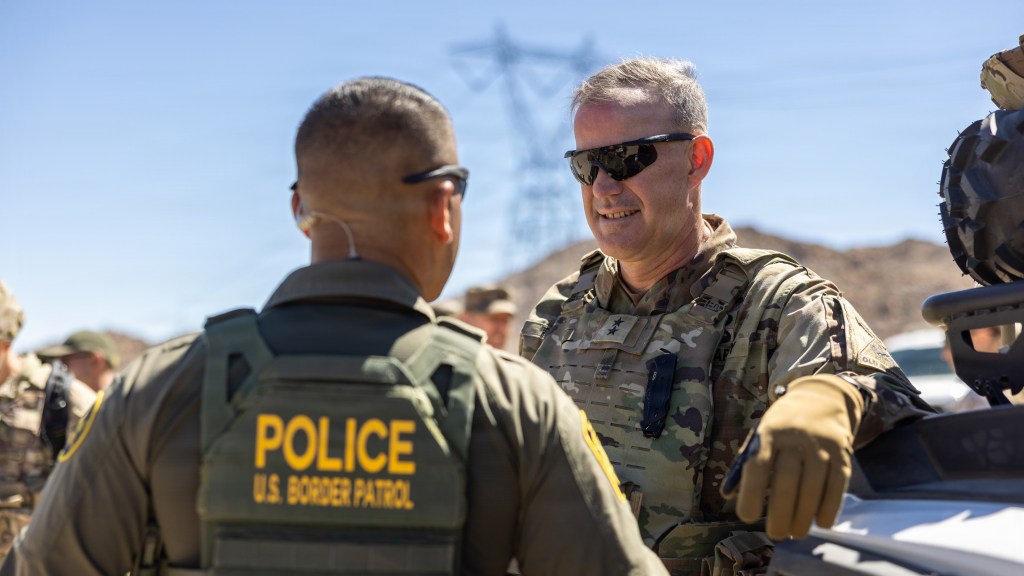
Taylor told the audience at Falcon Peak 26.2’s distinguished visitor day that the task force works with DHS and CBP agents across “all 1,954 miles of the” U.S.-Mexico border. Notably, when deployed on terrain designated as “national defense areas,” JTF-SB personnel have the same authority to conduct apprehensions associated with human trafficking and smuggling as they do on military installations.
“As we’ve operated on that border for the last 20 months now, what we have seen continue to emerge and grow is a significant drone threat,” Taylor said.
In terms of the current scope, the commanding general revealed that between Aug. 22 and Sept. 22, JTF-SB detected at least 378 drones around America’s southern border. Of those, according to Taylor, there were 75 “turn-backs,” 15 “engagements” and 1 drone “capture.”
“We have not, to date, seen any lethal drones along the southern border of the United States. That does not mean that that threat and that capability does not exist,” he noted. “We know from open-source information that’s freely available that there is a growing use of lethal drones in cartel and cartel violence in Mexico — and we all are concerned about the diffusion of lessons learned from Russia and Ukraine into the cartel fight in this hemisphere — so it’s something we’re concerned about.”
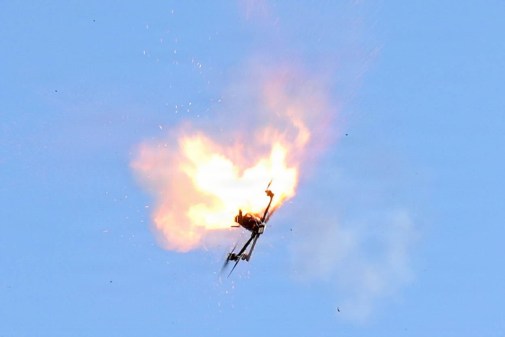
The task force has deployed the Army Multipurpose High Energy Laser (AMP-HEL) system to defeat hostile unmanned aerial systems that the U.S. determined to be used by cartels.
JTF-SB has an ever-expanding counter-drone arsenal that also includes systems like the lightweight, handheld electronic DroneBuster and the Pitbull drone jammer, which were displayed at Falcon Peak 26.2.
“As we have more success on the southern border, we are seeing a change in behavior from mass migration to human trafficking. What I mean by that is we are seeing organized and professional efforts to legally bring people into our country for further exploitation once they arrive,” Taylor warned in his keynote. “That effort is enabled by a drone capability that is growing every day.”
During a closed-door media roundtable that followed, his JTF-SB deputy commanding general said the detections and engagements recorded over the last month represent trends that are “increasing at a rate that’s very noticeable.”
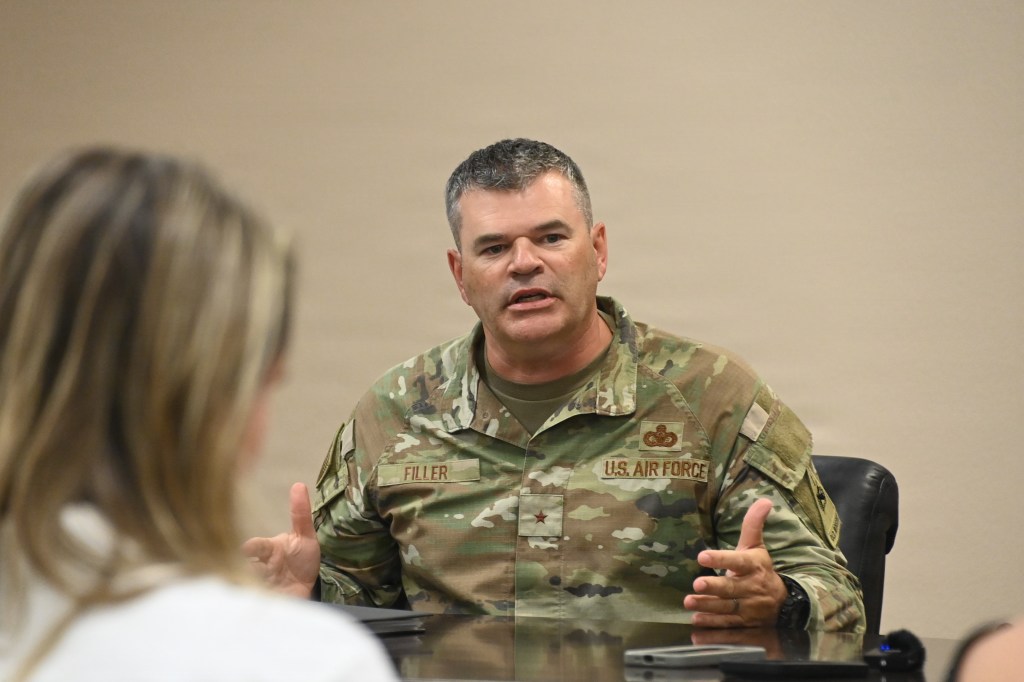
“We are seeing, largely, commercial off-the-shelf available drones. Those drones almost always have a payload of a surveillance device, [perhaps] a camera. We have high electro-optic cameras that can see the drones in-flight, and that’s how we do some of the positive [identification] on them and get a sense of what’s flying. Very often, we see drone launches, and then we see movement across the border. We have sensors that help us with that. We have cameras that help us with that. So, we have a pretty good characterization of what’s out there,” Filler said. “We know there’s some higher-end capability, but that’s not the predominance of what we see.”
He and Taylor did not specify how the task force directly links the drones to human-trafficking endeavors.
In response to DefenseScoop’s questions on that matter, Filler said there is an “incredibly involved intelligence process that goes into characterizing the drones.”
The U.S. military and its interagency partners are also building a digital library that tracks potentially adversarial drones, their flight frequencies and other data points recorded over time.
“Sometimes you see the drone and there’s nothing you can associate it with,” Filler said. “Sometimes, literally, a drone comes up and you see people crossing. We have had instances where we have mitigated a drone, and that has caused the group to turn back.”
The deputy commanding general declined to say whether the task force’s recent drone and counter-UAS operations had led to any response missions involving alleged human-trafficking victims.
“You know the question that I really want to answer, but don’t have a good answer for you, is: ‘Have we saved lives in the process?’” Filler told DefenseScoop. “What I would say is, generally speaking, we believe that the work we’re doing on the southern border is deterring people from wanting to cross. The numbers are way down. Some of that is policy-related — but some of that is operations between ourselves and the Border Patrol.”