Africom’s new Defense Economics Office set up to drive outsized security returns
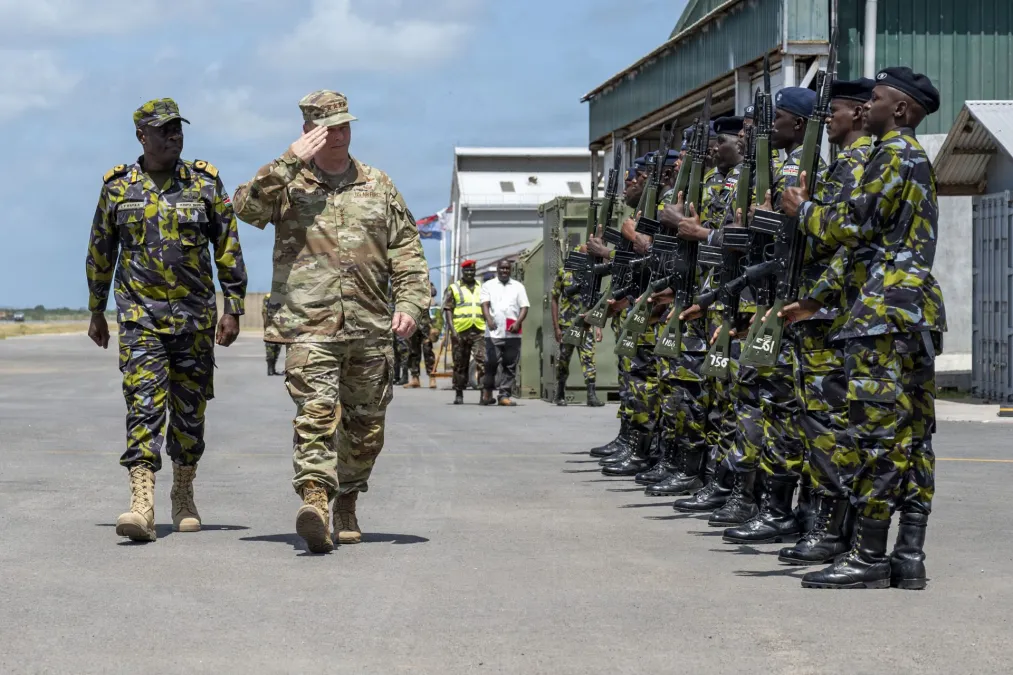
U.S. Africa Command recently set up its own Defense Economics Office to explore modern policy reforms, new ways to disrupt adversaries’ revenue streams and other money-related activities that can generate concrete security impacts, as it pivots to a significantly smaller physical presence across the African continent.
“A lot of times just the economic investment that we have done [with our African partners] is what provides us the ability to gain access or to be able to bring in ships and fueling, [and] allows us to be able to have that communication,” Africom commander Gen. Dagvin Anderson said.
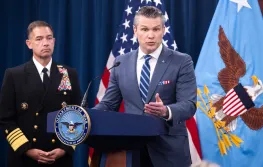
He and other officials shared new details about the office and its near-term priorities during the National Defense Industrial Association’s Emerging Technologies for Defense Conference last week.
“It’s a new capability that Africom is bringing online to really think about how economics, commerce, and finance factors into security,” a U.S. government official told DefenseScoop on the event’s sidelines.
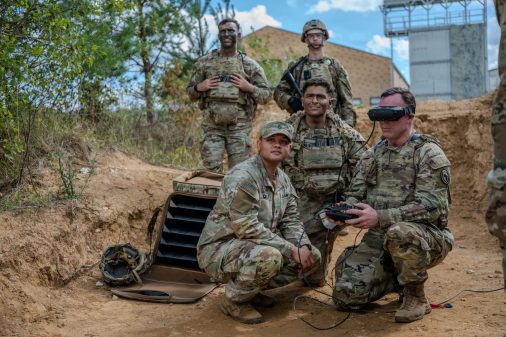
Africom’s Defense Economics Office is emerging as the command reduces its troop footprint across Africa and embraces an overarching strategy that leans heavily on U.S.-enabled, partner-led operations associated with training, intelligence-sharing, surveillance, targeted air campaigns and supplying commercial technologies to regional militaries.
Its stand-up also comes at a time when major economic players — including but not limited to China, Russia and the United States — are competing for influence and access across the massive continent.
“The world will be magnified by the future of Africa,” Anderson said in his keynote at the NDIA event. “And so, folks, understand that this is a global crossroads.”
He pointed to multiple challenges that accompany insurgencies and rising terrorism from old and new violent extremist organizations, a rapid expansion of Russian and Chinese military and economic investments, critical resource extractions and maritime trafficking threats.
The commander said the intersection of economics and security represents an “acceleration lever” that Africom will use to increasingly amplify its effects across the region. The new Defense Economics Office will work with the Commerce Department and other federal entities to identify where infrastructure and investment decisions may deliver outsized strategic security returns in Africa.
“We’re not looking to replace what Commerce does, by any means,” Anderson noted.
He called out Col. Joshua Stinson as Africom’s “lead for defense economics,” among several of his team members in the audience. Sources at the conference told DefenseScoop that Stinson previously served for a short period of time in the Pentagon’s nascent Defense Economic Unit, which Deputy Defense Secretary Steve Feinberg created earlier this year to lead all of the Defense Department’s pursuits that fuse economic leverage and requirements into joint military planning and operations.
A U.S. government official who spoke to DefenseScoop on the condition of anonymity on the sidelines of the NDIA conference said that “there’s a lineage” between Africom’s new office and the Pentagon’s EDU, which is “bringing the full suite of American economic power into the security apparatus.”
“We, down at the theater level, work very closely with colleagues in the Economic Defense Unit, but our perspective on it is very focused on the theater and our African partners. Whereas, you’ve seen a lot of press releases on domestic industrial policy, munitions, the defense industrial base — our contribution is sort of upstream,” the official said. “So we’re trying to de-risk value chains with critical minerals into the defense industrial base, all the way over to we’re trying to find new creative ways to disrupt our adversaries in the economic domain.”
The team is hustling to uncover “novel ways to advance both the broader commercial diplomacy and economic agenda,” they added.
The second Trump administration’s ongoing pressure campaign in the Western Hemisphere is allegedly leading to narcotics and other illicit items flowing into Africa at higher rates — as well as more collaboration between various cartels.
“From an Africom standpoint, we have 19,000 miles of coastline,” the U.S. government official said. “Like, the eastern seaboard of Somalia is equal to the United States eastern seaboard.”
Much of America’s counter-narcotics and counter-threat finance legislation was introduced early in the counterterrorism era. “But we’re in a whole new world. We have digital assets. Our adversaries are moving [cryptocurrency] around,” the U.S. official told DefenseScoop.
The command’s new office will explore “digital asset mapping” technologies and more modern analytic approaches, they said, to monitor and disrupt illegal flows.
Further, the team is tracking a conceptual paradigm shift in the global threat finance space — moving from criminal-evidence standards that typically lead to prosecuting and jailing individuals, to civil burdens of proof that focus more on taking money away from illegal actors.
“Right now, the preponderance of appropriation that we have for counter-threat finance is very specific to counter-narcotics,” the U.S. government official also said. “So what would be a great thing for our colleagues in [Congress] to think about as we’re thinking about broadly disrupting adversary capital in these new contexts is how do we get an appropriation that’s broader than sort of a narrower counter-narcotics authority? Because most of the software being used for counter-threat finance is developed with counter-narcotics money, whereas a big lion’s share of counter-threat finance we want to disrupt is outside the counter-narcotics mission space.”