Pentagon awards $500 million contract to Perennial Autonomy for counter-drone systems
The Pentagon’s counter-drone task force announced a $500 million contract award Monday to Perennial Autonomy, a defense company known for developing an interceptor that has downed thousands of Russian one-way attack drones over the last two years in Ukraine.
The Iran war, which has seen the same Tehran-variant drone known as the Shahed wreak havoc across the region, has also hastened the U.S. military’s push to down them.
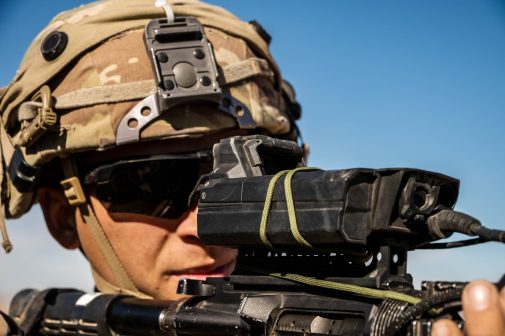
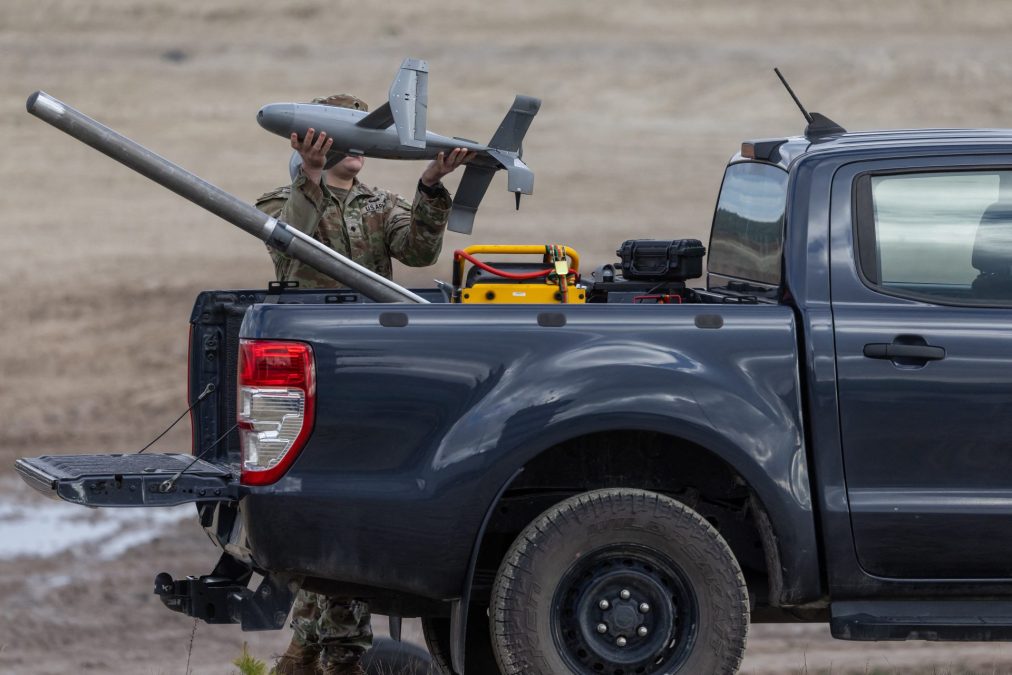
Under the three-year indefinite delivery/indefinite quantity contract, Perennial Autonomy is expected to deliver AI-enabled counter-UAS systems such as the Bumblebee quadcopter, Hornet midrange strike drone and the Merops, which has intercepted more than 4,000 Russian drones in Ukraine since mid-2024, according to the company.
Joint Interagency Task Force 401 noted in its press release that these systems “are currently being employed by forces operating in U.S. Central Command.”
“[The task force] continues to advance our counter-drone capabilities by fielding systems that can operate across multiple domains and integrate with existing command and control architectures,” Brig. Gen. Matt Ross, JIATF-401 director, said in the release. “This partnership provides the joint force with state-of-the-art, counter-UAS capability to remain lethal on today’s modern battlefield.”
The U.S. military has scrambled to deploy counter-UAS technology to Centcom, which is responsible for carrying out operations against Iran. The conflict has highlighted the glaring imbalance of intercepting cheap, mass-produced drones such as the Shahed with expensive defensive systems.
The recent award follows the military’s purchase of thousands of Merops at the beginning of the Iran war. In April, Army Secretary Dan Driscoll told lawmakers that the service bought 13,000 Merops interceptors in the early days of the conflict at roughly $15,000 per unit, which he said helped rectify the cost imbalance.
A spokesperson for Perennial Autonomy declined to describe the performance of the equipment in the Middle East and how many units the $500 million contract is expected to produce. The company, backed by ex-Google CEO Eric Schmidt, recently inked a partnership with Twentyfour Industries to make the Merops interceptor in Germany.
In a press release, the company touted the “battle-tested and proven at scale in Ukraine” equipment. It said the systems include computer vision, radio frequency-based detection, jam-resistant communications, and next-generation autonomy “to deliver precision engagement at a significantly lower cost per intercept than traditional missile-based defense.”