Operation Jailbreak: the Army’s massive push to hack its own systems and make them talk to each other
COLORADO SPRINGS, Colo. — Thick yellow cables descended from the ceiling, splintering into a network of cords and computers in an otherwise nondescript room where dozens of civilian data engineers clacked keyboards, slung technical parlance and tried to fix one of the Army’s most enduring problems.
Known as “Operation Jailbreak,” an initial swarm of engineers from roughly 20 defense companies descended on Fort Carson earlier this month with the overall goal of getting the Army’s vast stable of disparate military systems to talk to each other.
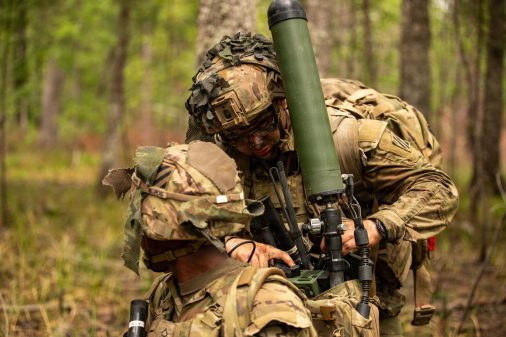
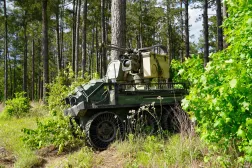
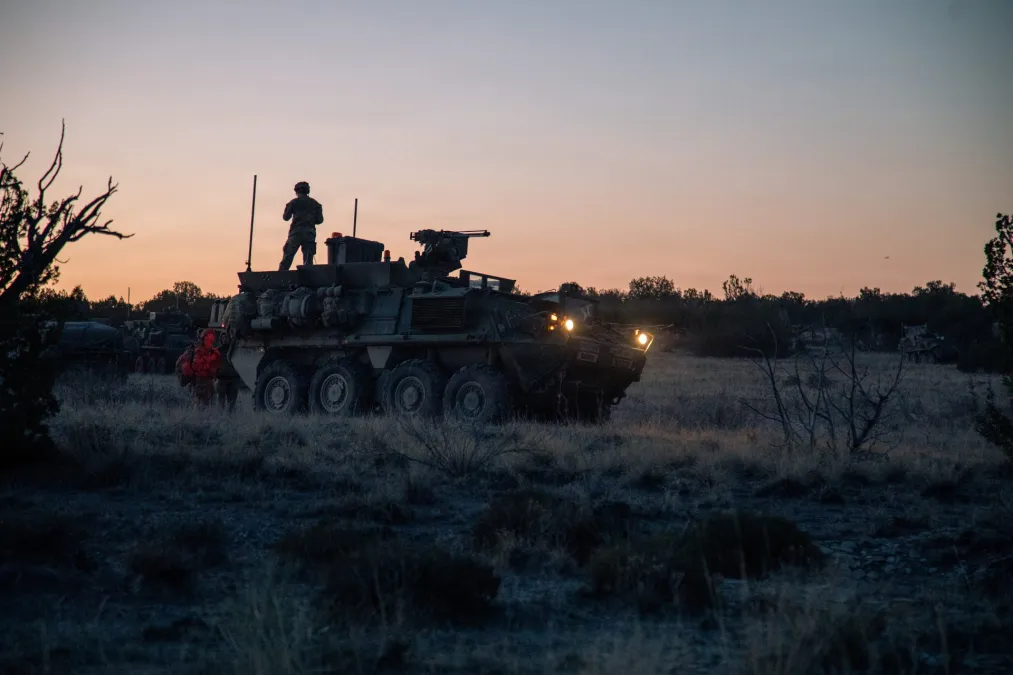
Missile systems, tanks, drones — some equipment that traces its original design back to the 1980s and beyond — struggle to exchange data, especially with new technology as it appears. Modern conflict has shown that barriers to quick, accessible information across sensors, drones, and units could define success or failure, officials said, and the Army wanted to “hack” its own systems to dismantle long-baked connectivity restrictions to achieve that success.
The issue is not new and follows a yearslong string of modernization strategies that, according to current Army officials, failed to yield the seamless battlefield connectivity needed against increasingly adaptive, sophisticated adversaries today.
The service wasn’t moving quickly enough to meet those threats. Moreover, the service needed to change the way it did business, officials said, so the vendors selling the Army those systems could change too.
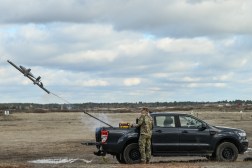
So, Right to Integrate (R2I) was born. Launched with little notice, the idea borrows heavily from hard-earned, adaptive Ukrainian architecture that Kyiv built out of necessity to combat Russian onslaughts. R2I was also galvanized by the Iran War, which wrought an urgent need for integrated U.S. defenses against Tehran’s deadly, one-way attack drones.
Operation Jailbreak was R2I’s first volley and is nearing the end of its first month-long “sprint.” Officials said hundreds of engineers and more than 50 defense companies have participated, despite the industry tradition of insularity.
Recognizing the drone threats from Iran, participants focused on counter-drone and air defenses first, with some “jailbroken” systems already deployed to the Middle East, officials said. It has also produced an application programming interface marketplace, where vendors and government officials can access interfaces to support the interoperability effort.
“We had to,” Army Secretary Dan Driscoll told reporters Thursday, citing the dangers service members face in the Middle East right now. Driscoll had a “light bulb” moment for the “hackathon” during a recent trip to Germany, where Ukrainians demonstrated the fruits of their efforts: the Delta system, which quickly pulls information from various battlefield sources into a common, real-time picture unlike the dissonant American configuration.
“When I testify and talk about what we’ve learned from Ukraine, and their speed, and their flexibility, and their adaptability, fundamentally, what they’re doing is they’re doing a hackathon as a country every single day and they are breaking through any problem that they need to fight off the Russians,” he added. “This is our best attempt to mimic what they are doing so well.”
Driscoll has called Operation Jailbreak the “largest hackathon in human history,” which is also an attempt to reverse decades of scattered acquisition that left countless military systems unable to talk to each other at a time when Army officials say the service cannot afford such incoherence on the modern battlefield.
Jailbreak’s framework will allow the Army to connect new systems, officials said, especially for the tens of thousands of new drone interceptors the service rushed to field in the early days of Operation Epic Fury. The service is already looking to replicate the model across the Army.
While some of the solutions from Jailbreak have already gone to the Middle East amid a brittle ceasefire between Tehran and Washington, the goal is to push “most” updates from the hackathon to U.S. Central Command within 30 days. If not, “we are failing,” Driscoll said.
Sticks or Carrots?
Earlier this month, DefenseScoop traveled to Colorado and observed the engineers working through the first days of Operation Jailbreak. There, and according to nearly a dozen interviews with service officials and industry professionals since, a “culture change” the Army has been trying to foment over the last 18 months is materializing.
No business developers, keen on growing their company’s margins, were allowed – only engineers keen on solving code. A company’s “ticket to entry” amounted to a willingness to expose its own interfaces, not only to the Army, but to its competitors. That alone might have some defense observers raise an eyebrow, knowing the long history of internal protectiveness in the industry.
Yet, defense heavyweights old and new sent representatives — voluntarily and on their companies’ dime — to dig through code alongside smaller vendors in growing numbers. Army officials scuttled between meetings, intent on making sure the engineers were stocked up on necessities, from internet ports to chairs for the swell of participants and a space for equipment in a nearby motorpool to test their work.
In a press release announcing the initiative, the Army’s Chief Technology Officer Dr. Alex Miller put it simply: “If you do not expose your interfaces and your documentation, you will not be able to join the ecosystem.”
Participating vendors were required to sign a statement of support, a copy of which was obtained by DefenseScoop. It described the “urgent need” for integrated systems based on “operational reports from combat activities across the globe” and included a broad-stroke description of the Operation Jailbreak sprint.
“We support the Army’s integration efforts and will participate in this sprint at no cost to the Army,” it said above the signature line. “We will provide technical representatives with the authority to support the integration of our products.”
The face-value reasons for industry participation appeared varied, but connected. One data engineer said there was the “fear of being left behind” and an interest in showing up to “see what’s happening.” Some Army officials touted efforts of new leadership, increased “patriotism,” and partnership between industry and the service that seeks to bring new opportunity for both, though one noted some initial “bare-knuckle boxing” over different, unnamed issues.
That dynamic seemed to be reinforced by both Army and industry understanding that participation did not mean sharing intellectual property. Essentially, the Army asked industry at Carson to standardize how systems talk to each other, not necessarily expose how the system’s proprietary IP works.
“The Army’s not asking anybody to expose internal intellectual property, they’re saying there’s a common way that these systems talk,” said Zach Kramer, Anduril’s Mission Command lead. “Your proprietary IP should be built into the radar or into the effector that is there, and then you have a common interface layer” where they can interact.
That said, there were questions about IP.
“I think it’s uncomfortable for some,” said Capt. Alexander Crosby, one of the Army officers supporting Jailbreak said of his observations when asked about possible industry hesitance, noting some had initial IP concerns. Crosby and other officials said lawyers, contract specialists and project managers were on standby to help iron out decisions or questions. “But you have to be uncomfortable to make change.”
That said, knowledge sharing naturally occurs between vendors at Jailbreak and competition is still a driving factor. When asked how the Army intends to prevent an environment where vendors might intentionally or purposefully take from each other, a spokesperson acknowledged the inquiry, but did not respond by deadline. How the Army intends to enforce a “play nice” environment or corral vendors who might not, also went unanswered.
Driscoll described several moves that began 18 months ago that supported this effort, including a $65 billion cut to fund the Army Transformation Initiative, overhauled acquisition processes — including venture capital-style funding and industry access to Army land — and the creation of new entities like a counter-drone task force.
But the launch of Operation Jailbreak also required vendors, initially nine, to agree to participate, virtually at the same time. Driscoll said he made calls to company leaders in a 24-hour timeframe, which included consuming a bit of humble pie.
“I can tell you on some of the calls I opened in my opening intro or monologue about how being the person that had gone on record in my first couple of months saying I would define success as one of the primes going out of business and the remaining primes getting stronger, I then led with ‘you guys have been proven to be amazing partners.’” Driscoll said. “‘I have realized why a lot of the original flattening that I had done of some of the bad outcomes over-blamed you — though you own some of it, so does a lot of the Army.’”
Miller, the Army CTO, said he would “unequivocally categorize it as a change” during an interview near Fort Carson, which has become one of the service’s de facto test beds for command and control. But he echoed that the changes needed to be two-sided.
The service spent decades buying “exquisite” military systems — meaning high-tech, but difficult to produce and connect en masse — from defense companies without meaningfully requiring that those systems were capable of talking to each other. The defense companies delivered, resulting in a cascade of “bespoke” equipment the Army spent untold resources trying to eventually integrate, only for those connections to regularly fail.
The integration oversight reinforced some of the most insular traits of the military-industrial procurement system that the Army is now trying to break, Miller explained. Unlike the commercial market where there is opportunity to sell products to many buyers that could physically accept them, the defense industry didn’t have an incentive to be “open” because it relied on the military as a sole customer, which never adequately asked for it.
“We’ve actually created a perverse incentive over time by creating monopsonies inside the government and monopolies inside the defense industrial base,” Miller said. By breaking those up, the two can break from a “Cold War mindset, where the first time we design[ed] a system [was] the last time we design a system.”
With Jailbreak and R2I overall, the Army is attempting to better define what it wants from industry: new systems to be “interoperable” from the get-go. And it wants those new systems to be able to connect with old ones so it can have a fast, accessible common operating picture similar to Ukraine’s — and to create an environment where vendors aren’t locked in to narrow, bureaucratic contracts that officials say stifled opportunity.
“There’s no stick, it was all carrot,” Miller said. “Everyone showed up voluntarily, because it’s so important. A couple of the engineers that I’ve talked to, they’ve already taken the practices here and pushed it back into their internal company development pipelines.”
The initial companies, which included Anduril, Boeing, General Dynamics, L3Harris, Lockheed Martin, Northrop Grumman, Palantir, Perennial Autonomy, and RTX responded to Driscoll’s calls in a way he did not expect, offering to quickly dispatch software engineers and ship equipment.
“My perception of this is there had been a first-mover problem, and a kind of a tragedy of the commons issue, where none of them could take the first step without being certain the others would come,” he said. “So once they were certain that the United States Army, as the convener, was requiring everybody — or strongly recommending everybody to show up — everybody came quickly, and it has unlocked massive momentum.”