Coast Guard adopts ‘whole new mission’ for drone defense at high-security events
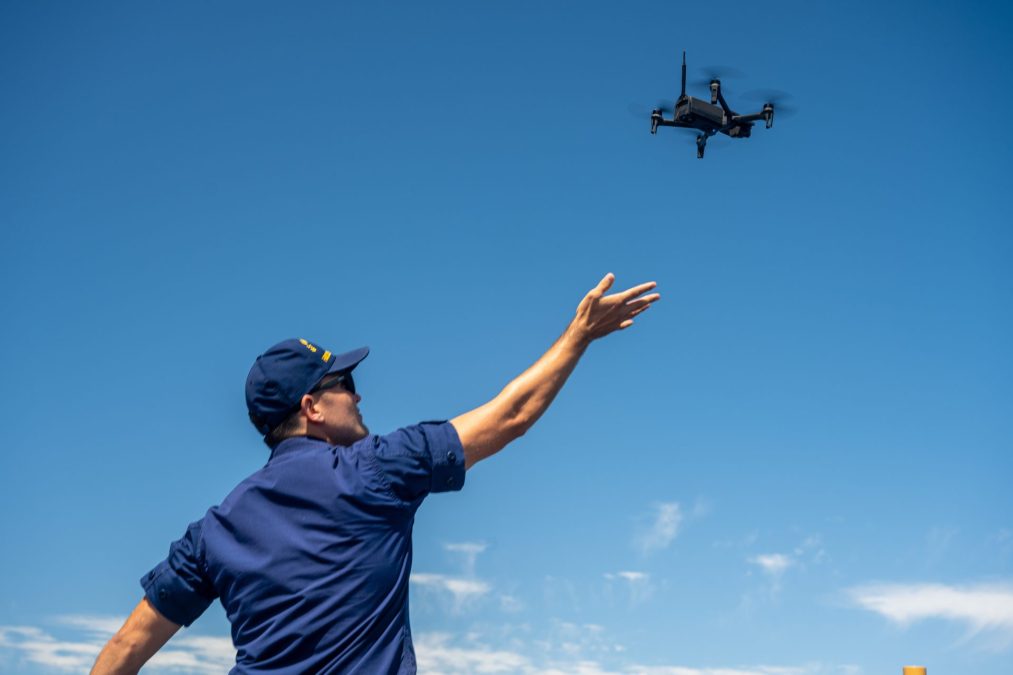
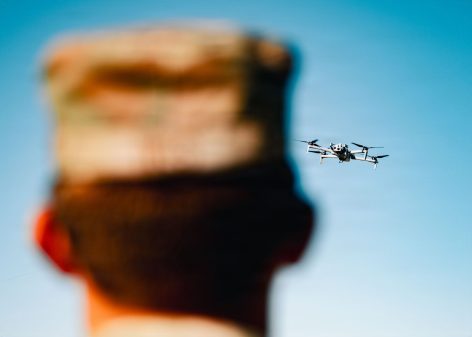
The Coast Guard will be “surging” counter-drone capabilities to upcoming, high-security events, officials said, training existing enlisted rates on the new UAS defense systems as the service stands up a specialized role focused on robotics.
Service officials said support for gatherings such as the FIFA World Cup and America 250 celebrations over the summer bring “a whole new mission set for us.” The comments, delivered at the Sea-Air-Space conference on Tuesday, come as the Coast Guard builds out its robotics repertoire.
“The Coast Guard is far more focused on a home game,” said Capt. Roberto Herrera, who manages surface and underwater portfolios for the service’s robotics and autonomous systems program executive office. “Most of the interest is domestic. It is the World Cup sites, it is domestically-hosted events that are nationally significant security events.”
Herrera did not specify the type of capabilities the Coast Guard would bring to these locations, but said the service used $150 million in reconciliation funding to purchase an initial tranche of equipment that personnel are currently training on.
“It’s not like every site will be covered 24/7,” he said. “It’ll be a mobile team that moves throughout the country to support the events.”
Following the publication of this article, a Coast Guard spokesperson issued a statement to DefenseScoop to clarify Herrera’s comments.
“Each FIFA World Cup and Sail 250 site the USCG is responsible for will be covered 24/7 throughout the duration of the activities at that site,” Lt. Cdr. Steve Roth, chief of media relations for the service, said Wednesday. “When activities conclude at one site, the mobile team responsible will relocate to cover activities beginning at a new site.”
Experts recently told DefenseScoop that drone threats to these events will be ubiquitous and require moveable teams to defend them.
Other services have signaled support to the upcoming gatherings, also citing security concerns. DefenseScoop recently reported the Army was leaning on its counter-drone marketplace, an “Amazon-like” platform that will allow military, federal, state and local personnel to purchase equipment to support security at such events.
“That’s a whole new mission set for us,” Herrera said of the Coast Guard, “and it’s quite impressive when you think of how we’re taking traditional yeoman, engineers, boatswain mates — we’re going to train them how to operate a completely different new capability.”
Meanwhile, the Coast Guard wants to grow by 15,000 personnel over the next two years, Herrera said. At least 2,000-3,000 personnel are expected to be robotic mission specialists, a recently announced rating that will see certain members operate and maintain drones, underwater vehicles, surface craft and other tech.
So far, the Coast Guard has no RMS personnel, Herrera said, which is why the service is cross-training existing enlisted rates for the stateside counter-UAS mission.
“It’s very tech-centric, and you have to be able to speak the language to know how to do it. It’s not something you can just ask any Coast Guard member to go to,” Herrera said when asked about RMS training. The goal is to “get it moving as quickly as we can and equip them to be ready for all — whether its mission planning, sustainment, operation[s], all of it.”
Updated on April 22, 2026, at 12:53 PM: This story has been updated with additional comment from a Coast Guard spokesperson.