Combatant commanders tour SNC’s Rocky Mountain Campus for updates on C2, comms protocols
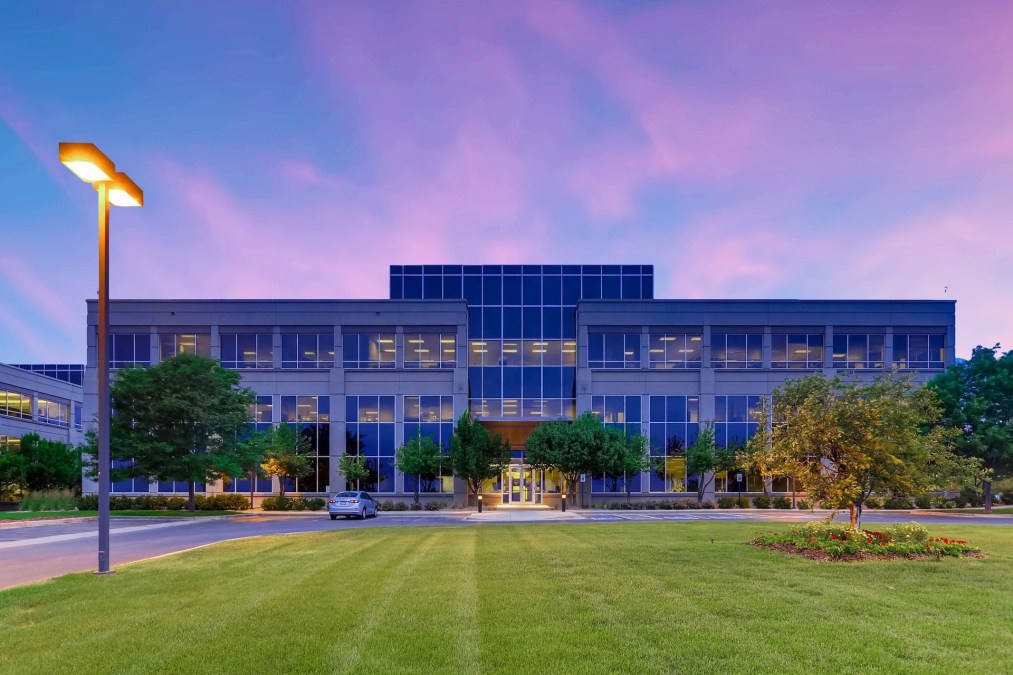
ENGLEWOOD, Colo. — Senior military officials from U.S. Transportation Command and U.S. Strategic Command toured Sierra Nevada Corporation’s Rocky Mountain Campus in Colorado on Monday, where they received executive briefings on modernization efforts to enable next-generation command and control.
This engagement comes as America’s adversaries are actively attempting to disrupt industrial supply lines and degrade the military’s communication networks.
“From the connectivity perspective, absolutely, we’re in the same place. [The two commands] face the same challenges,” Transcom commander Gen. Randall Reed said. “So, there’s an opportunity for our common needs to help inform the entire joint force.”
Reed and Stratcom commander Adm. Richard Correll discussed their major takeaways from the day in a joint interview with DefenseScoop at the end of the SNC tour.
In addition to overseeing the nation’s nuclear arsenal, Stratcom provides advanced global surveillance and intelligence assets to help ensure the logistics networks Transcom uses to move troops and equipment are not disrupted by adversaries, as well as the ability to rapidly and safely reroute its ships, planes, trains and people when threats emerge.
“There’s a portion of [Correll’s] mission where he depends on Transcom to provide forces for him — and when it comes to that aspect of the mission — assured communications is key,” Reed told DefenseScoop. “And so being here together to explore that space to make sure that we are connected to the joint force, we want to also make sure we are connected specifically to [Stratcom].”
During the daylong tour, the commanders observed technology demonstrations in SNC’s System Integration Command, Digital Cave, aircraft hangars and other facilities on the company’s sprawling campus. Briefings covered a range of capabilities SNC is developing and deploying, including its AEGIR family of autonomous unmanned surface vessels, Mobile Anti-Air Weapons Launcher-Reconfigurable (MAAWLR], Expeditionary Area Air Defense System (EAAD), and its solutions for Airlift/Tanker Open Mission Systems (ATOMS).
The company also discussed their cybersecurity products, rapid system modification capabilities and the importance of maintaining open communication protocols for military operations.
“This particular company won the contract for SAOC — so it’s the next-generation of assured command and control for the nation. And they immediately leaned forward in terms of investing in the aircraft that are going to be [involved in enabling] the platform for the future. And they have taken this approach that is creating a digital twin associated with that and making the data available to the service, right? So, it’s not a closed system in terms of the data, which is really important,” Correll told DefenseScoop.
The commander noted that while the Air Force is running the Survivable Airborne Operations Center (SAOC) acquisition and are moving out to field the capability, Stratcom plays a key role in articulating the demands of the future threat environment associated with that technology to the service and the company producing it.
SNC is executing the preliminary and critical design reviews for the SAOC program, which is valued at around $13 billion and designed to replace the military’s aging E-4B “Doomsday” fleet.
While the commanders attended closed-door meetings around the SNC facilities, senior officials from the company supplied DefenseScoop with unclassified versions of the presentations and demonstrations.
“What we’re doing on SAOC is what we call the ‘digital data package.’ We bought an extra engineering test aircraft as part of our engineering manufacturing development, and that aircraft is being digitally twinned now,” said SNC’s vice president for strategic aviation, Brady Hauboldt.
SNC initially purchased five Boeing 747-8i aircraft from Korean Air in 2024, with plans to transform the jumbo jets into the new, officially designated E-4Cs. Hauboldt described the physical scope of gutting the entire aircraft to scan it for a digital model so that engineers can know every data point to enable the modifications — and then rebuild it into its modernized form.
For instance, the environmental system on the original 747 aircraft was designed to cool an aircraft filled with passengers, while the new SAOC will instead have dense computing power to meet the military mission, creating an all-new environmental challenge.
Hauboldt said some SAOC aircraft are already in the U.S. for testing and others are overseas for heavy maintenance. The aircraft may be visible at the Dayton Air Show in Ohio later this month.
During Monday’s visit, the company also demonstrated what senior officials referred to as a novel communications protocol algorithm, to try to help break through potential loss of data from weather, jamming or other threats.
“It was just a really fascinating conversation,” Reed told DefenseScoop.