New science advisory council forms to help US government ‘resolve the UAP mystery’
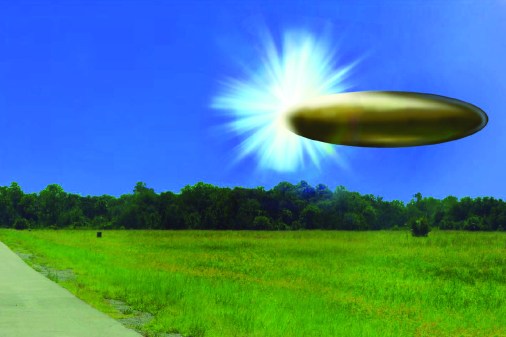
A new multidisciplinary team of expert researchers is assembling to supply scientific guidance to the U.S. government’s unidentified anomalous phenomena investigations and help agencies determine whether unexplained sightings pose national security threats or represent major new discoveries.
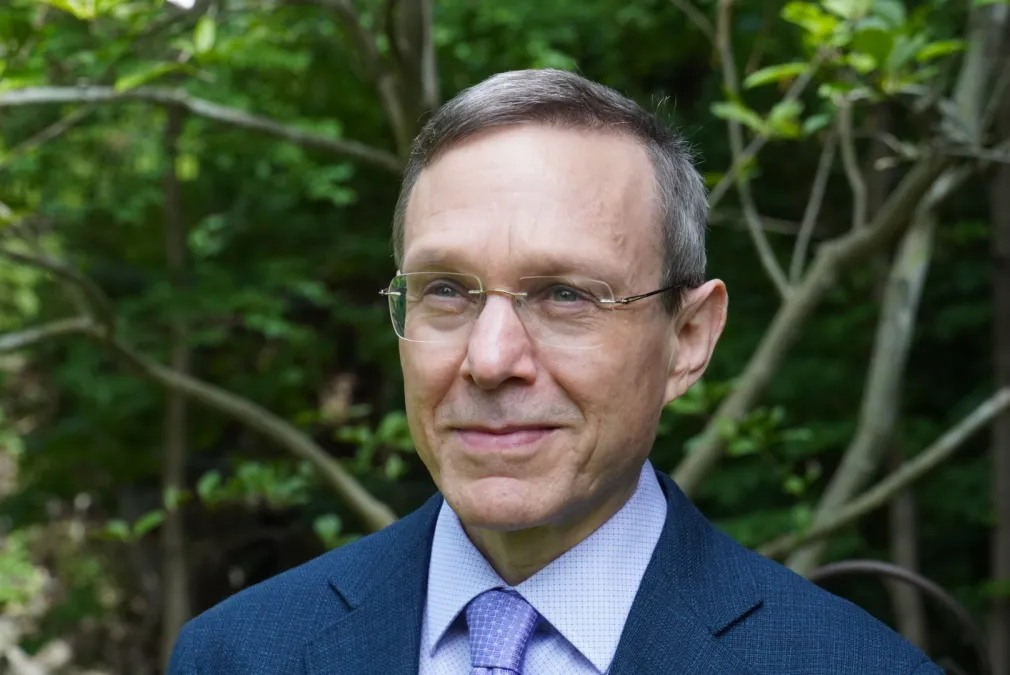
Well-known theoretical physicist and Harvard University Professor of Science Avi Loeb announced he would be leading this new UAP Science Advisory Council, which he unveiled in a post online this week.
Loeb and other officials involved in this work shared early details with DefenseScoop about the council’s vision and how it came together to support the Trump Administration’s new interagency UAP Governance Board.
“The [board], which will get advice from the science council as well as other committees, will assist in the timely coordination of declassification of UAP-related information, in accordance with Executive Order 13526, Classified National Security Information,” Loeb said, pointing to a presidential directive that establishes the uniform system for classifying, safeguarding, and declassifying NatSec records. “The goal of the council is to advise the U.S. government on how to resolve the nature of [UAP].”
Federal agencies and the military have a long and complicated legacy dealing with technologies and craft that personnel have reported performing in ways that seem to defy or transcend modern capabilities.
At a high level, the Defense Department’s teams set up to study UAP — the modern term for UFOs and transmedium objects — have taken different shapes over the years. The All-domain Anomaly Resolution Office (AARO) is the latest version. It was set up under the Biden administration in 2022 to fulfill a requirement in that year’s National Defense Authorization Act, following concerns from lawmakers that some UAP could be high-tech drones or other platforms developed by America’s enemies.
The office has issued multiple reports spotlighting the ever-expanding DOD portfolio of UAP investigations, and its insiders have maintained that they have found no evidence to confirm that any UAP cases involve extraterrestrial activity or technology to date.
In February, President Donald Trump indicated that he would be directing Defense Secretary Pete Hegseth and other relevant departments and agencies to “begin the process of identifying and releasing Government files related to alien and extraterrestrial life, [UAP], and unidentified flying objects (UFOs), and any and all other information connected to these highly complex, but extremely interesting and important, matters.”
So far, there were three batches of UAP files released on May 8, May 22, and June 12, 2026, via this initiative.
Loeb noted that the latest collection includes a new report that’s dated June 5, 2026, and signed by AARO’s Director Jon Kosloski.
“The report mentions that during two days in October 2023 law enforcement officials noticed anomalous phenomena including an orange ‘mother’ orb launching smaller red orbs. About 40% of the reported phenomena lack a reasonable explanation and remain unresolved,” Loeb told DefenseScoop. “The civil duty of scientists like myself is to serve the U.S. government by interpreting existing data or recommending how to get new data that would resolve the nature of UAPs. This is a detective story that can be resolved with better data.”
The scientist confirmed that all of the data shared with the newly installed team will be unclassified.
The UAP Science Advisory Council will report to a higher-level UAP Governance Board, which Loeb said will serve as an interagency body that can use each of its members’ capabilities and unique authorities to cohesively address national security threats posed by unexplained phenomena.
An ODNI official told DefenseScoop that the agency — alongside the FBI and DOD — established that new board “to provide guidance, recommendations and coordination at the interagency level, bringing together military, law enforcement, the intelligence community, and other civilian agencies,” in support of Trump’s recent directive on UAP transparency.
“The UAP Governance Board met for the first time yesterday,” the ODNI official said on Wednesday, without sharing the identities of the original participants.
The board’s mission statement includes that members will “integrate and optimize interagency processes involved in the investigation of UAP incidents and collection procedures used to analyze UAP data to ensure more effective support to” AARO.
The ODNI official also confirmed that the board is supported by several advisory groups with expertise and work outside the U.S. government, including the UAP Science Advisory Council.
Loeb supplied a list of other experts joining him on the new science council in its earliest days, as well as their focus areas in this forthcoming work to, as he put it, “help AARO resolve the UAP mystery.”
He said they are: Prof. Carol Cleland, anomaly identification; Dr. Richard Cloete, data analysis and AI tools; Dr. Omer Eldadi, data management, AI, and human psychology; Dr. Tim Gallaudet, oceanography; Ross Howard, communication; Ben Lamm, oceanography and biology; Dr. Devesh Nandal, numerical analysis and astrophysics; Prof. Garry Nolan, molecular biology and materials science; Dr. Michael Shermer, the study of anomalies; Dr. Peter Skafish, anthropology; Prof. Matthew Szydagis, instrumentation and data collection; and Dr. Jennice Vilhauer, quantitative psychology.
“Since UAPs are physical objects that interact with humans, the council includes members with expertise in physical sciences as well as psychology and biology,” Loeb explained. “All members had an intense interest in the scientific study of UAPs for many years.”
Among them is Tim Gallaudet, a retired U.S. Navy admiral who previously served as commander of the Naval Meteorology and Oceanography Command, assistant secretary of Commerce for Oceans and Atmosphere and in other senior roles.
Gallaudet told DefenseScoop that he hopes to apply his expertise and experience in ocean science, as well as government leadership, to help the council “most effectively accomplish its mission and support the new UAP Governance Board.”
During his own decades-long career, Loeb has advised lawmakers and U.S. government leaders on science and space matters, and also held many leadership positions in academia.
Over the past five years, he’s led the Galileo Project at Harvard University in search for extraterrestrial technological artifacts near Earth. At this point, the research team operates three observatories that collect and analyze data on millions of objects as they hustle to discover outliers that fall outside the performance envelope of human-made technologies.
“My leadership style promotes transparency and trust. This is why I was the longest serving chair, for three terms of 3 years, in the history of Harvard’s Astronomy department,” Loeb said.
In his view, if the orbs in AARO’s recent report represent unknown technologies employed by adversarial nations, then they would mark a serious breach of national security.
That’s why he believes that resolving their nature should be a high priority for the U.S. government, requiring the development of better sensors and AI algorithms to collect and interpret new data.
“The down-to-Earth interpretation of UAP is that we are dealing with human-made technologies. In this case, the defense system of the U.S. against espionage on strategic assets is being compromised,” Loeb told DefenseScoop. “We know about the Chinese spy balloon that was shot down in 2023. When finding an ant on the kitchen cabinet, we get alarmed because we realize that there must be many more ants hiding elsewhere in the kitchen.”
The frequency of the new science council’s meeting cadence has not been decided.
“We will make the best lemonade out of the lemons we are given,” Loeb said. “The best is yet to come. Stay tuned to future updates.”