Army awards $196M for sensors in first production contracts under EW-focused call for solutions

The Army awarded two electronic warfare-related contracts with a combined value of nearly $196 million, officials said Thursday, marking the first production deals under a new rapid call for solutions program focused on technology meant to help soldiers fight in the electromagnetic spectrum.
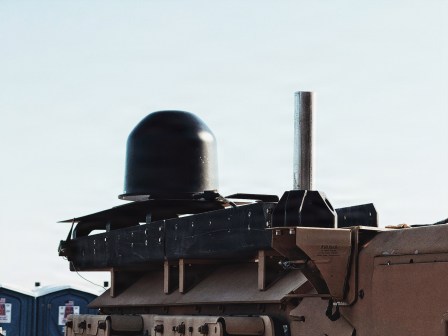
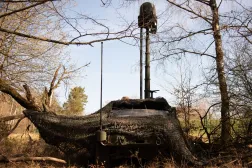
The service awarded Heaviside Industries Inc., a California-based startup focused on autonomous precision munitions, $99 million for its MOTH spectrum analyzer, according to an Army press release. The service also awarded Research Innovations Inc. $96.9 million for its AI-driven Dragonfly sensors, which will be integrated with another company’s drone.
The contracts stem from the Army’s Rapid Electromagnetic Warfare and Signals Intelligence (REWSI) call for solutions, which was announced in April. It is meant to give the service a vehicle for commercial EW tools, streamlined acquisition and “faster access” to different technologies, according to Joe Welch, the service’s C2 portfolio acquisition executive.
“The first two awards represent an innovation in defense acquisition — transitioning the enterprise from a reactive posture of developing proprietary systems to match emerging threats, to a proactive strategy of leveraging market velocity to consistently outpace them,” Col. Scott Shaffer, project manager for the service’s EW and collection portfolio, said in the release.
Top service officials and soldiers have been warning about what a “transparent” battlefield means for U.S. warfare. The war in Ukraine has demonstrated that even small signatures can become fodder for targeting in a matter of minutes because signals across electromagnetic spectrum operations (EMSO) are much more detectable amid the growing suite of advanced sensors and drones.
The Army is trying to catch up.
“The pace of technology evolution is faster than the pace of traditional procurement processes and this is particularly evident within the EMSO environment,” Welch said earlier this year.
The service recently approved a “Characteristics of Need” criteria for what it was looking for in EW tools from industry. Those include attack, support, protection and common services requirements, according to Breaking Defense, citing an initial request for information that has since had its description documents deleted.
Generally, those characteristics revolve around jamming, sensing and protecting from enemy attacks.
Chris Manning, capability program executive for intelligence and spectrum warfare, told reporters last month that the idea was to define the EMSO problem more “broadly” to industry, rather than being too prescriptive in technology requirements.
“These are the problem sets, what do you have technology-wise that we can go after?” he said during a media day at Aberdeen Proving Ground, Maryland. “Iterating that with units, defining what do we want to take to scale, and then being able to actually go buy those things.”
The Army described Heaviside’s MOTH system as a “small form factor” sensor that detects and reports signals in the EMSO for ground units; the company was awarded late last month. Research Innovation will attach its Dragonfly sensor to Menet Aero’s Intrepid drone.