Transparency proponents meet Trump’s UAP disclosure tease with hope — and caution
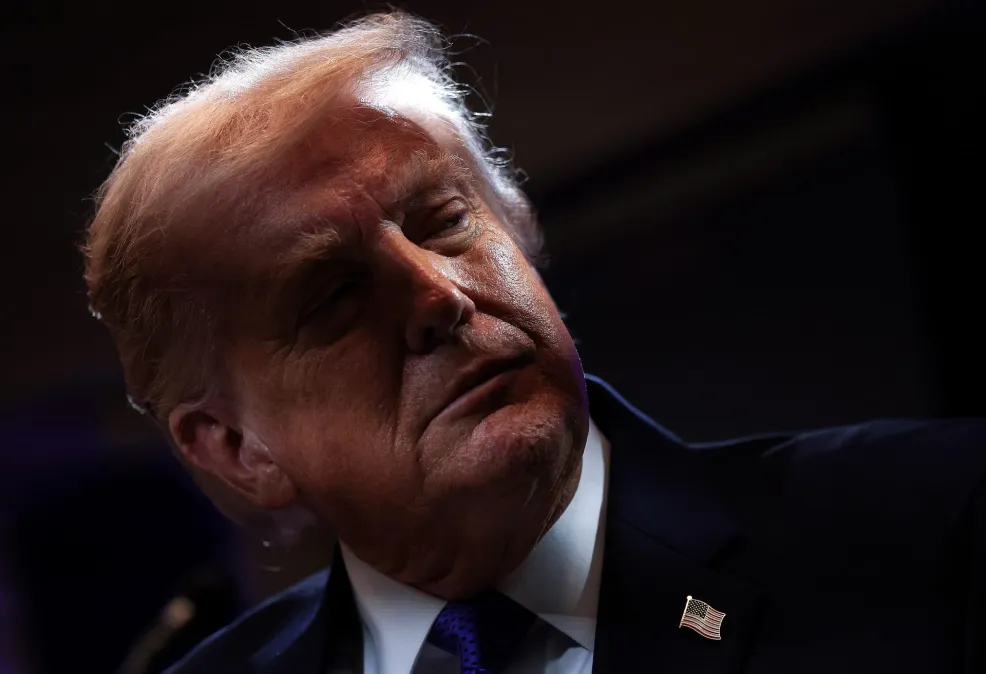
President Donald Trump’s vow this week to direct the release of government files about UFOs and aliens is sparking a new wave of anticipation and momentum around long-standing calls for more transparency on this historically taboo topic, experts and whistleblowers told DefenseScoop.
Yet as they acknowledge that this could mark a meaningful step towards addressing national security concerns, public intrigue and congressional oversight, multiple officials who have been involved for years in influential U.S. government disclosure efforts said they’ll remain skeptical until the second Trump administration generates tangible results.
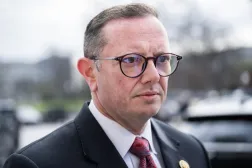
“This might be a consequential moment, but the impact will depend on the follow-through,” Christopher Mellon, former deputy assistant secretary of defense for intelligence, noted.
The Pentagon has a long but sticky legacy when it comes to dealing with technologies and craft that personnel have reported performing in ways that seem to transcend modern capabilities. At a high level, the Defense Department’s teams to study unidentified anomalous phenomena — or UAP, the modern term for UFOs and transmedium objects — have taken different forms over recent decades.
Its most recent version — the All-Domain Anomaly Resolution Office, or AARO — was officially set up under the Biden administration in 2022 to fulfill a requirement in that year’s National Defense Authorization Act. Lawmakers were concerned that some UAP could be high-tech drones or other platforms developed by adversarial nations.
AARO officials briefed Congress and issued several reports spotlighting the ever-expanding DOD caseload of UAP investigations early into its establishment. The office has maintained that it has found no evidence to confirm that any UAP reports involve extraterrestrial activity or technology.
But more recently, AARO has, as several sources put it, “gone quiet” in terms of its ongoing activities, responsibilities, and latest findings.
“The president’s directive should put constructive pressure on every relevant entity — including AARO — to participate more consistently and to meet statutory reporting requirements. AARO has yet to fulfill its statutory obligations. It has released neither the second volume of a congressionally mandated report on government involvement with UAP nor the required 2025 annual report,” Mellon, who currently chairs the Disclosure Foundation’s board, said. “The public’s trust has been eroded and must be restored. Fulfilling reporting obligations is a good step in that direction.”
Pentagon spokespersons did not respond to a request from DefenseScoop earlier this week for an update on AARO’s current caseload, among other related inquiries.
Retired Rear Adm. Tim Gallaudet, a former oceanographer of the Navy who has testified before Congress on UAP topics, told DefenseScoop that the president’s pledge to disseminate previously disclosed records is significant because “he has the authority to do it, while AARO is subject to executive branch policy priorities.”
“As with other promises made by Trump, I’ll believe it when I see it,” Gallaudet said. “Sometimes he follows through, such as the initial strikes on Iranian nuclear sites, but other times he does not, like ending the Russia-Ukraine war in a day.”
Specifically, the president posted on social media Thursday that, “based on tremendous interest shown,” he will direct Defense Secretary Pete Hegseth and other relevant departments and agencies to “begin the process of identifying and releasing Government files related to alien and extraterrestrial life, unidentified aerial phenomena (UAP), and unidentified flying objects (UFOs), and any and all other information connected to these highly complex, but extremely interesting and important, matters.”
In response to a request for comments on the new mandate — and information about AARO’s potential role in the work — Chief Pentagon Spokesman Sean Parnell told DefenseScoop on Friday that the “department looks forward to working with the interagency to fulfill the president’s directive.”
Shortly after Trump aired his plan and the White House shared it, Hegseth posted a screenshot with an alien emoji and a saluting emoji.
“At this point, the real questions are: Can they find answers that have been hidden? Can any answers involving weapons or technology actually be released?,” said a UAP whistleblower who has participated in closed-door briefings with lawmakers and was granted anonymity to speak freely about his experiences.
“Unfortunately, if extraterrestrial craft have crashed and been reverse‑engineered, the United States is not going to reveal the weapons or technology derived from them. That’s why I believe many people celebrating this announcement may end up disappointed — not due to a lack of effort, but because of the nature of the information involved,” he said.
Based on conversations he had in the aftermath of Trump’s announcement, the whistleblower predicts this will become a full‑scope effort involving the Intelligence Community and multiple government entities.
“Whether aliens or non‑human intelligences exist remains uncertain, but what is certain is that drones flew over Langley [Air Force Base] without being tracked, intercepted, or brought down. This is just one of many serious airspace vulnerabilities, and I believe this hunt for records will expose them,” he said. “Right now, we are effectively flying blind, even with new legislation on counter‑drone measures at sensitive sites.”
Both AARO and the National Archives and Records Administration are currently leading initiatives to digitize, declassify and release government records on UAP for the public, pursuant to several NDAA mandates passed in recent fiscal years.
“One step that can be taken immediately is to declassify events from 50 years ago. Technologies used half a century ago are no longer strategically sensitive. Releasing older data could significantly advance scientific research,” Harvard University professor and astronomer Avi Loeb said.
Loeb has also briefed Congress on UAP and national security. He leads the Galileo Project, which searches for extraterrestrial technology via multiple observatories.
He told DefenseScoop he would be delighted to help the government “in unraveling the meaning of the disclosed data” — and to help interpret new information about anomalous objects as it emerges.
“I hope we will learn a lot from the disclosure, including what AARO knows. The U.S. government monitors the sky and the oceans routinely and would have been the first to document anomalous objects,” Loeb said. “If we are visited by non-human technological objects, I hope to see clear scientific evidence for it.”
In Mellon’s view, the real test will be whether agencies actually identify the records they have, preserve them, and then appropriately release information — rather than defaulting to over-classification or procedural delay.
“This directive is different because of its authority and scope. Previous legislative transparency efforts had narrow reporting requirements with limited mandates. If executed seriously, a presidential directive can compel broad, cross-agency participation and set expectations beyond a single reporting lane. A whole-of-government approach may be required to restore effective oversight and public trust,” he explained.
That former senior defense official, among other sources who spoke to DefenseScoop on Friday, emphasized that genuine disclosure will not result from a single announcement. Instead, it requires a structured process, coordination across agencies, engagement with Congress, and a methodical declassification review — if the outcome is to be credible and durable.
“We know that the truth is unlikely to emerge overnight. Classification barriers, institutional caution, and bureaucratic foot-dragging are real headwinds in this effort,” Mellon said. “But if this is pursued consistently and in good faith, the process will gain momentum and begin to break down the remaining walls of secrecy that have surrounded this topic for decades.”
Notably, Trump’s proclamation came after he was asked by a reporter about statements made by former president Barack Obama in a podcast “lightning round” of questions regarding his personal views on aliens and whether they exist, which went viral this week.
Two sources noted that it also comes at a time when the administration is facing mounting pressure from the public regarding Trump’s connection to the disgraced financier, Jeffrey Epstein.
“There are still 2.5 million pages of Epstein files yet to be released,” Gallaudet noted.
Trump has denied any involvement in Epstein’s illicit activities.
As an appointee in Trump’s first term, Gallaudet served as the assistant secretary of commerce for oceans and atmosphere and acting administrator of NOAA. Now, he said he’s been watching Trump’s second term closely.
“He’s a mixed bag. Some things are going well, such as with the reinvigoration of American maritime dominance and artificial intelligence, but others are not, foremost being the cryptocurrency corruption [allegedly] pouring tens of millions of dollars into his family,” Gallaudet said. “So it’s anyone’s guess about disclosure.”
Others expressed similar sentiment.
“If the status quo remains, the answers will remain the same. The only real change here is hope — hope that this time will be different,” the UAP whistleblower said. “But for that hope to pay off, the facts and evidence must reach the right people, and historically that has been blocked. [Massive spending that spans] over decades, with massive silos of personnel, do not give up their secrets easily.”