Joint Chiefs chairman says U.S. forces must prepare to be ‘hunted’ by autonomous systems
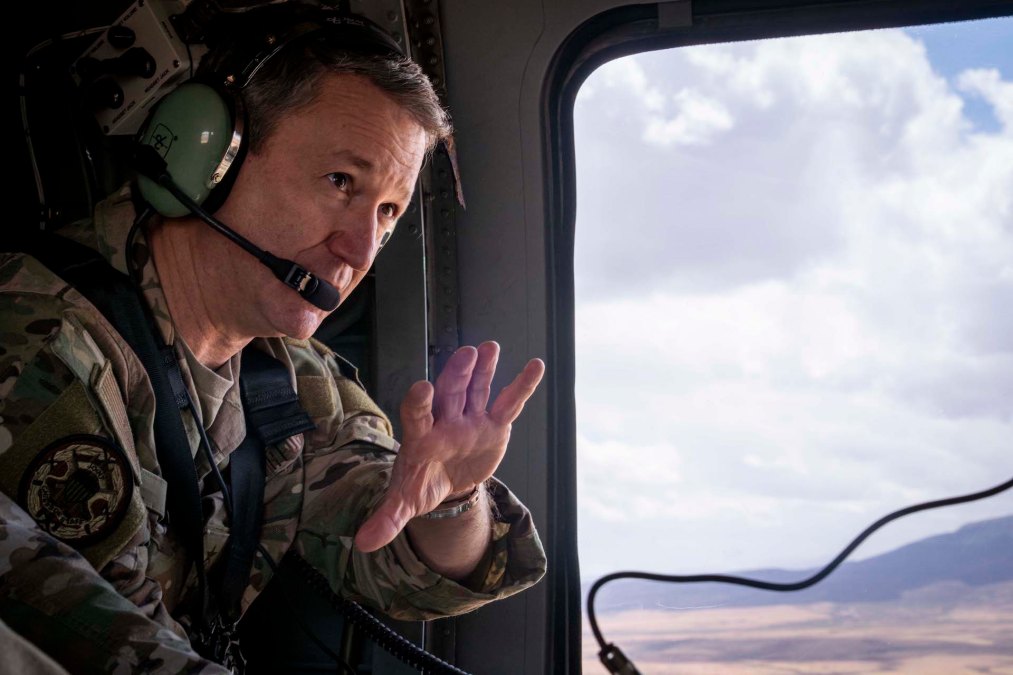
The age of AI-enabled drone warfare is here, and U.S. military leaders should assume that their troops will be “hunted” by autonomous systems on the battlefield, according to America’s top officer.
Chairman of the Joint Chiefs of Staff Gen. Dan Caine highlighted the threat during a keynote speech Wednesday at AFA’s annual Air, Space and Cyber Conference, citing the Ukraine-Russia war as an example.
“In Ukraine, we see … first-person view drones operating in heavily contested [electromagnetic interference] environments, some now using AI-enabled computer vision to continue to drive towards targets even when there’s no GPS or the links are cut. That gives small units affordable precision and shows how quickly software and autonomy are changing what is possible at the tactical edge. And the results are stark,” Caine said.
“In certain locations on the front line of troops right now, the life expectancy of a new Russian recruit arriving on the front lines is as little as 20 to 30 minutes. Think about that. This is what happens when low-cost precision [weaponry] is fielded fast, adapted quickly, and scaled across the battlefield. The price of lethal exchange is decreasing day over day. One wonders what the future of close air support looks like, but I am comforted by the fact that each and every one of you are in this room thinking about that,” he told conference attendees.
American forces need to be ready to operate in that type of conflict environment, he noted.
“We have to assume from now on that our formations will be hunted by autonomous systems, jammed across the spectrum, and tracked in real time. And we have to transition the joint force to be prepared to fight and win our future wars by generating and delivering lethality at scale with an agile, optimized, high-low mix of combat capabilities to give the young members of the 2.8 million member all-volunteer joint force the tools that they need before they need them,” Caine said.
Advancements in AI and cyber capabilities are the top factor in accelerating changes in warfare, according to the chairman, who noted that such tools can help with many key elements of operations.
“In the future fight, advantage will go to the side who can see first, who can understand first, decide first, and act first, and along the way be a learning organization,” Caine said. “AI is here now and it’s already changing the way militaries see, sense, decide and act. And across the joint force, we’re putting AI to work every single day to move faster, to make better decisions through active adaptation on every single battlefield by leaders in your joint force.”
Pentagon leaders have previously touted how the Maven Smart System aided U.S. military operations during Operation Epic Fury against Iran.
During his keynote Wednesday, Caine highlighted how AI and unmanned systems technology contributed to the rescue of downed Army Apache helicopter pilots near Oman in the Strait of Hormuz just a few months ago.
As DefenseScoop previously reported, an autonomous Corsair surface vessel built by Saronic was deployed in June by Task Force 59 under U.S. Central Command to find and recover the two service members amid the conflict with Iran.
“That capacity did not appear overnight. It came from the men and women of Task Force 59, Centcom’s forward-leaning unmanned joint maritime unit who spent the last several years testing, integrating, and operationalizing unmanned systems and AI in one of the most demanding and kinetic environments on Earth right now,” Caine noted.
“What made this [successful rescue] possible was a bunch of entrepreneurial sailors and members of the joint force on watch floors at piers, managing networks of unmanned systems across thousands of miles of water, and using AI to turn massive amounts of data into a crisp, clear, perfect maritime picture that allowed us to go grab those two soldiers in the water,” he added.