SOCOM highlights 6 focus areas for naval capabilities modernization
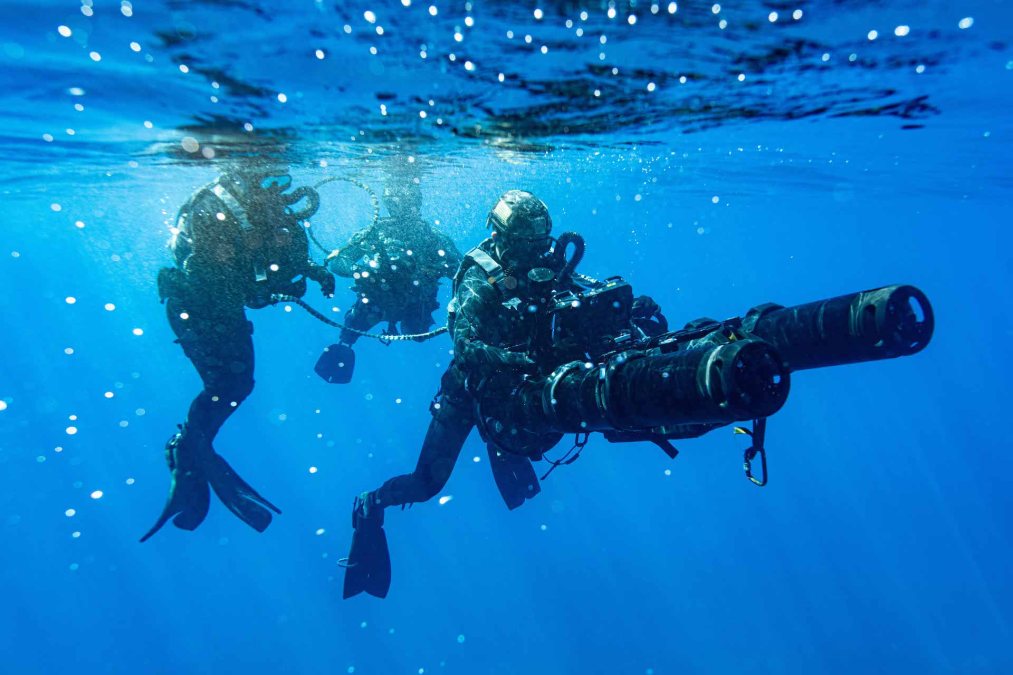
U.S. Special Operations Command’s acquisition, technology and logistics directorate is looking to partner with members of industry and nonprofit organizations via a new initiative focused on modernizing SOCOM’s maritime and cross-domain capabilities, according to a sources-sought notice published Friday on a government contracting website.
The Advancing Naval Capabilities through Holistic Opportunities and Resources (ANCHOR) effort aims to use other transaction agreements to develop prototype solutions related to six focus areas: unmanned systems; counter-unmanned systems; command, control, communications, computer, cyber, intelligence, surveillance and reconnaissance (C5ISR); “scalable effects”; human performance; and human-machine teaming.
The effort will be executed with partners under a Participant Basic Agreement, according to the notice.
The command is looking for tools that will help synchronize operations across warfighting domains and better enable distributed and networked ops.
SOCOM is keen on robotic systems that can aid special operations forces and keep troops out of harm’s way.
“Across the maritime domain, USSOCOM is increasingly leveraging unmanned and autonomous systems to push the limits of where and how its forces can operate. Integrating unmanned aerial, surface, and underwater platforms enables longer persistence in contested and denied environments, surveillance and reconnaissance in high-risk areas, and enhanced situational awareness without exposing personnel to unnecessary danger,” per the notice.
“USSOCOM is particularly interested in capabilities that improve cross-domain coordination, reduce the logistical footprint of deployed forces, and deliver reliable data and effects in dynamic maritime conditions,” officials wrote, noting their desire for innovations in autonomy, sensing, endurance and resilient comms.
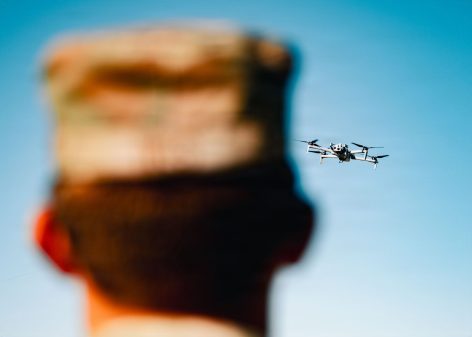
To adapt for an era in which drones are proliferating and being heavily featured in modern conflicts, the SOF community also wants tools that can counter adversaries’ robotic systems.
“As autonomous and remotely operated platforms become more accessible and adaptive, the need for agile, layered defense systems has become essential to preserving operational security and freedom of action. USSOCOM is interested in technologies that detect, track, and neutralize unmanned threats—from individual platforms to coordinated swarms—within the constraints of maritime special operations,” per the notice.
Officials wrote that solutions would need to be optimized for size, weight and power, and be able to function in electronic warfare environments.
The backbone of SOCOM’s future force design is a resilient C5ISR network that better connects sensors, shooters and commanders. That vision is in line with the Pentagon’s high-tech warfighting construct known as Combined Joint All-Domain Command and Control, or CJADC2.
“Next-generation C5ISR systems are expected to integrate multi-source intelligence, resilient communications, and cyber-secure data networks, enabling USSOCOM operators to sense, process, and act faster than the adversary. USSOCOM is particularly interested in technologies that strengthen edge connectivity, leverage AI-enabled analytics for real-time situational awareness, and ensure data integrity across denied or degraded environments. Seamless integration of cyber defense, intelligence fusion, and tactical communications allows operators to maintain command and control across dispersed forces while enabling intelligence collection and dissemination at the speed of relevance,” according to the notice.
For the “scalable effects” focus area, the command is eyeing directed energy, electronic warfare, cyber, and other precision engagement tools that can be employed from maritime platforms and provide “tunable” impacts on adversaries’ systems. Such effects could range from reversible disruption and temporary degradation to permanent disablement, officials noted, with consideration given to limiting collateral damage and making attribution of U.S. attacks more difficult.
To improve the human performance of its operators and minimize injuries, burnout and attrition, SOCOM is interested in comprehensive physical conditioning programs as well as cognitive performance enhancement via mental acuity training, stress inoculation and neurological health monitoring, according to the notice.
Like other components of the Defense Department, SOCOM is aiming to advance human-machine teaming.
“Natural control methods, such as voice commands and gesture recognition, enable USSOCOM operators to direct autonomous systems while maintaining tactical readiness and operational security. This reduces the cognitive burden of system management, allowing operators to focus on tactical decision-making and leverage machine capabilities for surveillance, reconnaissance, and support functions,” officials wrote in the notice.
The command is also keen on using augmented and virtual reality technologies for training, so that operators can boost their human-machine teaming prowess while being free from the safety risks and logistical constraints associated with live training.
Industry responses to the sources-sought notice are due June 1.