Navy launches next-gen undersea security initiative
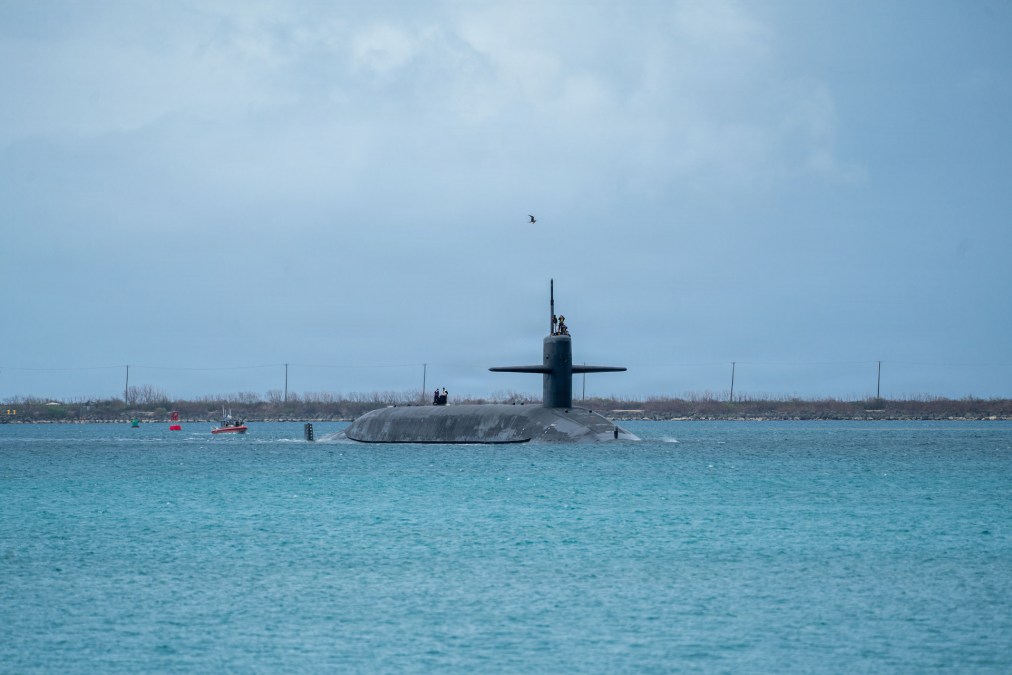
The Navy’s program acquisition executive for strategic systems programs is launching a Next Generation Undersea Security Initiative focused on unmanned systems, autonomy and other high-tech capabilities that could enhance and protect the sea service’s assets.
The SSP office is responsible for developing and sustaining sea-based nuclear forces and other advanced weapon systems.
Via the NG-USI effort, the Navy aims to create a “sphere of technological excellence” with members of industry and not-for-profit organizations to rapidly develop prototype solutions that “sustain and expand strategic superiority within broadly stated submersible operations,” according to a sources-sought notice published July 2.
The service plans to use other transaction authority and “maximum practicable competitive procedures” to award deals for the projects under the terms of a participant basic agreement.
The NG-USI has 22 focus areas, including tech to counter adversaries’ AI, autonomy and robotic platforms.
Specifically, the Navy is looking to prototype capabilities to “detect, track, identify, deny, and defeat unmanned systems across all domains (aerial, surface, underwater, and ground),” officials wrote in the notice, adding that the service seeks scalable solutions for shore-based installations and afloat operations in port, harbor, littoral, waterways and open ocean environments. Examples of desired tools include kinetic and non-kinetic “effectors,” and “physical denial” systems such as advanced netting or other modular means of shielding infrastructure.
The service is eyeing solutions to defend against complex threats such as autonomous drone swarms, AI-enabled intelligence, surveillance and reconnaissance efforts directed at nuclear facilities, and “AI-driven cyber-physical attacks or spoofing attempts” on strategic security networks.
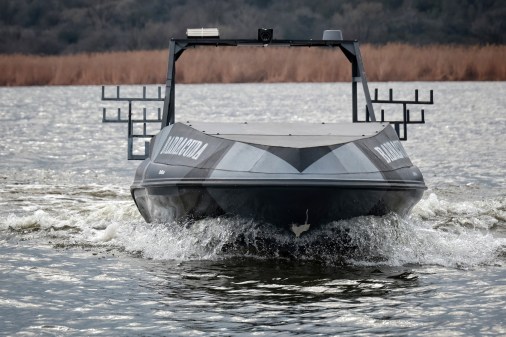
An aim of NG-USI is to prototype uncrewed and autonomous systems that could monitor and protect strategic ports, harbors and other facilities. Technologies that could potentially fit the bill include mobile surveillance kits, unattended surface and underwater sensors, and smart cameras with automated threat recognition capabilities “tailored to maritime conditions,” according to the notice.
The Navy is interested in commercial robotics to enhance security force operations via “persistent patrol, automated inspection, and rapid response integration,” such as maritime drones for waterside patrol and unmanned ground vehicles for perimeter screening.
Additional focus areas for NG-USI include signal mitigation for the Navy’s submarines and unmanned systems, electronic security systems and sensor fusion, enhanced access control and security screening, strategic maritime transit and escort security, and strategic ground convoy and land transit security.
Officials are also keen on prototyping devices, software, computational power and other tech to enhance fire control systems, among other focus areas listed in the notice.
Organizations that want to be part of NG-USI can pursue a participant basic agreement that will be offered to “qualified entities,” per the notice, which listed a primary point of contact for the effort.