Director of Pentagon’s secretive Strategic Capabilities Office lays out focus areas
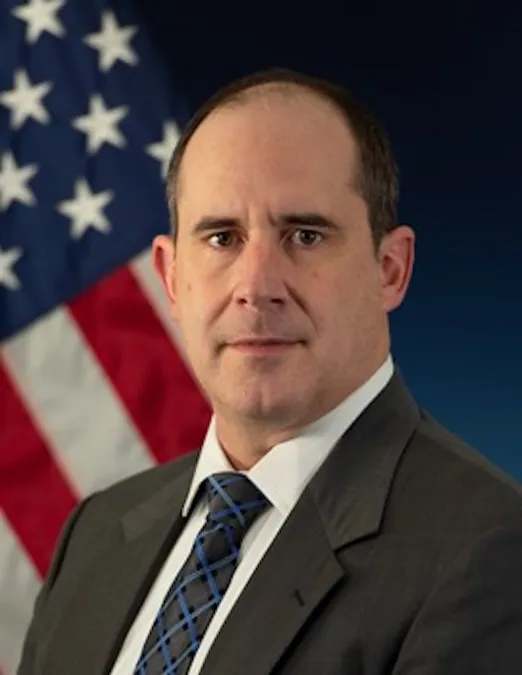
Much of the work of the Defense Department’s Strategic Capabilities Office is classified, but the secretive organization’s director recently shed light on the capability areas that the SCO is focused on.
The office, which aims to rapidly prototype and transition “game-changing,” high-tech solutions to address near-term challenges, is executing a $1.7 billion budget this year, according to SCO chief Jay Dryer.
Part of the Pentagon’s research-and-engineering directorate, the SCO partners with the combatant commands and the military services to meet their operational needs, including repurposing or enhancing existing programs of record, scaling existing concepts, and accelerating the maturation of government and commercial tech.
“For us, it doesn’t start with the technology. It starts with what does the warfighter need? What’s that operational problem that we’re trying to solve? What’s that opportunity that we’re trying to take advantage of? The formula is really kind of simple: start with the problem, look at a trade space of solutions, and then because of where we sit and who we are, that allows us to think service-agnostic and cross-domain. So you’ll find that we’re working air, land, sea, space, cyber. For the type of work we do, [we] make a decision and then show the efficacy of the method, demonstrate whether it’s going to work or whether it doesn’t, how we have to modify it, how do we actually field a disruptive capability that creates advantage for our warfighter?” Dryer said Friday at the AI+ Expo.
The SCO has three portfolios: long-range fires, autonomy and AI, and “special and enabling capabilities,” according to his presentation materials.
The long-range fires portfolio encompasses “kinetic” systems for both offensive and defensive purposes. “Generally, if it explodes, it is probably in this portfolio,” he said.
The autonomy and AI portfolio includes “the human decision-making side to it, the command-and-control aspects that come along,” he noted.
The special enabling capabilities that the SCO works on are related to things like cyber, electronic warfare, space and special operations forces, Dryer said.
The SCO’s eight focus areas across those portfolios include precision fires and lethal effects, contested and contesting logistics, novel employment and collaborative systems, deception and surprise, advanced kill webs, countering adversary or “red” kill chains, extended reach and survivability, and cost-effective air defense.
“You can almost summarize these on how do we enable blue kill chains? And by that, I mean how are we able to find, track, target [adversaries] and assess the effectiveness of the system?” Dryer said. “How do we disrupt the adversary’s ability to do the same? So, we call that breaking red’s kill chains. How do we defend our own assets? How do we work into areas like contested logistics, the supply side? How do we contest the adversary’s logistics?”
DefenseScoop asked Dryer if the SCO is prioritizing any of those portfolios or focus areas above others.
“That’s kind of like asking, you know, who’s your favorite kid? And oh, no, I love them all. It actually does vary. And to some extent, those are large portfolios, so it’s really hard to say that there is one that is a priority. But … even within those projects, the portfolios, the way we select the project is not scoped thinking, ‘hey, this is what I want to go,’” Dryer said.
His office talks to combatant commands to better understand their needs, he noted.
“So the prioritization, to some extent, occurs when we even select those. But even within the priority, it’s hard to answer that question, because it’s not just one project or one portfolio. It’s how they all work together that really matters,” Dryer said.
As the SCO pursues capabilities, the office must be flexible and adapt to how particular technologies pan out in testing and how America’s adversaries are evolving, he noted.
“What we also try to do is not be chasing the shiny object. And things are always going to look better on PowerPoint than they do when we prototype it,” Dryer told DefenseScoop.
Examples of projects that the SCO has worked on to help deliver capabilities to the military include Ghost Fleet unmanned surface vessels, a Hypervelocity Gun Weapon System for air defense, the Hurt Locker effort to demonstrate the launch of various missiles from containerized launchers, and the Pele program to develop a nuclear power plant, according to Dryer’s presentation.
The SCO also works closely with industry, the director highlighted.
“We also need to see this across the broader community. For example, within industry, we’re not looking for one industry partner that can do it all. We’re looking for the industry partner who can work with others, that can be part of that team to enable the development and the deployment of these future capabilities,” Dryer said.