New S&T chief supplies update on DOD’s pilot program for free tech patent licenses
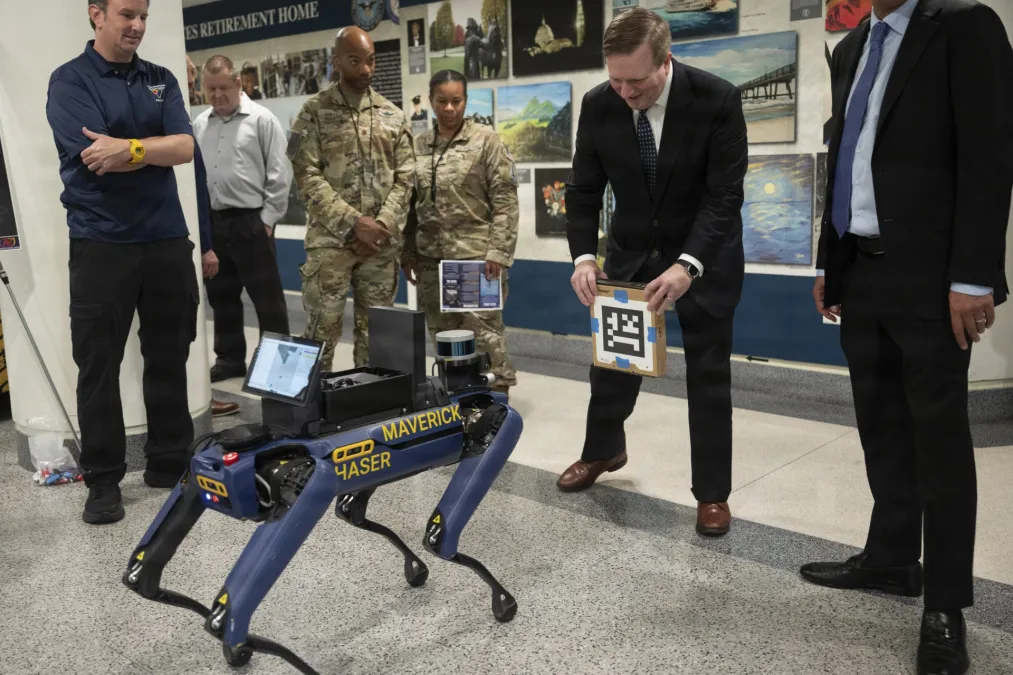
More than 50 applications are under review for the Defense Department’s new pilot program offering small and medium-sized businesses free, two-year commercial evaluation licenses for hundreds of curated, government-owned patents, according to a senior official overseeing the work.
This “Defense Patent Holiday” effort is designed to let non-traditional suppliers and other firms explore, prototype, and test military technologies for commercial or defense applications without paying the usual upfront fees. The vision is to allow partners to try capabilities before they buy them, and to potentially integrate or turn “shelved” DOD research into practical products.
“So, companies are able to sign out, on a non-exclusive basis, commercial evaluation licenses and they won’t have to pay anything to evaluate that patent for the first two years — no fees, no royalties,” Assistant Secretary of Defense for Science and Technology Joseph Jewell said Friday at the Special Competitive Studies Project’s AI+ Expo.
Before he was sworn in under the second Trump administration in March, Jewell was a professor and the director of two hypersonic wind tunnels at Purdue University in Indiana. Prior to that work in academia, he served at the Air Force Research Laboratory, and as a subject matter expert on both classified and unclassified hypersonics programs, as well as on four NATO-led expert working groups.
“We had a great lead in hypersonics in this nation, kind of on the tail of the space program. And at the end of the Cold War we were the undisputed leaders of hypersonic technology. And now, our position in that regard is in doubt with respect to China, because they made big science and technology investments,” Jewell said.
He currently reports as a top advisor to Undersecretary of Defense for Research and Engineering Emil Michael, who launched the DOD’s tech patent acceleration effort in January.
Onstage at the AI expo, Jewell said that the “goal is not to make money off these,” but to ease the licensing pathway and help DOD’s industry partners more quickly commercialize innovative tech for U.S. military personnel.
“So far, we’ve had nine of these patents signed out. We have six more applications pending. It takes a few months for them to get legally reviewed,” he noted. “And then we have, I think as of last count, we’re up to 52 applications in various states of progress, and 180 conversations [where] different entities have explored this.”
The patents, which cover various sectors, are spotlighted by the department in a searchable database.
Jewell said among those signed to date include patents associated with marine battery technology and drone architectures.
“What’s, I think, most telling is we’ve started to get emails and communications — not just from the people who are interested in signing out these patents, but from inventors at the defense labs who have said, ‘Hey, I have a really good one. This really should be a problem. Put me in the next one,’ right? So we’re going to make the next [licensing round] broader,” Jewell said. “And we’re going to, I think, do this periodically, at least throughout the rest of the presidential term, and we hope that it lasts beyond that too.”