‘Cognitive drains’ and weight remain ‘pain points’ for drone employment, Marine official says
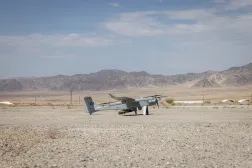
While small drones increase the distance at which small units can identify or destroy an adversary target, Marines are still contending with how much those systems weigh and the “cognitive drains” it takes to operate them, a service official said Tuesday.
Early in the Pentagon’s latest, sweeping crusade to put a slew of drones into the hands of troops, military officials identified that adopting small unmanned aerial systems comes with its tradeoffs.
Soldiers and Marines, who have become primary adopters of small drones and already carry a suite of conventional weapons, supplies and radios, for example, are contending with the extra pounds that come with ground control systems, batteries, ordnance and the UAS themselves.
The Marine Corps has particularly leaned into the Pentagon’s drone push. Over the last 18 months, the service created new UAS teams, training programs and codified drone standards as it looks to field tens of thousands of new uncrewed platforms for the fleet.
Col. Jeremie “Hank” Hester, director of the Capabilities Development Directorate’s Aviation Combat Element, cited the recently-concluded Balikatan exercise in the Philippines as an example of small drone utility where systems increased the distance at which squads could affect enemy targets, filling “gaps and seems” that traditional weapons systems could not.
But he was also the latest military official to sound concerns over their weight and use, characterizing those factors as “pain points.”
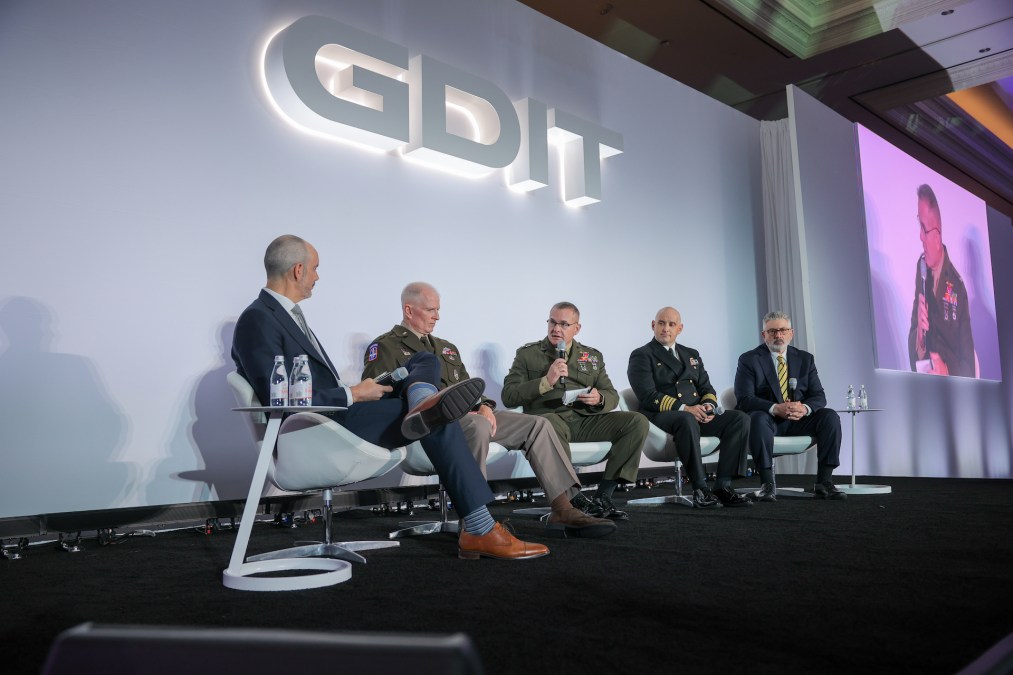
“They have their organic weapon systems, and now we’re asking them to put another 30 pounds of kit of ground control stations, all the accouterments that go [with it], and probably two or three drones as backups, and now you add the explosives,” Hester said during a panel at GDIT’s Emerge: Battlespace of the Future conference in Washington, D.C., produced by Scoop News Group. Carrying those around the island chains of the Pacific or in Eastern Europe would be a “pain,” he added.
The Marine Corps is not alone in that struggle. Following the Army’s inaugural drone competition in February, where more than 100 soldiers from units across the force went head-to-head on UAS tasks, officials identified weight as a difficult variable to standardize.
“Developing a standard packing list for a drone operator is one thing out of this competition that we haven’t defined or said yet, but we’re definitely seeing a range of solutions from soldiers,” said Col. Nicholas Ryan, director of the Army’s UAS transformation at the Aviation Center of Excellence at the time. “Some soldiers are packing very light and very minimal. And some soldiers are like carrying the kitchen sink on their back.”
While using drones, including submersibles, have given small units the ability to reduce risk or cover targets they otherwise couldn’t, they also bring their own separate workloads.
DefenseScoop recently spoke to Marine explosive ordnance technicians who said remotely operated vehicles were helping them reconnoiter the vast ocean environments for bombs and keeping personnel safe while doing it. But building the skills to use those systems, maintain them and analyze the data they produce puts a strain on their already significant workload.
That balance applies to conventional infantry squads and teams that are getting drones, something Army leaders noted in recent months as they work to “enable” small units, not “encumber” them with UAS.
Hester also noted the “cognitive drains” associated with pulling members of a four-Marine fire team to operate drone systems, for example. He said autonomous systems, which could do some of these functions for Marines, would likely be a factor in reducing that drain.
“You decrease the lethality by 50% because it generally takes two Marines to manage an attack drone and one of the [intelligence, surveillance, and reconnaissance] platforms,” Hester said. “Some of those pain points we’re working through, and I know that some level of autonomy is required to help us solve those problems.”