SOCOM looking to mount new ELINT capabilities on maritime drones
U.S. Special Operations Command is on the hunt for new technologies to enable a variety of robotic platforms to detect and process adversary signals.
SOCOM’s program executive office for tactical information systems and the SOFWERX innovation hub are spearheading a new market research effort to see what industry has to offer.
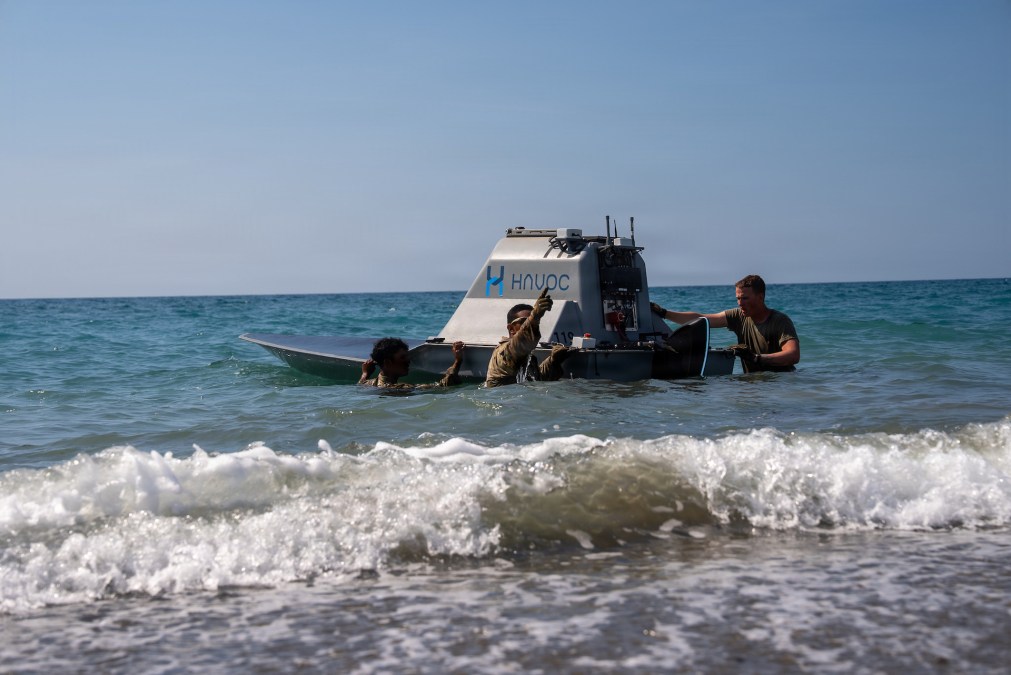
More specifically, the command is interested in mountable payloads for uncrewed surface vessels, unmanned underwater vehicles and aerial drones that can geolocate modern signals and process electronic intelligence (ELINT) in complex maritime environments, according to a special notice released this week on a government contracting website.
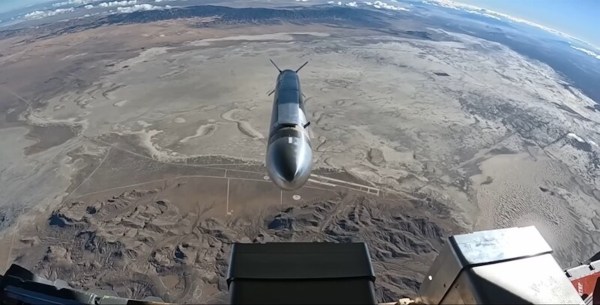
The notice comes as U.S. military officials are embracing drones, AI and other enablers for a variety of missions — such as intelligence, surveillance, reconnaissance and targeting — to boost their arsenals and keep troops out of harm’s way.
“The objective [of the market research initiative] is to discover solutions and facilitate a capabilities demonstration to identify small-form-factor payloads that align with real-world [concepts of operation], threat environments, and platform constraints. This effort is designed to map the competitive and technological landscape, revealing where industry solutions already exist, where innovation is needed, and how to differentiate capabilities in a crowded UxV ecosystem,” officials wrote in the notice.
Following a SOCOM review of industry white paper submissions and a downselect, the command plans to hold a capability assessment event in August at a naval warfare center in Rhode Island, which could lead to procurement contracts or other agreements with vendors.
The special operations community is particularly interested in payloads with low size, weight and power that are optimized for small robotic platforms and can operate in GPS-denied or low-bandwidth communications environments. Mission autonomy, counter-detection signature management, and sensor reprogrammability are also desired capabilities, among others, according to the notice.
SOCOM officials plan to assess the accuracy and ability of industry systems to detect, classify and localize a target emitter in a dense maritime environment at extended ranges or stand-off distances with minimal human intervention. They’ll also evaluate the systems’ size, weight, power and ruggedness of sensors and antennas; data bandwidth requirements; frequency range; ease of use and maintainability; reprogrammability of targets for the sensor at the tactical edge; and unit cost.
Industry responses to the notice are due July 1.