‘Ready, but not done’: The Army will start scaling parts of its new C2 ecosystem to more units, but some of it might not move forward.
The Army will start scaling its prototype command-and-control system beyond the two divisions that have been testing it for nearly a year, officials said, but some of it might not move forward.
A top priority for the service, Army officials have billed the Next Generation Command and Control prototype as a data-heavy ecosystem of interconnected hardware and software intended to give commanders the ability to make “more, better and faster decisions” against increasingly sophisticated adversaries.
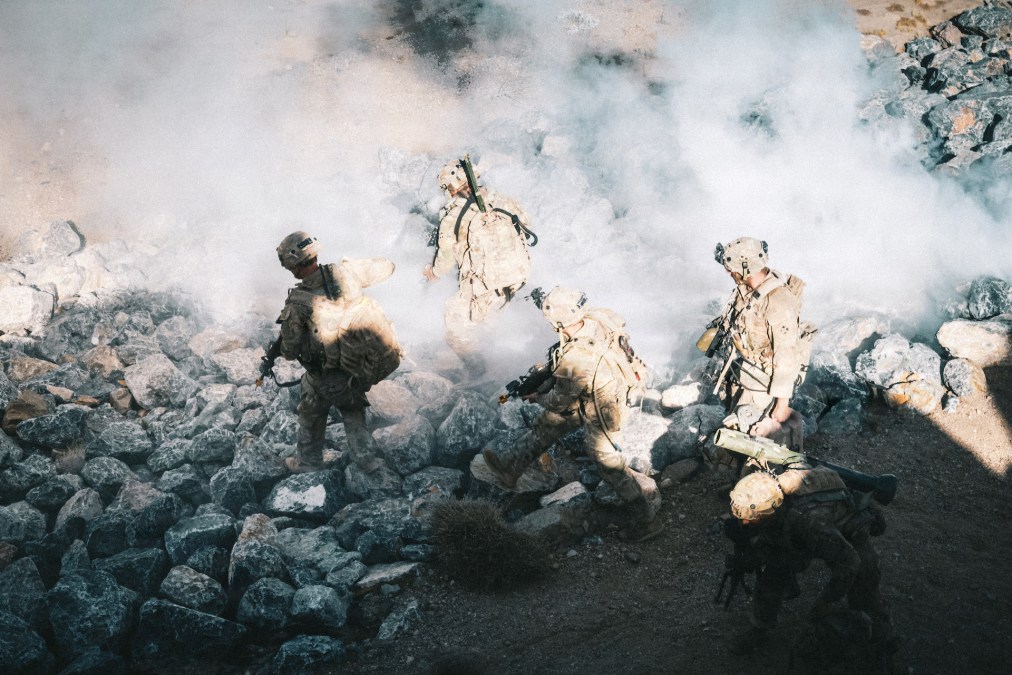
About 10,000 soldiers with the 4th Infantry Division descended on the Mojave Desert in late July as part of the Army’s Project Convergence Capstone 6, a 10-day event at Fort Irwin’s National Training Center meant to “push the boundaries” of new military technology, primarily NGC2.
Officials dubbed PC-C6 a success on Wednesday, the day of its completion. They also said the exercise highlighted shortcomings in parts of the NGC2 ecosystem.
“We’re gonna have some failures out here in the desert, and that’s good,” Gen. Christopher LaNeve, the acting Army chief of staff, told reporters. “We we want to put our systems through the paces, and if there’s something out here that’s not living up to what has been advertised, then we’re going to walk away from that, and we’re going to put our energy into where we’re seeing success out here in this command-and-control system.”
Officials said the Army will soon start delivering core components of NGC2 to other units, namely the Pacific-focused I Corps headquartered in Washington state. They also alluded to other divisions receiving the technology, but did not detail the delivery timeline.
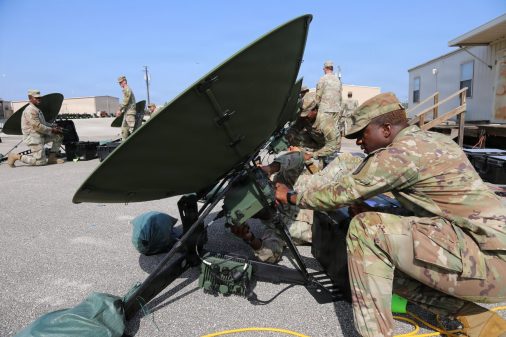
NGC2’s hallmark feature is its four-part stack, which includes transport, infrastructure, data and application layers. That stack is slated to deliver to other units, according to C2 portfolio acquisition executive Joe Welch, while specific components within its layers, such as redundant applications or below-par hardware, might not.
“I do think that the availability of what we’re doing at a data layer, at an app layer at higher echelons, that’s more straightforward to provide than when we’re talking about needing to get the specific radios, tactical edge compute devices, etc., down at echelon,” he said. Officials did not name specific systems that would not move forward.
Since last year, Anduril and Lockheed Martin have been testing parallel versions of NGC2 between 4th ID and 25th ID, respectively. Last month, the Army chose Anduril to lead its common data layer baseline for NGC2 as part of a massive, 10-year enterprise contract worth up to $20 billion, sidelining Lockheed into an implementation role for Anduril’s product.
DefenseScoop spent four days observing PC-C6, speaking with dozens of soldiers, defense tech vendors and senior Army officials as part of an upcoming series of articles exploring NGC2. Soldiers tested more than 90 technologies during the event.
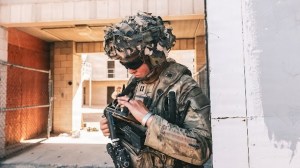
Generally, troops at the tactical level found utility in the new ecosystem’s real-time location tracking and certain AI-backed applications within NGC2. The prototype is also central to reducing command post size and signature, DefenseScoop reported, and is meant to help keep units connected at greater distances.
But soldiers also said hardware overheated in the sweltering desert, some applications did not display the full range of data they needed to consider it fully useful, equipment experienced semi-frequent connectivity issues, and that they were making trade-offs between what the burgeoning, commercial-first military technology offered and cost them during their missions.
“We see that we have some shortcomings in some of the technology’s ability just to handle the heat,” said Maj. Gen. Partick Ellis, 4th ID commander. “But we also found there’s some pretty basic ways for us to accommodate for the heat. Some soldiers figured out that by soaking a t-shirt in iced water you can put on top of some of the antennas and cool them off enough for them to function.”
“From my position, it’s ready, but not done,” Ellis said in a separate interview at PC-C6. “We’re finding friction points. We’re finding things we need to continue to fix.”
Officials and vendors do not expect units to conduct as lengthy of an adoption timeline that 4th ID and 25th ID experienced as they send NGC2 to other parts of the force, according to interviews at PC-C6.
Meanwhile, nearly $4 billion for continued development is on the line for next year’s budget.
“When we get back and we we take the lessons learned,” LaNeve said, “we’re gonna have to take a look at the limited resources we have and determine what’s available within our Army to be able to have a basis of issue, a plan that will make commanders successful at echelon, and really how we’re going to be able to scale this across the Army and what that looks like.”