Pentagon seeks access to vast private UFO records collection
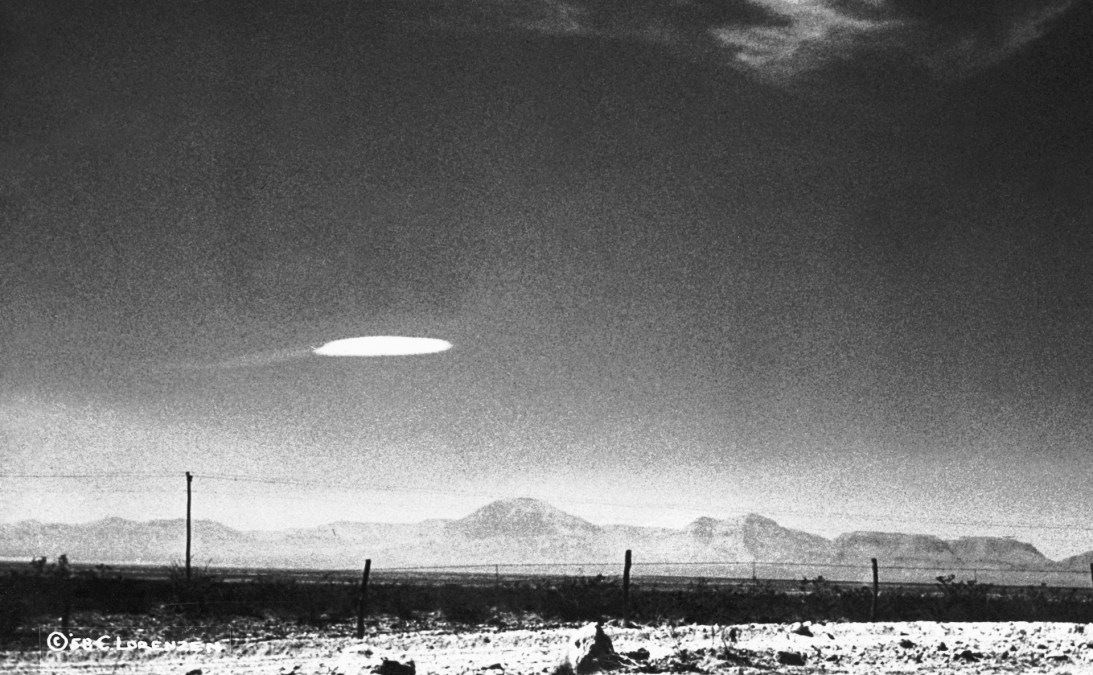
The Pentagon recently moved to issue a sole-source contract to a New Mexico-based nonprofit corporation that reportedly holds North America’s largest private collection of historical records documenting unidentified anomalous phenomena, including heaps of exclusive UFO case files that exist outside of the U.S. government’s expansive cache.
Details about the All-domain Anomaly Resolution Office’s plans to buy a commercial data subscription to scrutinize the National Unidentified Flying Object Historic Records Center’s archives — and specifically, materials that pre-date 1990 — were first revealed in a recent Defense Department contracting notice.
It marks AARO’s latest publicized step to fulfill its congressional mandates to review the complete historical record of the federal government’s UAP involvement dating back to 1945.
“The subscription service will provide AARO with access to a pre-existing, proprietary commercial data subscription and is not for professional labor or advisory services,” said a source who asked to be referred to as a War Department official. “Market research conducted to date indicates that no other organization possesses the historical depth, volume of unique records, and specialized analytical expertise to meet the government’s minimum needs.”
(President Donald Trump signed an executive order rebranding DOD as the Department of War last year, but officially changing the Defense Department’s name requires an act of Congress.)
AARO was established by the Biden administration in 2022 to fulfill a requirement in that year’s National Defense Authorization Act. Its stand-up was largely initiated in response to mounting concerns from the public and lawmakers about escalating domestic UAP incursions and fear that they could be high-tech drones or other platforms launched by America’s enemies.
The office’s aims to purchase access to NUFOHRC’s files seem to stem from a sequence of expanding congressional requirements embedded in that NDAA and some that followed.
The annual legislation for fiscal 2023, for instance, directed AARO to compile a comprehensive historical record report on all of the U.S. government’s UAP-related intelligence and military engagements and assets from 1945 onward.
Multiple sections in the fiscal 2024 NDAA also mandated the creation of the UAP Records Collection at the National Archives and Records Administration. All federal agencies were instructed to review, organize, digitize, and transfer all of their government or government-funded UAP records to NARA for eventual public disclosure.
Separately but relatedly, President Donald Trump earlier this year called for the wide-scale declassification and release of government files about UFOs and “aliens.”
It’s no secret that DOD has a deep-rooted, complicated history dealing with technologies reported by its personnel to perform in ways that seem to transcend contemporary capabilities. Historical military records from the mid-20th century were heavily hidden, decentralized, fragmented, or often preserved only by civilian researchers and private organizations after official projects concluded.
Contracting with NUFOHRC could open AARO’s aperture to identify missing historical context or trace previously unindexed government documentation of pre-1990 cases.
Echoing DOD’s recent contracting notice, the source who asked to be referred to as a War Department official told DefenseScoop this week that “NUFOHRC possesses the world’s largest private collection of UAP-related historical records, including hundreds of thousands of unique case files that exist exclusively within its archives and are not available in any other public or private repository.”
“Furthermore, NUFOHRC has unparalleled, specialized expertise in analyzing this specific data, demonstrated by its staff’s proven ability to generate the high-quality, science-driven analytical studies required by the government,” the official said.
NUFOHRC was founded and is led by UAP historian and researcher David Marler.
He’s known best for individually accumulating an extensive private collection of UAP books, journals, newspapers, audio and video recordings, photos, and physical artifacts that cover more than 75 years of history. Prominent early researchers and their families have entrusted Marler with their personal archives as they retired or died.
Over the last six years, he also took custody of multiple well-known, massive legacy UAP archives.
The record loads included the complete historical files of one of the earliest civilian scientific UFO research groups founded in the 1950s and rare personal files once belonging to Dr. J. Allen Hynek, a premier ufology expert who worked for the Air Force’s Project Blue Book and on other U.S. military UAP investigations.
NUFOHRC spokespersons did not respond to DefenseScoop’s request for comments.
The proposed contract structure consists of a one-year base period with four subsequent one-year option periods. The multi-year subscription service will supply AARO officials with digital access to proprietary data, metadata, and analytical products from NUFOHRC.
“AARO continues to work with a wide range of partners to identify, analyze, and contextualize both historical and contemporary UAP records,” said the source who asked to be referred to as a War Department official.
They declined to disclose the DOD’s estimated total cost for this work.