Covenant unveils ‘deep precision strike’ missile it plans to build by the thousands
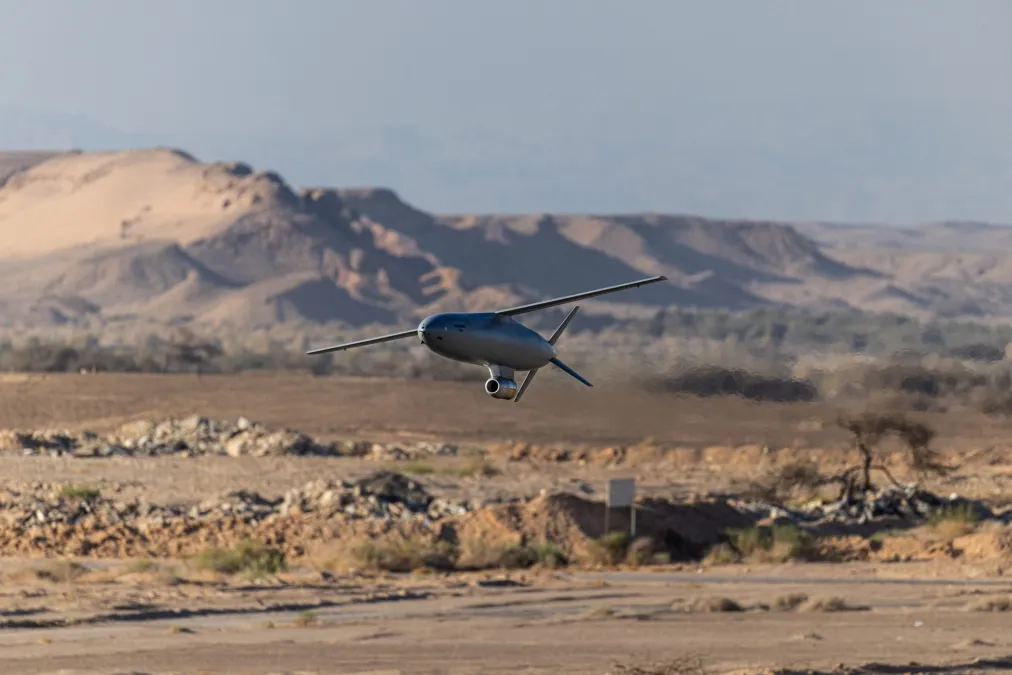
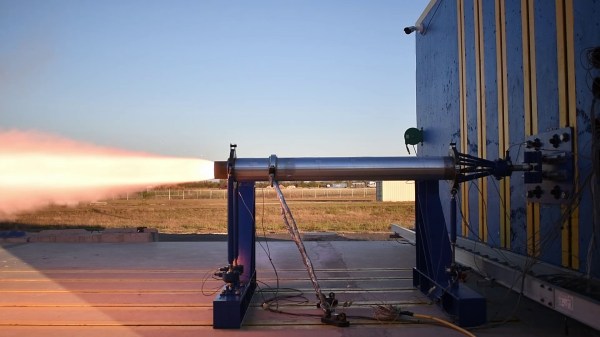
Emerging from two years of secret development, defense startup Covenant officially revealed its hallmark missile on Wednesday, opening up a new facility in Texas it hopes will help produce the low-cost, “deep precision strike” system by the thousands beginning next year.
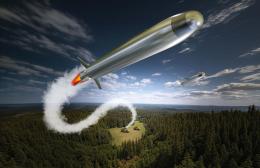
Covenant officials advertised Anthem as a mass-producible, easy-to-store missile system made of mostly commercial parts that is capable of destroying hardened targets en masse from long distances using a heavy, 200-plus kilogram payload.
The head of Army fires acquisition said Wednesday he was impressed with the company’s system and that it’s in the mix of capabilities the service is looking at, but that he wouldn’t “limit” himself to Anthem as the military attempts to diversify its munitions stable.
Covenant billed Anthem as a solution to the West’s munitions woes in its announcement, invoking the U.S. military’s expenditure of expensive weapons against the “mid-sized regional power” of Iran and the need for the West to prepare for conflict against Russia and China.
“Deep precision strike is the biggest gap in the arsenal of the West, and we spent the last two years building Anthem to fill it,” said Michael Kaufman, co-founder and CEO of Covenant.
A company executive alluded to the missile being able to “collaboratively home on target,” but declined to detail the feature or the system’s range. A single Anthem costs in the “mid-six figures” and is paired with a proprietary, ground-based launcher at an additional price, according to company officials who also declined to specify the exact price of the missile or its launcher.
With $250 million in funding from several venture capitalist firms, the company built factories in Germany, Israel and now Dallas, where it aims to make 1,000 Anthem missiles in its first year. The goal for the Dallas facility is to ramp up to 5,000 missiles per year, according to the company.
Top defense and Trump administration officials have forcefully denied the U.S. has a munitions shortfall or is unprepared to fight peer adversaries, while doling out several framework agreements with top missile producers that require funding from Congress.
Multiple think tanks have released reports about significant U.S. munition depletion, including for key systems like the Patriot and Tomahawk.
Meanwhile, service officials are trying to diversify the military’s munitions types, in what they call a “high-low mix” of some expensive systems and other, cheaper missiles it can deploy in bulk.
“We’re looking at a wide array of capabilities in different range envelopes, warhead effects, different velocities, and at different price points,” Lt. Gen. Frank Lozano, portfolio acquisition executive for the Army’s fires program, told reporters on Wednesday.
“So I don’t want to just limit myself to a $500,000 Covenant cruise missile solution,” he said. “Obviously, it’s in the mix, and we’re very intrigued, and have been impressed with what Covenant has been able to do.”
A representative for Covenant said he couldn’t confirm the price point Lozano offered and reiterated that the Anthem’s cost in the “mid-six figures.”
Abby Denburg, president and chief growth officer for Covenant, told DefenseScoop in an interview Tuesday that Anthem is designed for saturation at “strategic range,” otherwise known as overwhelming a target with a lot of cheap munitions from greater distances.
“You do not want to be using your most exquisite systems to take out production facilities and airstrips and ports and these things that require tens or dozens or hundreds of munitions,” she said. “When we look across the Middle East, or Asia, or Europe, the target sets that our customers are looking at are hardened enough that they require the penetrative capability of 200 kilograms plus.”
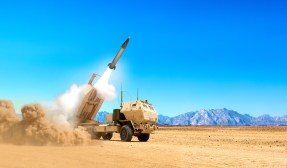
She said that Covenant designed its own launcher to mass deploy Anthem without having to rely on expensive legacy systems with limited capacity to do so.
Covenant has already booked roughly $150 million in orders, which include research and development as well as production contracts, according to a company press release. Lozano referenced a prototype agreement with Covenant for further demonstration in fiscal 2027. Covenant officials said they’re also working with the Navy to develop a maritime version of Anthem.
“Our customers are demanding systems in 2027, and they want systems at scale in 2027,” Denburg said. “The ability to produce quickly and sustain that production was paramount to us.”
Munition makers have long complained of bottlenecks in the supply chain that prevent quick and sustained production for expensive systems, especially for solid rocket motors, which Anthem also uses.
Denburg said that Covenant recognized those “risk components” early on and that the company “invested heavily in our supply chain partnerships” that could meet its need to produce a low-cost missile without sacrificing quality. She did not identify any suppliers or detail the company’s agreements with them, but said none of Anthem’s components rely on a sole source.
Since August 2025, Anthem has been launched in over 200 tests, Covenant said. Army and company officials teased the missile last month after Covenant tested its system at a new range in Morocco with less than two weeks’ notice from the service. After that test, the company said, Covenant was selected to head a new testing framework with U.S. Africa Command, Army Test and Evaluation Command, Southern European Task Force-Africa (SETAF-AF) and PAE Fires.
It also tested Anthem at Project Convergence Capstone 6 at Fort Irwin, California, this summer.
Both events saw Covenant personnel operating the Anthem while troops observed, Denburg said, though the qualification contract with the Army will allow for “soldier touchpoints.”