U.S. military seeks more ALPV capability to resupply troops in contested littoral environments
The Pentagon’s innovation hub is looking for a stealthy, autonomous vessel to address significant support challenges that naval and Marine units would face across vast, contested ocean spaces in a potential conflict.
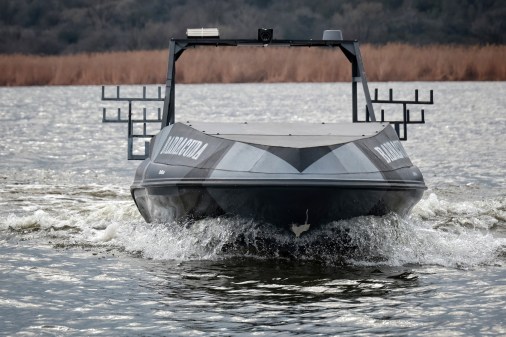
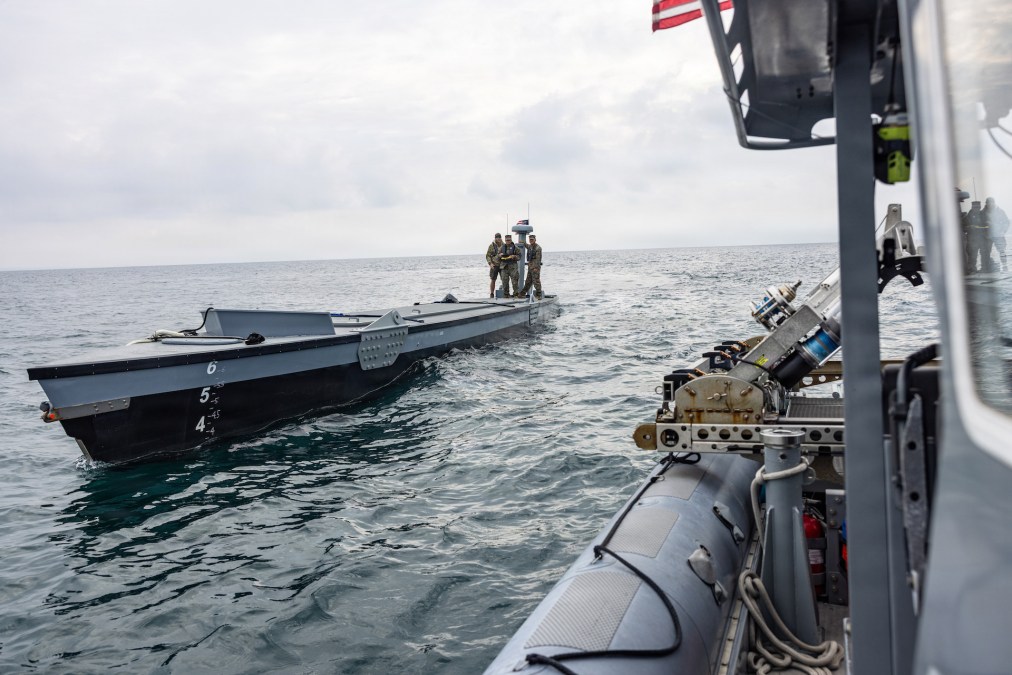
Over the last two years, some Marine Corps units have been ramping up efforts to get autonomous low-profile vessels (ALPV), dubbed the “narco boat,” to resupply forces in the Pacific where established logistics nodes would be few and far between and troops would face significant dangers should a war break out with China. The ALPV, which is uncrewed, could perform the mission without putting service members in harm’s way.
On Tuesday, the Defense Innovation Unit (DIU) addressed those concerns in a pitch to industry for more autonomous platforms, calling the resupply issue a “challenge.”
“Increasingly distributed operations in austere, contested littoral environments are met with all-domain threats targeting logistics capabilities, locations, and activities,” officials wrote in the solicitation. “These threats limit the ability of warfighters to persist in contested environments and remain combat effective.”
The DIU, which specifically addressed the need to resupply Marines in contested, dispersed environments, said the new vessel should be able to transport at least 18,000 pounds of cargo for up to 2,000 nautical miles in moderately rough seas.
The platform should be capable of moving autonomously — including in congested waterways and ports — using GPS and when communications are down, according to the DIU.
As recently as January, Marines assigned to Pacific-postured units were pictured operating an ALPV in exercises off the coast of California. Leidos, which makes an ALPV, said in 2024 that its vessel could carry five tons of cargo “over a range of 2,000 nautical miles.”
Officials have previously quipped about the design being inspired by those used by drug runners.
“Truth be told, this is just a narco boat. You know, we stole the idea from friends down south,” Brig. Gen. Simon Doran, who is currently the director of strategy and plans for the Marine Corps, said in 2024. “And so this is, you know, 55-feet long, completely autonomous. It’s able to go hundreds or thousands of miles. It’s able to carry weapon systems that we have that are new. It can carry fuel. It can carry food. It can carry pretty much anything you want to put in it.”
Many Marine units in the Pacific are positioned as “stand-in forces,” intended to be low-profile, mobile units that would fight in contested areas against China.
The DIU said that humans must be able to take over control of the ALPV, and it should be transportable by commercial means or Marine-specific trailers.
Officials wrote that solicitation responses are due by March 16 and developers can expect to demonstrate their solution within six months of the award.
“Solutions will be evaluated on their problem alignment, technical merit, and innovative approaches to support the delivery and sustainment of maritime autonomous resupply systems, at scale, for operations in contested littoral environments,” according to the DIU.