80% readiness requires 21st-century tools
The Navy does not lack commitment, courage, or talent. It lacks time. That is especially true when it comes to material readiness.
Ships’ material condition suffer because of deferred maintenance. Scheduled maintenance windows stretch longer than planned. Critical decisions are made with incomplete or outdated data. None of this is due to a lack of effort by our dedicated Sailors or shipyard workers. It’s the result of 20th-century processes colliding with 21st-century demands.
As Command Master Chief at NAVSEA, I saw firsthand how maintenance delays ripple across the fleet. A cracked fuel tank or an extended CNO availability doesn’t just affect one ship. It cascades through deployment schedules, compresses training cycles, and dampens crew morale. And too often, those delays came down to visibility: we simply didn’t have fast, accurate insight into the true condition of our assets at the right time.
Achieving our fleet readiness target of 80% by 2027 requires 21st-century tools.
Enter the robot
The Navy’s maintenance enterprise was built for an era when inspections were slow, manual, and episodic. Data was scattered across systems and decisions were often made with partial information. That approach might have been sufficient when the fleet was larger, there were more shipyards, and threats were distant. It is no longer sufficient today.
Modern technologies, such as robotics, advanced sensors, and data-driven analysis, fundamentally change how quickly and accurately we can understand the health of ships. They reduce the time it takes to find problems, improve the quality of the data behind maintenance decisions, and allow the Navy to shift from reactive repairs to planned, predictive maintenance.
That shift is beginning to take hold. The Navy’s decision to award Gecko Robotics a five-year, $71 million IDIQ contract to deploy AI and robotic technologies across the fleet is a concrete example of how readiness can be improved by modernizing processes, not just increasing effort.
To the Pacific and beyond
This work will begin with 18 ships in the Pacific Fleet, the Navy’s largest fleet command, where operational demand is highest and delays are least affordable.
Starting in the Pacific Fleet is significant. These ships operate at a high tempo, far from homeport, and are central to deterrence in an increasingly contested region. Reducing maintenance delays and improving inspection speed on even a small number of ships can have an outsized impact on availability and scheduling across the force.
Importantly, this isn’t about experimenting with unproven ideas. Gecko’s advanced robotic inspections and digital assessments have already been used across surface ships, aircraft carriers, and submarine programs, demonstrating measurable reductions in maintenance lead times, work hours, and cost.
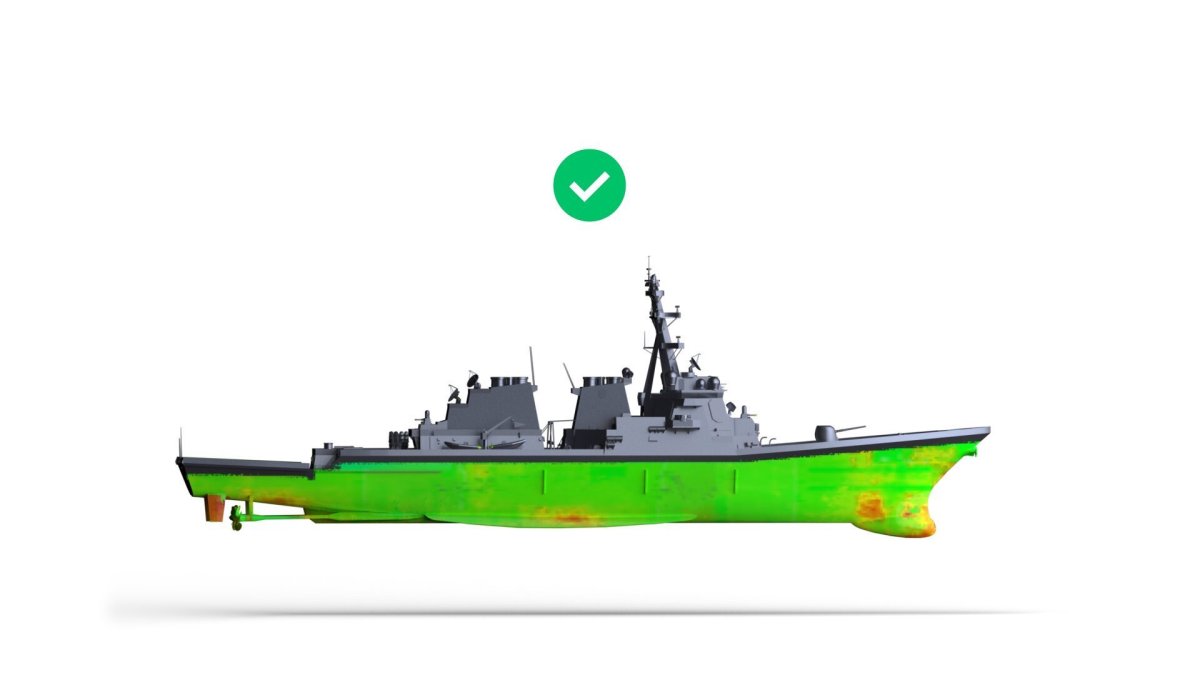
Analysis from previous work with the Navy showed that just a single robotic evaluation and digital rendering of a flight deck eliminated over three months of potential maintenance delay.
Reaching 80% readiness
What matters most, however, is what this means for Sailors and shipyard workers. Better tools mean better scoped work items, fewer rework cycles, and fewer surprises that set everyone back by weeks, months, and even years. Decisions will be made with confidence rather than caution, and schedules built on facts instead of assumptions.
Readiness is not achieved by asking people to work harder with outdated tools. It is achieved by giving them modern capabilities that multiply their effectiveness and reduce unnecessary friction in the system.
Reaching 80% readiness by 2027 is an ambitious goal, but it is achievable if the Navy continues to modernize how it inspects, maintains, and manages its fleet. The choice is clear: we can continue relying on processes designed for a different era, or we can embrace tools that reflect the realities of today’s operational environment.
Our Sailors are already operating in the 21st century. The systems that support them must do the same.