Marine Corps charts path for future aviation ops led by drones
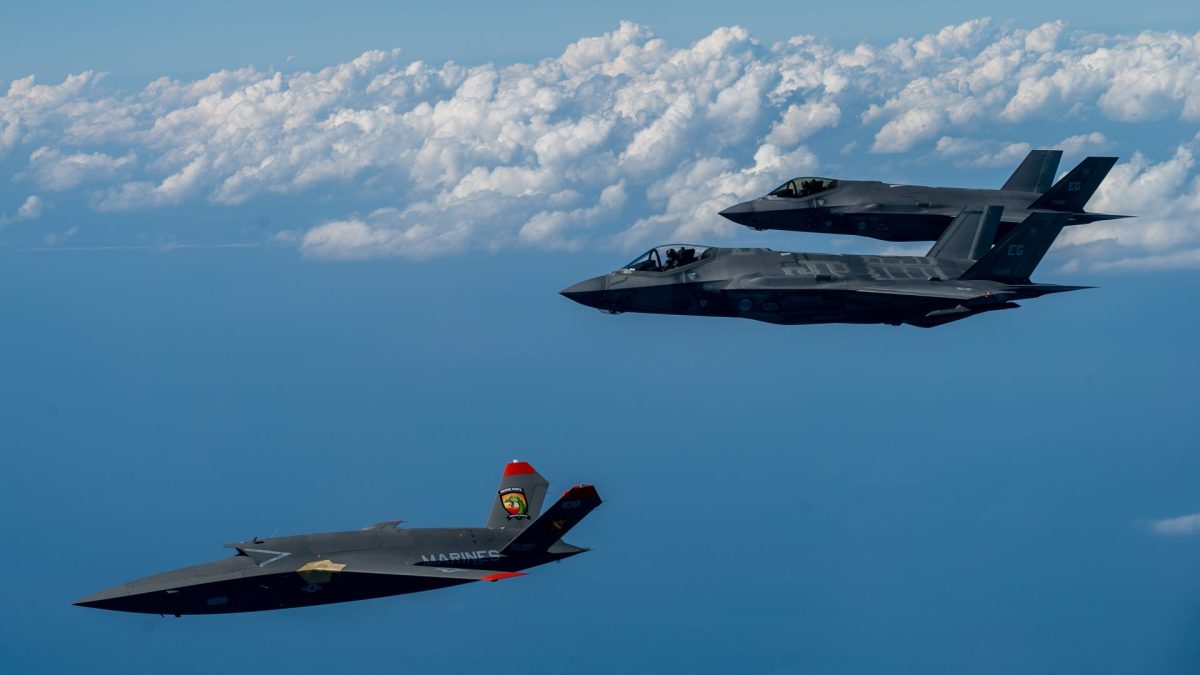
As the Marine Corps prepares to introduce a robotic wingman drone into its aviation fleet in the next few years, officials are simultaneously parsing out its long-term plans for developing unmanned aerial vehicles for other missions.
The Corps wants to begin operational testing of the Marine Air-Ground Task Force Uncrewed Expeditionary Tactical Aircraft (MUX TACAIR) platform by 2029, said Col. Richard Rusnok, branch head of the Cunningham Group, the service’s aviation-focused innovation unit. The aircraft will be the first of many larger drones that the service plans to field to transform airborne operations.
“Not just from the perspective of combat capability, we are opening up an entirely new realm in Marine aviation,” Rusnok said Wednesday during the annual Modern Day Marine conference. “I think this is potentially as seismic as what we did when we introduced rotary wing aircraft to the fleet back in the 1950s.”
MUX TACAIR is the Marine Corps’ variant of a Collaborative Combat Aircraft (CCA) — drones designed to fly alongside the military’s manned aircraft to provide additional strike and intelligence-gathering capabilities.
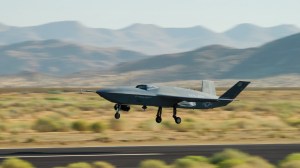
The service contracted Northrop Grumman in January to lead an industry team that will develop and field the first MUX TACAIR increment. The platform itself will be Kratos’s XQ-58 Valkyrie drone equipped with mission kits and autonomy software developed by Northrop Grumman.
Rusnok said the Marine Corps will conduct developmental testing over the next few years to ensure the CCA platform is safe to fly while also integrating mission systems onto the aircraft. Then, the service will begin operational testing with the VMX-1 test squadron before fielding, he said.
But MUX TACAIR is only the beginning of the Corps’ plans for integrating unmanned aerial vehicles. The service has multiple programs in nascent stages of development that aim to leverage drones for a number of different missions.
“We are really using this as an exploratory capability in order to develop a larger mindset for 2040 and beyond,” Rusnok said.
One near-term effort focuses on pivoting away from contractor-owned, contractor-operated (COCO) agreements for intelligence, surveillance and reconnaissance. Instead, the service wants to develop an organic ISR (OISR) capability using mid-sized drones, according to Maj. Michael Zbonack, a planner with the Marine Corps Future Concepts UAS.
“That is the Marine Corps’ return to Group 3 UAS operations,” Zbonack said Wednesday during a separate panel at Modern Day Marine. “It will provide persistent overhead coverage for Marines on the ground, in addition to executing whatever missions that the [aviation combat element] requires.”
The OSIR drones would be smaller than the MUX TACAIR platforms, meaning the service can purchase and field them in higher numbers and deploy them in remote locations with limited infrastructure, he said.
The Marine Corps plans to observe technological advancements in Group 3 drones and drill down its requirements for the OSIR program, Zbonack noted. Once details are finalized, officials will make a decision “on whether or not we want to acquire a specific system,” he added.
The service is also exploring how unmanned aircraft provide logistics support to units located in austere environments under two efforts — the Aerial Logistics Connector (ALC) and the Medium Aerial Resupply Vehicle — Expeditionary Logistics (MARV-EL).
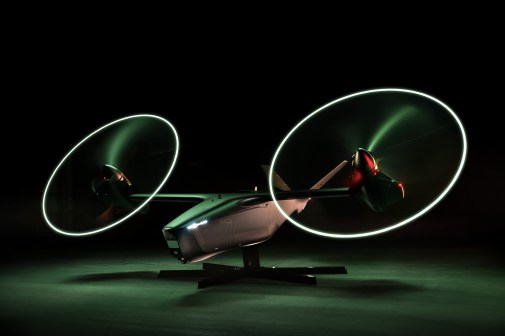
A team led by Airbus and Parry Labs is developing an optionally-piloted version of the UH-72 Lakota helicopter for the program, which recently notched its fourth autonomous flight test. The Corps is currently planning for an operational demo of ALC with one of its littoral regiments in the Pacific in 2027, according to Lt. Col Ben Link, head of the Cunningham Group’s vertical takeoff and landing concepts.
“We will fly with prototypes and rapidly learn and refine our requirements,” Link said during a presentation at the conference. “ALC’s mission is clear and critical: to provide autonomous airborne logistics to sustain the stand-in force.”
As for MARV-EL, the Marine Corps recently awarded both Lockheed Martin-subsidiary Sikorsky and Near Earth separate prototyping contracts for the program. The effort is also focused on developing an autonomous cargo helicopter that can resupply Marines in remote locations.
Link explained that while both programs have similar requirements and are complementary to one another, the service is still hashing out their respective requirements.
“As it stands today, MARV-EL is designed to be an organic logistics air vehicle owned and operated by the ground force. ALC is general support to the [Marine Air-Ground Task Force], owned and operated by the aviation side,” he said.
In the long term, the Corps is in the early stages of a program to replace its venerated fleet of Bell A/UH-1 Iroquois helicopters. The service expects to begin conducting market research for the effort — dubbed Future Attack Strike (FASt) — this summer, according to a report from Aviation Week.
Like the UH-1, FASt will be a multi-role helicopter able to conduct armed escort and maritime strike missions, Link said. The service is exploring all options when it comes to the platform’s design, including the potential of it being optionally piloted to leverage manned-unmanned teaming concepts.
“FASt will incorporate advanced technologies to operate in contested environments, while employing a diverse array of kinetic and non-kinetic effects against an ever more capable adversary,” Link said. “A key attribute of this future capability will be our plans to integrate into joint kill webs, enhancing our ability to find, fix, track and engage targets.”
During a separate panel Wednesday, Brig. Gen. Robert Finneran, assistant deputy commandant for aviation, noted that while the 2040 timeline seems distant, it is imperative that the Marine Corps begins work now to get the helicopter’s requirements down. He emphasized that the service is “exploring every option” for the program — such as existing platforms like the MV-75 Cheyenne II, which will serve as the Army’s replacement for the UH-60 Black Hawk fleet.
“We’re just solidifying our top-level requirements and finalizing the request for information back from industry,” Finneran said. “It’ll be a collaborative thing that we do between us and industry. And [the MV-75] certainly could be one of the options, along with others that are at least proposed.”