GAO: Pentagon’s hypersonic programs grappling with schedule constraints, production woes
The military services remain challenged to deliver key hypersonic weapons to warfighters by their previously projected timelines, according to a new report from the U.S. government’s watchdog organization.
Published on Friday by the Government Accountability Office, the review highlights that three of the Pentagon’s ongoing hypersonic weapons programs are at risk of being delayed or delivering systems that have not been fully demonstrated. The efforts detailed in the report include the Air Force’s Hypersonic Attack Cruise Missile (HACM), the Army’s Long Range Hypersonic Weapon (LRHW) and the Navy’s Conventional Prompt Strike (CPS).
The findings are part of GAO’s annual assessment of the Defense Department’s major acquisition programs, which analyzes potential delays and cost growths for multiple weapons systems. The latest report urges the department to only use rapid acquisition pathways — such as the Middle Tier Acquisition (MTA) authority — for programs that require already matured technologies and develop nascent capabilities separately.
“More broadly, these findings contribute to growing evidence that programs using the MTA pathway are not delivering fieldable capabilities faster,” the report stated. “Rather, the use of the MTA pathway has largely been to develop immature technologies that the department has deemed important for acquisition programs with estimated costs equivalent to [a major defense acquisition program].”
Tight schedules for the Air Force
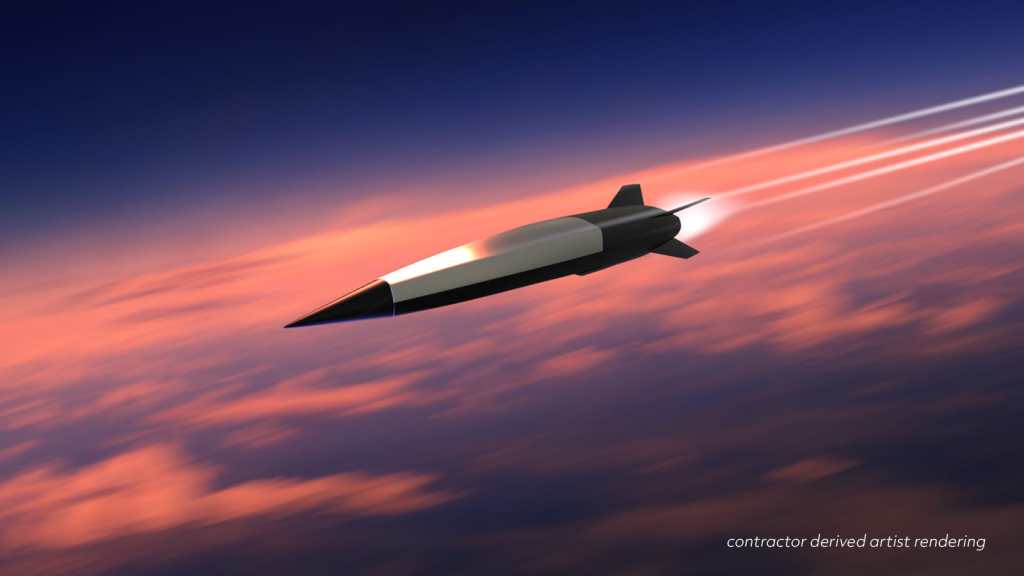
The GAO outlined growing concerns for the Air Force’s planned flight testing phase for HACM, a weapon being developed by RTX-subsidiary Raytheon. The company received a $985 million contract in 2022 to develop the hypersonic missile under an MTA contract — which requires a program to conduct rapid prototyping and immediately initiate fielding within five years.
In 2025, the watchdog reported that delays in finalizing the missile’s design had forced the service to reduce the number of flight tests it can conduct during the development timeline from seven to five.
And although the Air Force planned to begin HACM’s shortened flight testing phase in the second quarter of fiscal 2026, program officials told GAO that any additional delays or hiccups encountered during testing is likely to push the weapon past its due date.
“The program has already descoped the rapid prototyping effort from seven to five planned flight tests. If a significant flight test failure occurs, it is likely that the program will not be able to complete all five tests within the 5-year rapid prototyping timeframe,” the watchdog reported.
In order to stay on track, the Air Force has almost exclusively prioritized efforts that support HACM’s first flight test. Program officials told GAO that this has included “risky strategies,” like conducting parts validation testing while simultaneously completing the weapon’s design — “which could require the redesign of key parts if they fail validation testing.”
Any delays would likely disrupt the Air Force’s plans to begin HACM’s rapid fielding in the first quarter of fiscal 2027. The service’s budget request for FY27 includes $404 million to begin purchasing the weapon, as well as $806 million to continue testing efforts, capability enhancement and investment in industrial base capacity.
The report also noted that overlapping acquisition efforts could introduce additional risk, as the Air Force plans to buy more HACM weapons to bridge a production gap between the program’s prototyping and fielding phases.
“These efforts will commence before the rapid prototyping effort has concluded and before the flight test program has demonstrated all aspects of HACM’s planned performance,” the report stated. “We have found that starting production before demonstrating a system will work as intended increases the risk of discovering deficiencies that require costly, time-intensive rework”
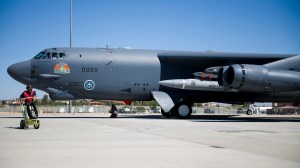
HACM isn’t the first Air Force hypersonic missile to experience a rocky testing phase. The service’s other program — the AGM-183A Air-Launched Rapid Response Weapon (ARRW) — experienced multiple issues during its testing phase that delayed the service’s decision to purchase the systems by a year. The Air Force began buying ARRW from prime contractor Lockheed Martin in fiscal 2026.
Production woes for the Army, Navy
The government watchdog also revealed that ongoing programs within the Army and Navy have encountered bottlenecks and issues with the defense industrial base’s hypersonics production lines.
Notably, “missing, inconsistent and unclear work standards for missile production” have pushed delivery of the Army’s second LRHW battery to at least six months later than originally planned, GAO found.
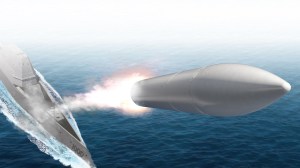
At the same time, the Navy’s CPS program discovered similar problems during initial production that “resulted in the program and contractor having to address quality issues on the missile production line,” according to the report. The production delays have also caused the Navy to postpone integrating the weapon onto its DDG Zumwalt-class destroyers, the watchdog added.
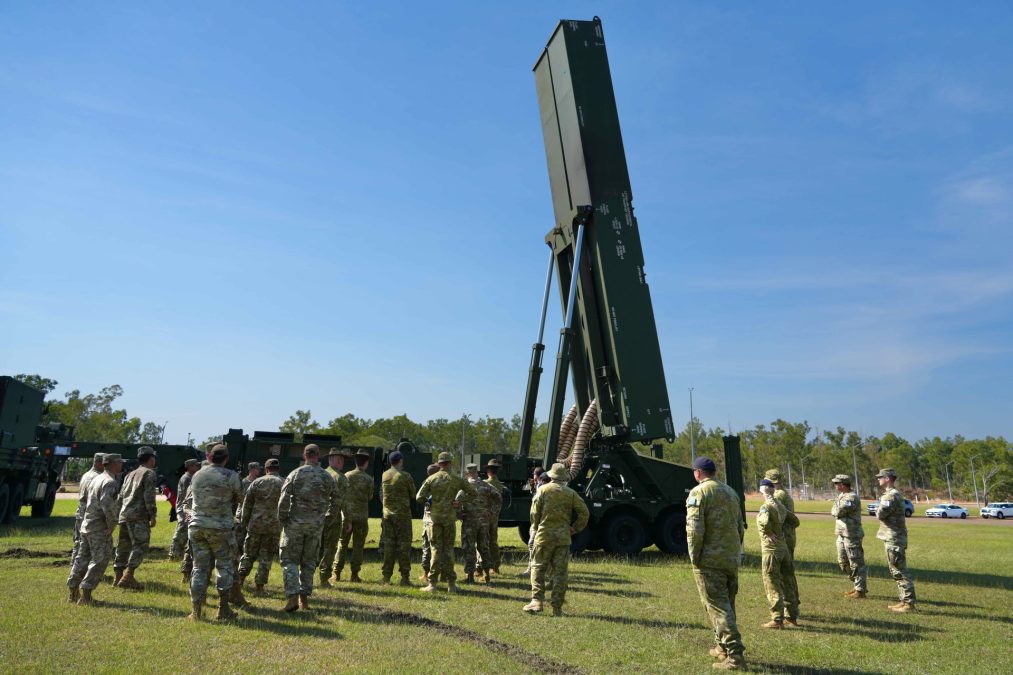
The Army and Navy are jointly developing their hypersonic weapons, with each missile variant sharing a common hypersonic glide body system built by Dynetics. The Army plans to integrate LRHW — also known as Dark Eagle — into ground launchers, and currently has separate MTA rapid fielding efforts to field additional batteries.
The Navy also developed CPS under an MTA contract. Its sea-launched iteration will be deployed from Zumwalt-class destroyers and Virginia-class submarines. Lockheed Martin serves as the prime integrator on both services’ programs.
According to GAO, both the Army and Navy failed to conduct an industrial base assessment before beginning production that would have highlighted the issues and likely prevented delays.
“For these interrelated programs, DOD took steps towards improving the rate of missile production. According to program officials, both the LRHW and CPS programs are now conducting production quality reviews,” the report stated. “For example, program officials told us that the Army worked with a third-party consultant to identify production challenges. Similarly, program officials told us that the Navy is conducting its own reviews.”
Schedule slips are not new to the Dark Eagle program, as technical issues discovered during the weapon’s flight testing phase forced the Army to scrub several tests and push delivery of the ground-launched hypersonic missile to early 2026 — over two years past its initial goal.
Complications from early flight tests created a “production bottleneck” that forced both the Army and Navy to pause manufacturing until the missile had successfully flown. Officials told GAO that one of the contractors continued to experience issues at its facility, and that both services were working with the company to implement improvements.
The Army began fielding the first Dark Eagle battery at the end of 2025, and is now expected to deliver the second battery in early 2027. That next unit also features a missile with minor modifications that have not been tested during a live flight, also delayed due to production challenges, GAO found.
“The third battery could also face similar delays because the Navy’s CPS program, which develops missiles for the LRHW program, has not finalized the design as of January 2026,” the report warned. “The program stated that it is working with the Navy to finalize the design, but the time needed to test it remains a concern.”
As for the Navy, officials told the government watchdog that Lockheed Martin finished integrating the hypersonic weapon for initial at-sea testing in January, and that the service is on track to field CPS onto the DDG 1000 Zumwalt-class destroyer in 2027.
However, missile availability for testing remains a risk for the program — primarily due to long-standing challenges that stem from the early-stage production bottlenecks.
“CPS officials said that these peaks and valleys in production demand have made maintaining steady contractor staffing a challenge. For example, officials said that the contractor has not had the same staff in the same roles in successive production runs, which limits learning and harms efficiency,” the report noted. “The Army has also raised concerns about the contractor’s capacity to meet its needs for LRHW fielding.”