Air Force to begin concept refinement of MQ-9 replacement by end of year
DAYTON, Ohio — The Air Force and the Defense Innovation Unit plan to start the concept refinement phase of its MQ-9A Reaper replacement effort during the first quarter of fiscal 2027, service officials said Monday.
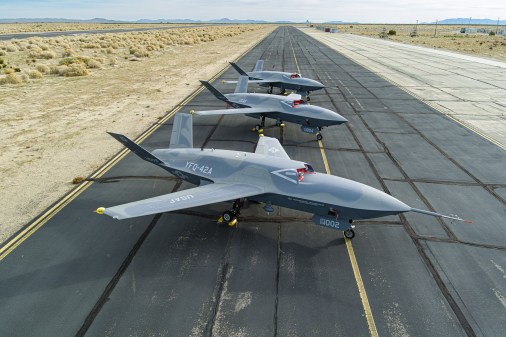
The Air Force wants to bring multiple companies into the next stage of the Massed Modular Aircraft (MMA) program, Col. John Dayton, portfolio acquisition executive for intelligence, surveillance, reconnaissance and special operations forces, told reporters Monday. During that phase, both traditional and non-traditional vendors will conduct early analysis that will help the service shape its design, requirements and cost of the future unmanned aerial vehicle.
“Part of the approach we’re taking, where we’re trying to engage with industry, engage with non-traditionals with a very broad requirement set so we capture and understand what industry can provide and what’s in the realm of possible in that trade space,” Dayton said during a media roundtable at the Air Force Life Cycle Industry Days.
On July 7, DIU issued a commercial solutions opening for the MMA effort that called for an inexpensive, long-range drone outfitted with a variety of payloads that could “execute missions that the MQ-9A performs today.”
The notice stated that the Air Force wants to fly a full-scale MMA prototype within 21 months of awarding a contract, with plans to have 20 operational drones on stand-by by fiscal 2031.
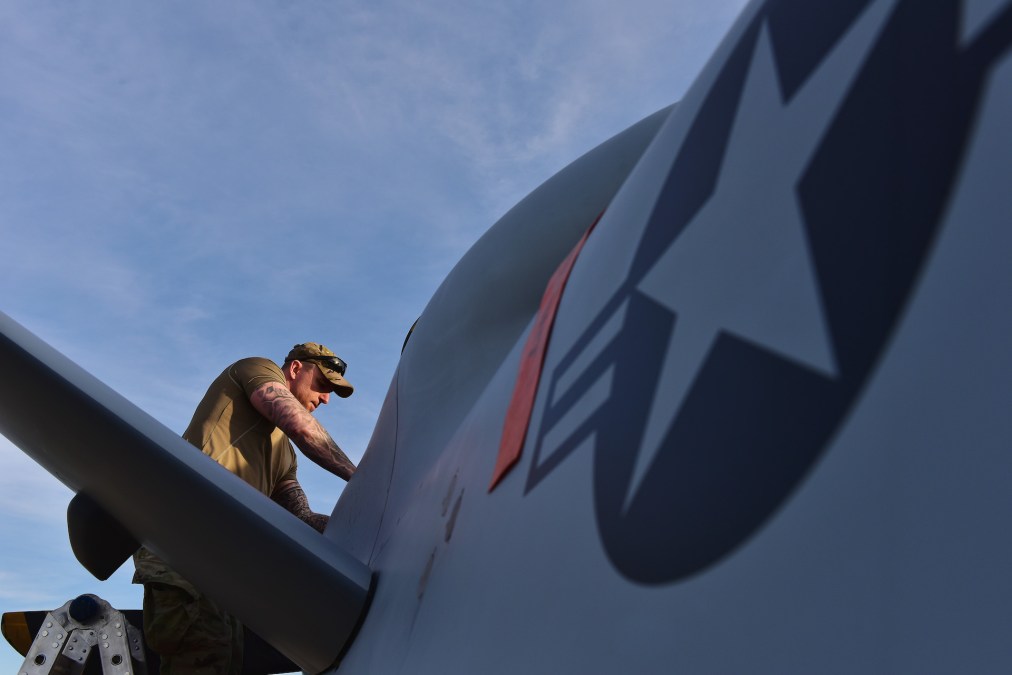
The program comes as the Air Force grapples with the loss of nearly 30 Reaper drones during recent operations against Iran, according to a report from Air and Space Forces Magazine. General Atomics stopped production of the MQ-9A in 2025, leaving the service with around 135 MQ-9As that cost approximately $30 million per unit.
A key aspect of the MMA effort is the platform’s overall affordability and ability to be produced en masse. DIU did not include a specific price tag in its solicitation, and Dayton said the service wants to build its budget for the program based on what industry pitches.
“I do think it is more of that [Collaborative Combat Aircraft] mentality of setting a large target and large vision for what this could become across the portfolio at the right price point so that we can have that attrition tolerance,” he said.
The MMA is expected to conduct a wide range of missions — including ISR and offensive strike — and could potentially fly solo or in a larger swarm formation, Dayton said. The Air Force is also interested in leveraging the Autonomy Government Reference Architecture (A-GRA) developed for the CCA program.
“I think what that allows over time is to leverage those defined interfaces for autonomy,” Dayton said. “I think there’s going to be some working alongside the A-GRA to specifically look at ISR use cases that we have, to make sure that the features are all there.”