Air Force could tap up to 6 vendors for second increment of CCA drone program
DAYTON, Ohio — The Air Force could bring up to six vendors into the early prototyping work of its second robotic wingman batch next year, according to the official overseeing the program.
The service is currently working with nine unnamed vendors to outline concepts and define requirements for the Collaborative Combat Aircraft (CCA) Increment 2 program — a process that will last around 10 more months, Col. Timothy Helfrich, portfolio acquisition executive for fighters and advanced aircraft, told reporters Tuesday at the Air Force Life Cycle Industry Days.
“We have another approximately 10 months left of our concept-refinement contract, where we would expect to have the refined attributes as we did before, as well as several closed conceptual designs,” Helfrich said. “We’re shooting for roughly six, but we’ll see what we end up with.”
Following the initial downselect, the Air Force will then award contracts for prototyping and later production — a process similar to how the service held its competition for CCA Increment 1.
“We will continue to maximize competition through all the phases of CCA Increment 2,” Helfrich added. “We may have entrants that come in in a later phase that were not part of the concept alignment.”
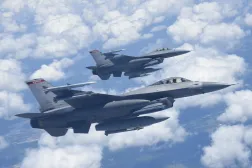
The drones are part of the Air Force’s Next-Generation Air Dominance (NGAD) family of systems. The service is developing the robotic wingmen to fly alongside fifth- and sixth-generation fighter jets, augmenting its manned fleet with additional offensive strike and intelligence-gathering capabilities.
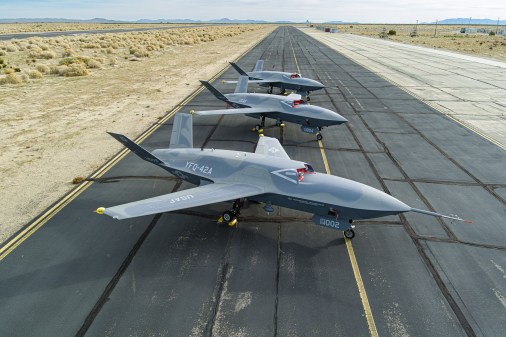
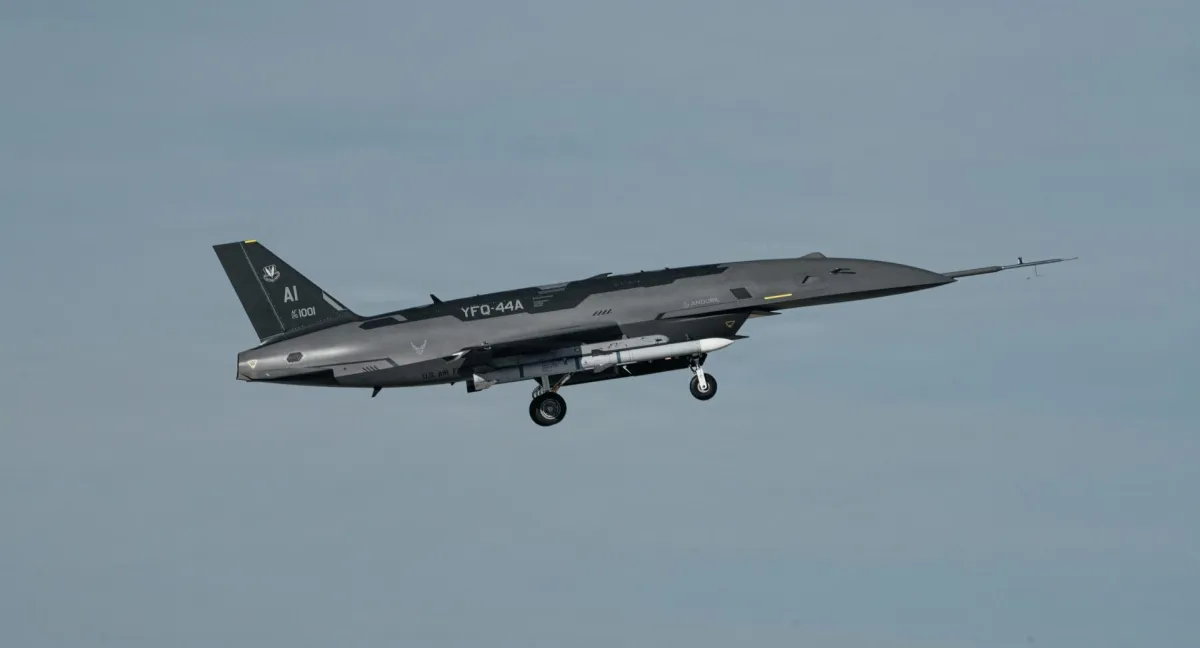
The acquisition strategy called for developing CCA drones in spiral increments, with each iteration featuring the latest upgrades and capabilities. Anduril and General Atomics are currently building the Increment 1 platforms, having both received production contracts in June.
Officials have been tight-lipped about what exactly it’s looking for in CCA Increment 2, and possibilities include inexpensive designs or more exquisite platforms. Helfrich told reporters that the Air Force isn’t viewing the drones as attritable, but rather “optionally attritable” in order to provide more options to commanders using them.
“That really depends on what the commander on the ground needs to be able to execute the mission,” he said. “CCA will have a very long service life if they need to, or they could be attritable.”
The Air Force is, however, taking a new approach when it comes to the engine for CCA Increment 2. For its first batch, the service leveraged an existing propulsion system so that the drones could be fielded as quickly as possible. But different requirements for Increment 2 are pushing the Air Force to look at clean-sheet engine designs, according to John Sneden, portfolio acquisition executive for propulsion.
“The reason we’re not taking something off the shelf is because we think that the requirements and the needs are going to be greater for CCA Increment 2, and we need to have propulsion systems ready for that,” he said.
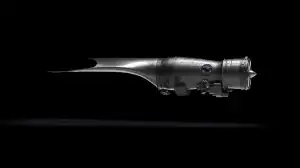
The Air Force has given two sets of contracts across six vendors for CCA propulsion options. Beehive Industries, Honeywell, Pratt & Whitney and a team of GE Aerospace and Kratos are developing smaller engines with a thrust class of 1,400 to 1,600 pounds, and the companies are expected to continue conducting preliminary design activities through May 2027. Meanwhile, GE Aerospace and Rolls-Royce have been tapped to develop “medium-class” engines with 5,000 to 6,000 pounds of thrust. The propulsion system will either be a brand new design built from the ground up, or a modified iteration of an off-the-shelf engine, Sneden said.
“My general perspective is that we have to start building the propulsion that we want,” Sneden said Monday during a separate media roundtable. “We have to start building tomorrow’s systems today, and that’s exactly what we’re doing in CCA Increment 2.”