MDA awards X-Bow to develop low-cost interceptor
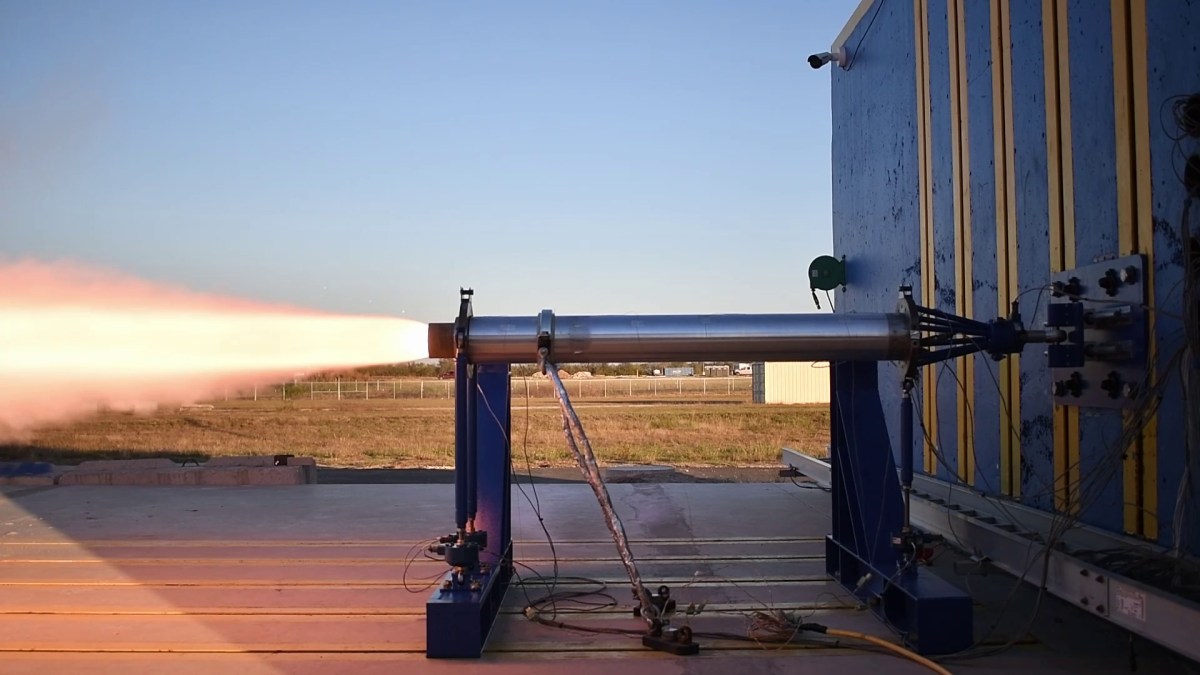
Defense startup X-Bow has been tapped to develop and demonstrate an affordable interceptor for the Missile Defense Agency in late 2027, the company announced Wednesday.
MDA awarded the two-year, $10.9 million contract to the company in July under the agency’s Rapid Response Small Launcher Technology program, moving X-Bow into phase 2 of the Low-Cost Interceptor (LCI) initiative. Like others across the Pentagon, the effort seeks to rapidly build and test an inexpensive defense solution against advanced missile threats — including hypersonic weapons.
“America can’t out-produce today’s threats with yesterday’s supplier base,” X-Bow CEO Jason Hundley said in a statement. “Our new manufacturing technology lets us bring affordable interceptors and rocket motors to the warfighter faster — and this award is a chance to prove it.”
Affordability is the main requirement outlined in MDA’s solicitation for the LCI program, published in 2025. The document notes that the munition should have a unit cost of less than $750,000 in exchange for a “slightly reduced performance rate.”
By comparison, a single Terminal High Altitude Area Defense (THAAD) interceptor costs roughly $12.7 million, while a Patriot missile has an average price tag of $4 million.
During phase 2 of the LCI program, X-Bow will build and flight test a prototype of the weapon. Afterwards, the company is expected to deliver four-to-10 systems that MDA can use for intercept tests, according to the solicitation.
X-Bow primarily builds solid rocket motors (SRM) — a critical supply component of munitions. In a statement, the company noted that its ability to develop and fly its own SRMs for the program will greatly reduce the missile’s cost.
The Pentagon has raced to operationalize hypersonic missiles, which are able to fly at speeds of Mach 5 or greater and can maneuver unpredictably during flight. Because their capabilities make them difficult to track and intercept, the department has also focused on developing new interceptors to destroy adversary systems.
MDA has a couple of ongoing counter-hypersonics efforts — including the ship-launched Glide Phase Interceptor (GPI) scheduled to field in 2031, as well as the near-term Project Maverick capability that would be kick-started under the agency’s fiscal 2027 budget request.
According to MDA Director Lt. Gen. Heath Collins, the goal of the LCI program is to find ways to reduce the overall unit cost for high-speed interceptors and make them more affordable down the line.
“We’re taking a look at propulsion, we’re taking a look at all the expensive parts of an interceptor to look for opportunities to drive down every bit of cost in there as we move forward,” Collins said Aug. 13 during the Space and Missile Defense Symposium in Huntsville, Alabama.
MDA’s program is not the only low-cost missile currently under development at the Defense Department, as the ongoing war with Iran has put the United States’ munitions stockpiles and industrial base capacity to replenish them in the public spotlight.
Army Secretary Dan Driscoll told reporters in June that the service was launching its own LCI program, also meant to produce a highly scalable missile interceptor. The service recently revealed a competition dubbed Affordable High Speed Strike (AHSS), envisioned as a long-range, surface-to-surface missile compatible with the High Mobility Artillery Rocket System (HIMARS).
Other similar programs include the Air Force’s Family of Affordable Mass Missiles (FAMM), the Defense Innovation Unit’s Ground-Based Affordable Mass (G-BAM) challenge and the joint-service Low-Cost Containerized Missile (LCCM) effort.