Air Force moves to accelerate effort to replace MQ-9 Reaper after combat losses in Iran war
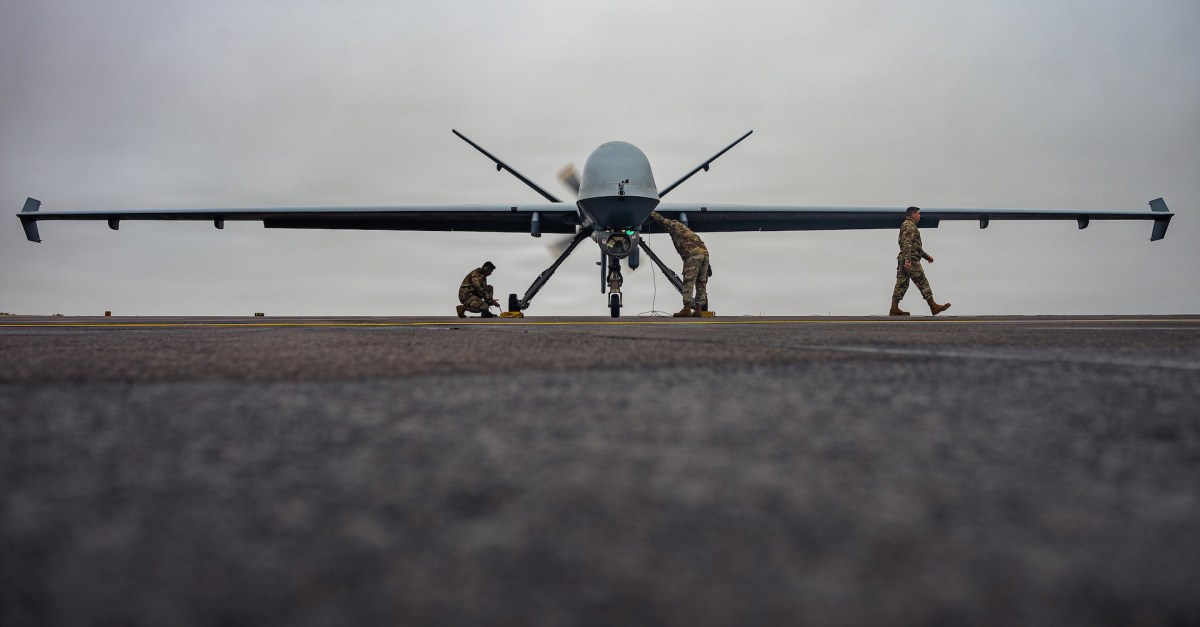
The loss of dozens of MQ-9A Reapers during Operation Epic Fury has prompted the Air Force to rethink its plans to replace the drone, with officials now looking to field a cheaper successor in large numbers much more quickly.
The service is working with the Defense Innovation Unit on the Massed Modular Aircraft (MMA) program, which looks to develop an affordable alternative and eventual replacement for the aging Reaper fleet. The Air Force kicked off the effort in July, and is planning to field at least 180 MMA drones with an air vehicle price of about $10 million each, said Lt. Gen. Christopher Niemi, Air Force chief modernization officer.
“We want to bring this thing forward because of the fact that, although we have plenty of MQ-9As today, we are going through them at a rate that is concerning to us,” Niemi told reporters Thursday at the Pentagon.
DIU’s solicitation for the MMA program originally stated that the Air Force wanted to have a full-scale prototype ready within 21 months of awarding contracts, and ultimately have 20 operational drones ready by fiscal 2031.
However, Secretary of the Air Force Troy Meink has directed officials to expedite the MMA program following mounting losses of MQ-9s in combat, Niemi said.
“As we get to the end of the MQ-9 life, there was some early talk of where do we want to go afterwards. And candidly, as a result of some of the losses that we’ve experienced in combat operations, that discussion sort of got accelerated,” Niemi said.
As of Aug. 13, the Defense Department had lost 45 Reaper drones during Epic Fury against Iran — around 25 percent of its entire fleet, according to The Washington Post. Built by General Atomics, the MQ-9A can cost anywhere from $30 million to $50 million depending on its sensor and weapons configuration.
The MMA air vehicle itself has a target price of about $10 million per unit, but that estimate does not include sensors, weapons or other mission equipment that would be considered separate cost drivers.
The Air Force is deliberately trading some performance and survivability capabilities in order to meet its cost goals, arguing that a cheaper drone that can be produced in larger quantities provides more combat value than an exquisite platform that is too expensive to risk losing.
“We’re trying to be thoughtful as we go through it and figure out what are those trades that are costing us a lot of dollars that — in the big scheme of things — aren’t vital to the platform being wildly successful for the warfighter,” Niemi said.
The service is looking to rely on mature, proven technologies rather than pushing for the most cutting-edge capabilities so that the MMA drone can be built quickly and in greater quantities, he added.
“You’re going to have to certainly give up something,” Niemi said. “There’s no doubt if we try and pursue the exact same approach that we had with things like the MQ-9, we’re going to get something that costs about the same as an MQ-9.”
The Air Force is also considering a different approach to the drone’s lifecycle costs, potentially buying aircraft with shorter service lives rather than maintaining them for decades through expensive depot maintenance and modernization programs.
Niemi said the MMA drone’s concept refinement phase will evaluate multiple factors — including cost per effect, the amount of flight hours, service life and total lifecycle cost.
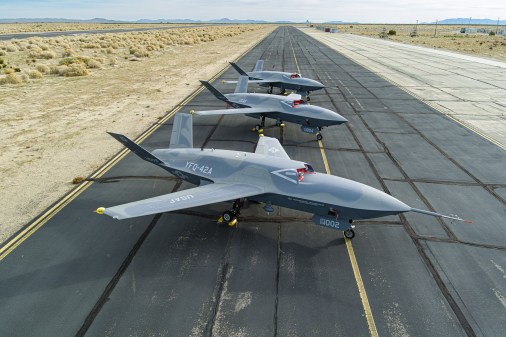
MMA will likely feature a high-aspect-ratio wing and a turboprop engine, prioritizing range and payload capacity over speed, Niemi said. The drone is expected to be in the “4,000 miles-type class,” he added, allowing it to fly much farther than the Air Force’s future Collaborative Combat Aircraft (CCA) while carrying more weight.
DIU’s solicitation to industry called for at least 2,800 pounds of payload and a range of 8,000 nautical miles.
The Air Force plans to take several cues from its ongoing CCA drone effort. Lt. Gen. Luke Cropsey, the service’s military deputy for acquisitions, told reporters that the plan is to leverage the program’s government-owned reference architecture on the MMA so that the new platforms can be developed in increments.
“Applying those to a clean-sheet design like we’re doing now gives us the ability to impose that up front, so that as vendors are coming in, we’re requiring them to be compliant to those government reference architectures. That would then give us the ability to do this kind of iteration quickly,” Cropsey said.