Space Force laying groundwork to connect future satellite ‘enclaves’ as it prepares for additional launches

The Space Force is on the cusp of launching its next batch of satellites into low-Earth orbit as officials are laying the groundwork to connect future “enclaves” of platforms that are expected to pass critical data to warfighters.
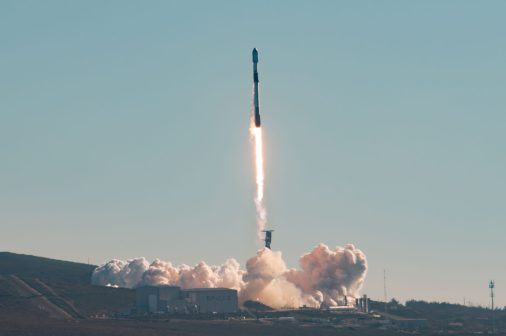
The Space Development Agency over the past year has been building out a so-called Proliferated Warfighter Space Architecture (PWSA) that will consist of multiple layers of data transport and missile tracking satellites manufactured by multiple vendors. SDA is planning to add to it next week with the launch of 21 Northrop Grumman-made birds.
“We launched our first plane last September with York [Space Systems]. We launched a second with Lockheed [Martin] in October. Then we took a strategic pause … and then we launched the second plane of York back in July. So with that, we have three planes on orbit, 63 satellites, and [with] our next one now we bring in a third vendor on the transport side” with Northrop’s systems, Gurpartap “GP” Sandhoo, director of SDA and the Space Force’s portfolio acquisition executive for missile warning and tracking, told reporters during a call ahead of next week’s launch.
Liftoff is scheduled for Oct. 5 at 1:15 a.m. Pacific Time from Vandenberg Space Force Base in California.
“This will be the fourth launch, and we have six more to go. We have two more in transport, then we have four in tracking. The goal here is to build out this mesh on the data transport side, and then once we start launching our sensors in a tracking layer, this is what they’ll connect to to deliver that missile warning, tracking and defense data to the warfighter,” Sandhoo explained.
The upcoming launch is about adding capacity to what’s already on orbit.
“To get to a global coverage we have to have the capacity. To get to a resilient, survivable architecture we have to have enough capacity up there,” Sandhoo said, noting that “the whole point” of the PWSA is to boost the survivability of the U.S. military’s satellite posture to address concerns that adversaries could target American platforms on orbit during a future conflict.
“We’ll have additional capacity. We’ll have persistent regional coverage at the end of Tranche 1. At the end of Tranche 2, we’ll have persistent global coverage. So, it’s absolutely a capacity issue. The capability is already up there, but it’s not up there as fully intended and designed,” he told DefenseScoop during the call with reporters.
Meanwhile, the Pentagon has been planning for a so-called Space Data Network featuring military-owned and commercial satellites manufactured by different companies that would enable a multi-orbit communications architecture.
In May, the department awarded SpaceX a $2.3 billion contract to deliver an operational prototype for the SDN’s “backbone” by the end of next year. Other transition agreements have also been awarded to Lockheed, Northrop, Rocket Lab and Amazon LEO for Government to demonstrate ground-to-space and space-to-space data transport between platforms that were built by disparate vendors.
Sandhoo told reporters that the PWSA and SDN will provide the military with different “enclaves” of systems.
“The initial SDN satellites are the SpaceX satellites, right?” he said. “We will be doing some technical risk reduction [to address issues related to] how do we actually connect to talk to them. We are starting on that process, working with the [space-based sensing and targeting portfolio acquisition executive].”
“With Tranche 1 and Tranche 2 [of the PWSA] we’ll have an enclave,” he continued. “The SpaceX [contribution to the Space Data Network] is going to be one enclave. We’ll have another enclave. At some point we need to start connecting these enclaves to make sure that data can flow between the multiple enclaves. And there may be other commercial entities that come on into the market in 2, 3, or 4 years from now, and it’ll be smart for us to make sure that we can connect to all of them to make sure … this information can flow as much as possible. So yeah, we are in active risk-reduction activities to make sure we can connect with them.”